
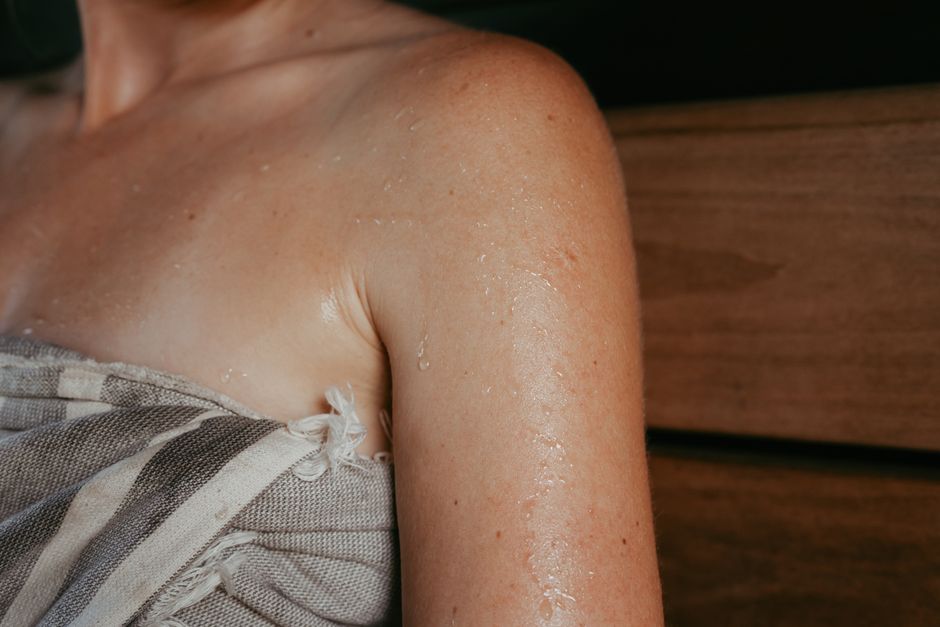
You sweat during a workout because your body is trying to stop itself from overheating. Muscles at work produce heat, and sweat is the cooling system that carries that heat away. How much you sweat depends on far more than how hard you are pushing — your genes, fitness level, body size, and even the room you are training in all change the volume.
Why Do I Sweat So Much When I Work Out?
Sweat is a heat-management response, not a sign of weakness or poor fitness. When you exercise, your muscles convert stored energy into movement, and a large share of that energy escapes as heat. That heat raises your core temperature.
Your brain monitors this constantly. A region called the hypothalamus acts as a thermostat. When it detects rising internal temperature, it sends signals through your nervous system to your sweat glands. Those glands release fluid onto your skin. As that fluid evaporates, it pulls heat away from your body. This is called evaporative cooling, and it is the main way humans dump heat during exercise.
Two things determine how much you sweat: how much heat you are producing and how efficiently your body can lose it. Push harder, and you make more heat. Train in a hot room, and evaporation slows down, so you need more sweat to get the same cooling effect. That is the whole system in plain terms.
What Actually Controls How Much You Sweat?
The volume of sweat you produce is set by a mix of biology and environment. Some of it you can change. Some of it you cannot.
Your sweat gland density is genetic. People are born with different numbers of active sweat glands, and that number does not change much with training. This is one reason two people doing the exact same workout can end up in very different states.
Fitness level matters, but not in the way most people assume. Trained athletes often start sweating sooner and sweat more than untrained people doing the same work. Their cooling system has adapted to switch on earlier. So heavy sweating is not automatically a sign that you are out of shape.
Body size and composition play a role too. A larger body generally produces more heat during movement, which means more sweat is needed to cool it. Muscle generates more heat than fat during activity.
Other factors that shift sweat volume include:
- Air temperature and humidity — humid air slows evaporation, so sweat pools instead of cooling you
- What you are wearing — heavy or non-breathable clothing traps heat
- Hydration status — being dehydrated can reduce your ability to sweat, which raises heat risk
- Acclimation — after repeated training in heat, your body learns to sweat earlier and more evenly
- Medications and caffeine — some drugs and stimulants affect sweating, sometimes increasing it
- Hormones — thyroid activity and, in women, menstrual cycle phase can influence sweat rate
One point worth knowing: the idea that you can “sweat out toxins” is not supported by evidence. Sweat is mostly water and electrolytes. Your liver and kidneys handle waste removal. Sweat’s job is temperature control, not detox.
Is Sweating a Lot a Sign You Are Fit or Unfit?
Neither, on its own. Sweat volume is a poor standalone measure of fitness. A very fit person can sweat heavily because their cooling system is responsive. An unfit person can sweat heavily because they are working near their limit. A fit person in a cool room might barely sweat at all.
What fitness does change is how quickly and efficiently you cool down. With training, your body starts sweating at a lower core temperature and distributes sweat across more of your skin. That means you cool more effectively, even if the total volume looks the same or higher.
If you want a real picture of your fitness, look at heart rate recovery, how quickly your breathing returns to normal, and how the same workout feels over weeks. Sweat volume tells you about heat, not conditioning.




When Is Heavy Sweating a Medical Concern?
Sweating more than expected during exercise is normal. Sweating far more than your peers in cool conditions, or sweating heavily at rest, is a different matter and worth discussing with a clinician.
A condition called hyperhidrosis causes excessive sweating that is not explained by heat or activity. It often affects specific areas like the palms, underarms, face, or feet. It is a recognized medical condition, not just an inconvenience, and there are clinical approaches to managing it.
Other patterns that deserve a medical conversation:
- Night sweats that soak your bedding without an obvious cause
- Sweating paired with chest pain, shortness of breath, or a racing heart
- Sudden changes in sweating patterns, especially with weight loss or fever
- Sweating that stops entirely during hard exercise in the heat, which can signal dangerous overheating
That last point matters. If you normally sweat a lot and suddenly stop while training in heat, that is a warning sign, not a good sign. It can mean your body is losing its ability to cool itself, which raises the risk of heat illness. Stop, cool down, and get help if you feel confused, dizzy, or nauseated.
Does Sweat Rate Change With Heat Acclimation?
Yes, and this is one of the more useful things to understand. When you train repeatedly in a hot environment, your body adapts over roughly one to two weeks. Your sweat response becomes more efficient.
Specifically, you begin sweating sooner, you sweat across more of your body, and your sweat becomes more dilute, meaning you lose fewer electrolytes per liter. You also tend to hold onto sodium better. The net effect is better cooling with less strain on your body.
This is why athletes who train in heat often handle hot competition better than those who do not. It is also why the first hot workout of the year feels so much harder than the tenth.
How Do You Replace What You Lose?
Sweat is mostly water, with sodium and smaller amounts of potassium, chloride, and magnesium. The main thing to replace during and after exercise is fluid, and for most sessions under about an hour, plain water is enough.
For longer or very sweaty sessions, electrolytes matter more. Sodium is the key one, because it is what you lose in the largest amount. Some people are “salty sweaters” — their sweat leaves visible white residue on clothing. Those people tend to need more sodium replacement.
A practical way to gauge your fluid needs is to weigh yourself before and after a workout. Each pound lost is roughly a pint of fluid. Drinking about that amount over the following hours helps you recover. This is a widely used approach in sports settings, though individual needs vary.
Do not force large amounts of plain water in a short time. Drinking far more than you lose can dilute your blood sodium to dangerous levels, a condition called hyponatremia. It is uncommon but serious, and it is most often seen in endurance events where people drink excessively without replacing sodium.
Can You Reduce How Much You Sweat?
You cannot change your genetics or gland density. But you can make sweating more manageable and more effective.
Training in heat gradually, staying well hydrated, wearing breathable clothing, and choosing cooler times of day all help. Antiperspirants containing aluminum salts can reduce sweating on the underarms and hands, and they are a standard over-the-counter option for that purpose. For more stubborn cases, clinicians sometimes use prescription treatments, though these are not a fix for exercise-related sweating specifically.
One thing worth accepting: some sweating during exercise is not just normal, it is necessary. Your body is doing exactly what it should. The goal is not to stop sweating. It is to stay cool, stay hydrated, and recognize when something is off.
Frequently Asked Questions
Why do I sweat so much when I work out even when I am fit?
Fit people often sweat more, not less, because training makes the cooling system switch on earlier and work more effectively. Sweat volume reflects heat production and cooling efficiency, not fitness level on its own.
Is sweating a lot during exercise a sign of poor health?
Usually not. Heavy sweating during exercise is a normal cooling response. It becomes worth a medical conversation if you sweat heavily at rest, have night sweats, or notice sudden changes in your sweating patterns.
How much water should I drink after sweating heavily?
A common approach is to replace roughly a pint of fluid for every pound lost during the workout. Individual needs vary, and drinking far more than you lose in a short time can be harmful.
Does sweating burn calories or remove toxins?
No. Sweat does not meaningfully burn calories, and the claim that it removes toxins is not supported by evidence. Sweat is mostly water and electrolytes, and its purpose is temperature control.
