
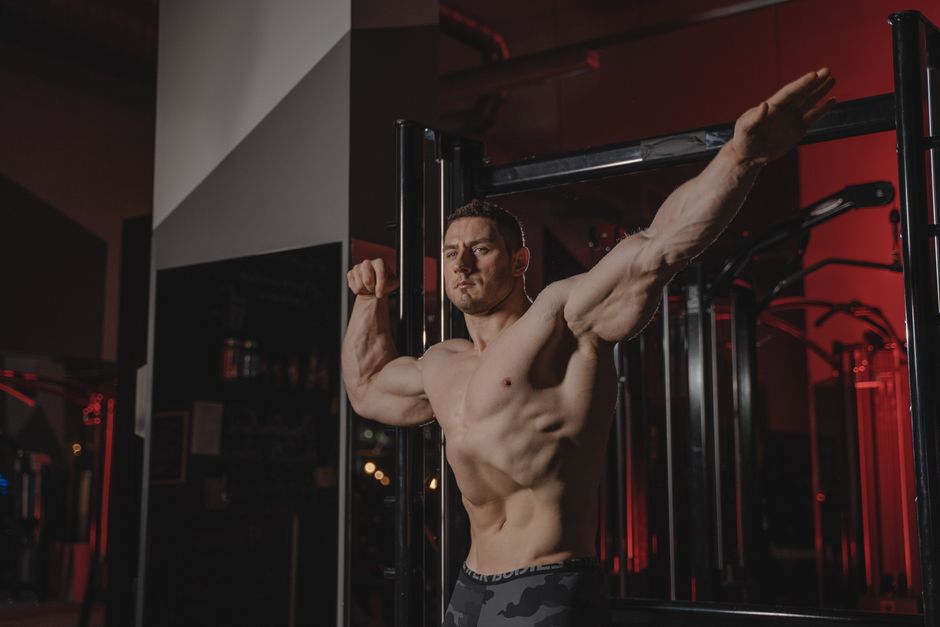
Competitive bodybuilders typically step on stage at around 4 to 8 percent body fat for men and roughly 12 to 18 percent for women. Men often reach the low end of that range, while women rarely go below about 12 percent because essential fat stores differ by sex. These are estimates from body composition testing and coaching practice, not a single official standard. The exact number varies by division, individual genetics, and how the physique is judged.
What surprises many people is that stage condition is not a healthy long-term state. It is a temporary peak reached for a few hours of competition. Understanding how that level is achieved, and what it costs the body, matters more than the number itself.
How Much Body Fat Do Bodybuilders Have On Stage?
Most male competitors are estimated to be somewhere between 4 and 8 percent body fat at the moment they compete. Women usually land higher, often between 12 and 18 percent. These figures come from skinfold measurements, bioelectrical impedance, and DEXA scans used by coaches and researchers, though each method carries a margin of error.
It helps to compare these numbers to general population ranges. For reference, the American Council on Exercise publishes widely cited body fat categories. Men are classified as “essential fat” at 2 to 5 percent, “athletes” at 6 to 13 percent, and “fitness” at 14 to 17 percent. Women are classified as essential fat at 10 to 13 percent, athletes at 14 to 20 percent, and fitness at 21 to 24 percent.
Stage condition sits at the very bottom of the athletic range, and for men occasionally dips toward the essential fat category. Essential fat is the minimum needed for basic physiological function. Going below it is not sustainable.
Why Do Men and Women Compete at Different Body Fat Levels?
Women carry more essential fat than men for biological reasons tied to reproductive function and hormone regulation. This is not a matter of training intensity or discipline. It is basic physiology.
Essential fat in women supports hormone production, menstrual function, and the fat stores needed around reproductive organs. When body fat drops too low, the body can shut down or disrupt the menstrual cycle. This is a recognized clinical pattern, sometimes called functional hypothalamic amenorrhea when it results from energy deficiency and low body fat.
Men can reach lower percentages partly because their essential fat threshold is lower. But there is a limit for them too. Below roughly 3 to 5 percent, men can experience hormone disruption, immune suppression, and other problems. The leaner the physique, the narrower the margin between “stage ready” and “physiologically stressed.”
This sex difference explains why you will almost never see a female bodybuilder at 5 percent body fat. It is not that women cannot get lean. It is that the body defends a higher minimum, and pushing past it carries real consequences.
How Do Bodybuilders Get So Lean?
Getting to stage condition requires a sustained calorie deficit combined with heavy resistance training and high protein intake to preserve muscle. The process usually takes months, not weeks, and is often broken into phases.
The general approach involves:
- A gradual reduction in calories over an extended period, often 12 to 20 weeks or more
- High protein intake to help protect muscle mass during the deficit
- Continued resistance training to signal the body to keep muscle
- Increasing cardiovascular activity as the competition approaches
- Tracking food intake and body weight closely to manage the rate of loss
The goal is to lose fat while losing as little muscle as possible. This is difficult because the body does not always cooperate. As body fat drops and the deficit continues, the body adapts by reducing energy expenditure and increasing hunger signals. This is a well-documented metabolic response, sometimes described as adaptive thermogenesis.
In the final days before a show, many competitors manipulate water, sodium, and carbohydrates in a practice called “peak week.” The goal is to look as full and dry as possible on stage day. The specific methods vary widely, and the evidence that any particular peak week protocol reliably improves appearance is limited. Some approaches used in this window carry genuine health risks, including severe dehydration and electrolyte imbalance.





Is Stage-Ready Body Fat Healthy?
No. Stage condition is a temporary peak, not a sustainable or healthy baseline. This is one of the most important things to understand about the sport.
At these body fat levels, both men and women can experience a range of physiological disruptions. Documented effects include:
- Reduced testosterone and other hormone changes in men
- Menstrual disruption or loss in women
- Weakened immune function and increased illness
- Reduced bone density with prolonged low body fat and low energy availability
- Poor sleep, low mood, and constant hunger
- Reduced resting metabolic rate that can persist after the diet ends
Competitors commonly report feeling cold, tired, and mentally foggy in the final weeks. Libido often drops. These are not signs of peak health. They are signs of a body under stress.
After a show, most competitors regain body fat, and many overshoot their pre-diet weight. This rebound is common and reflects the body’s strong drive to restore energy stores after a period of restriction. Some athletes develop disordered eating patterns during and after contest preparation. This is a recognized concern in the sport, not a rare exception.
Why Do Stage Photos Look Leaner Than the Actual Number?
Stage appearance depends on more than body fat percentage. Several factors make competitors look leaner than their measured number might suggest.
First, muscle size matters. A bodybuilder with more muscle mass will look leaner at the same body fat percentage than someone with less muscle, because the muscle creates more definition and shadows. Two people at 6 percent body fat can look very different depending on how much muscle they carry.
Second, stage lighting and posing are designed to emphasize muscle definition. Tanning, oil, and strategic lighting all increase the appearance of leanness. Posing compresses and stretches muscles to highlight separation.
Third, the “dry” look comes partly from low water and glycogen levels, not just low fat. A competitor who is dehydrated and glycogen-depleted will look harder and more defined than the same person at the same body fat when properly hydrated.
This is why stage condition is often described as an illusion built for a few hours. It is not how the athlete looks or feels the rest of the year.
How Is Body Fat Measured in Bodybuilders?
No method is perfectly accurate, and this matters when interpreting any specific number. The most common tools each have strengths and limitations.
| Method | How It Works | Accuracy Notes |
|---|---|---|
| Skinfold calipers | Measures fat thickness at multiple sites | Depends heavily on tester skill; less reliable at very low body fat |
| Bioelectrical impedance | Sends a small current through the body | Affected by hydration; can be inaccurate when dehydrated |
| DEXA scan | Uses low-dose X-rays to estimate fat and lean mass | Considered one of the more reliable methods; still has error margins |
| Hydrostatic weighing | Measures body density underwater | Accurate but impractical; rarely used now |
For very lean athletes, most field methods become less reliable. Skinfold equations were often developed on average populations, so they can misestimate people at the extremes. This is one reason two tests on the same competitor can produce different numbers.
The takeaway is that any single body fat number is an estimate. The 4 to 8 percent figure for male competitors is a reasonable working range, not a precise measurement.
What Is the Difference Between Stage Condition and Off-Season?
Competitors do not stay at stage condition year-round. Most spend the off-season at a higher body fat level, often in the fitness or athlete range, and diet down for a specific show. This cycle is called contest preparation.
During the off-season, many athletes are at 10 to 15 percent body fat or higher for men, and higher still for women. This allows for better training performance, hormone function, and recovery. The leaner phase is deliberately temporary.
Some competitors stay relatively lean year-round, but this is generally not recommended for health or performance. Staying at very low body fat for extended periods increases the risk of the same problems seen during contest prep, including hormone disruption and immune suppression.
The honest picture is that stage condition is a peak, not a lifestyle. Treating it as a permanent goal is where many people run into trouble.
Frequently Asked Questions
What body fat percentage do male bodybuilders have on stage?
Most male competitors are estimated to be around 4 to 8 percent body fat on stage. The exact number varies by division, genetics, and measurement method.
What body fat percentage do female bodybuilders have on stage?
Female competitors typically compete at roughly 12 to 18 percent body fat. Women rarely go below about 12 percent because their essential fat needs are higher than men’s.
Is it healthy to be at stage-ready body fat?
No, stage condition is a temporary peak and not a healthy long-term state. It can cause hormone disruption, immune suppression, and menstrual changes, especially if maintained for long periods.
Why do bodybuilders look leaner on stage than their body fat number?
Muscle size, stage lighting, tanning, posing, and temporary dehydration all make competitors look leaner than their measured body fat suggests. The look is partly an illusion designed for a few hours.
