
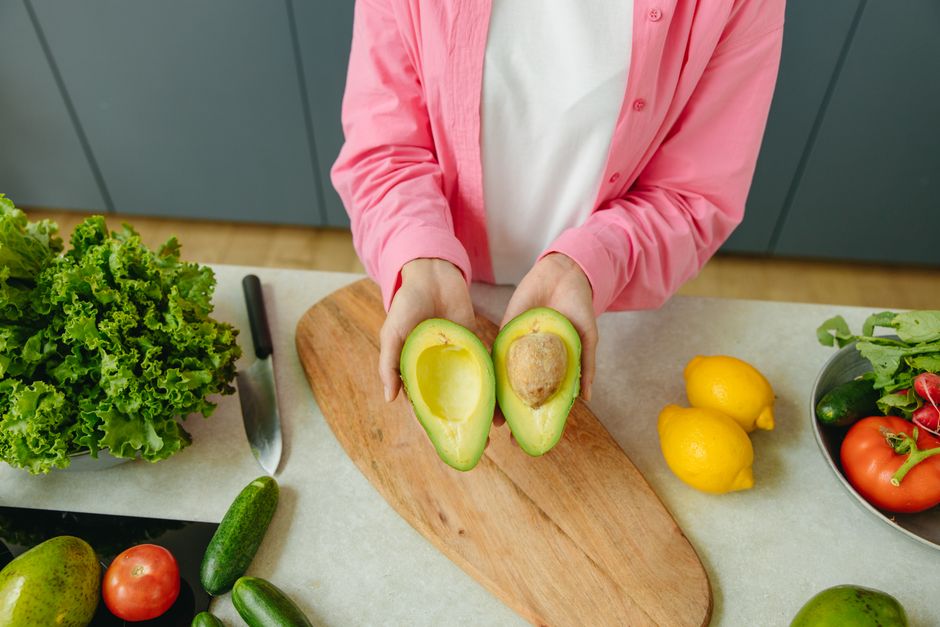
An avocado contains about 21 grams of fat in a typical 200-gram fruit. That works out to roughly 15 grams of fat per 100 grams of fresh avocado, or about 10 grams of fat in a single 68-gram half. Almost all of that fat is unsaturated.
That number surprises people. Avocados are the rare fruit that gets most of its calories from fat rather than sugar. The fat is the reason avocados feel filling, the reason they turn brown when exposed to air, and the reason food scientists treat them more like an oilseed than a fruit.
How Much Fat Is In An Avocado Nutrition Facts?
One whole avocado of the common Hass variety, weighing about 200 grams, delivers roughly 21 grams of fat and about 320 calories. A half avocado, the portion most people actually eat, contains roughly 10 to 11 grams of fat and about 160 calories.
Here is what that fat is made of in a single whole avocado:
- Monounsaturated fat: about 14 grams, mostly oleic acid — the same fat found in olive oil
- Polyunsaturated fat: about 2.7 grams
- Saturated fat: about 2.1 grams
So roughly two-thirds of the fat in an avocado is monounsaturated. That is an unusually high proportion for a fruit, and it is the main reason avocados get grouped with olive oil and nuts in nutrition discussions rather than with bananas and apples.
Fat makes up about 15 percent of an avocado’s weight. Carbohydrate makes up about 9 percent, and most of that is fiber. Protein is minimal, around 2 percent. The rest is water.
Does the Type of Avocado Change the Fat Content?
Yes, but not as much as people assume. Fat content varies by variety, growing conditions, and ripeness, generally falling somewhere between 10 and 20 grams of fat per 100 grams of edible flesh.
Hass avocados, the dark-skinned variety that dominates US grocery shelves, tend to run on the higher end. Florida varieties, which are larger and lighter green, tend to be lower in fat and higher in water. This is why a Florida avocado can feel less rich and creamy than a Hass of similar size.
Ripeness matters too. An avocado that is rock hard has not yet completed the enzymatic changes that soften the flesh and develop flavor. The fat is largely already present, but the eating experience and nutrient availability differ. A properly ripe avocado is softer, and its fat is more accessible to digestion.
The single biggest variable is simply how much avocado you eat. A large avocado can weigh 300 grams or more. If you eat the whole thing, you are eating closer to 30 grams of fat, not 21.
Why Does an Avocado Have So Much Fat?
Avocados evolved to be eaten. The fat is stored energy for the seed inside, and the fruit’s job is to attract animals that will carry the seed away and deposit it somewhere new.
Botanically, the avocado is a berry. It develops from a single flower and contains one large seed. What makes it unusual is that instead of packing its energy as sugar, it packs it as oil.
That oil is mostly oleic acid, a monounsaturated fat. Oleic acid is the dominant fat in olive oil and is one of the reasons the Mediterranean dietary pattern gets so much research attention. An avocado is essentially a fruit that stores its energy the way an olive does.
The fat also explains the browning. When you cut an avocado, you rupture cells and release an enzyme called polyphenol oxidase. That enzyme reacts with oxygen and with compounds called polyphenols, producing the brown pigment you see on a cut avocado left on the counter. The fat itself is not turning brown — the flesh around it is oxidizing.




Is the Fat in Avocados Healthy?
The fat in avocados is predominantly unsaturated, and unsaturated fat is well established as a healthier choice than saturated fat for cardiovascular health. That part is not controversial.
What is harder to state with confidence is whether eating avocados specifically produces measurable health benefits. The evidence here is more limited than the marketing suggests.
Some studies have found that avocado consumption is associated with better diet quality and, in some analyses, with lower body weight. But association is not causation. People who eat avocados may differ from people who do not in many other ways.
Some smaller trials have looked at avocado intake and cholesterol or satiety. Results have been mixed, and many of these studies are short and involve small numbers of participants. A review of the evidence would reasonably conclude that avocados are a nutritious food that fits well in a balanced diet, while stopping short of claiming they prevent disease.
One practical point that is well supported: fat aids the absorption of fat-soluble vitamins. Vitamins A, D, E, and K need fat to be absorbed efficiently. Adding avocado to a salad or a vegetable dish can increase absorption of carotenoids from those vegetables. That is a real, documented effect, and it is one of the more useful reasons to include avocado in a meal.
How Many Calories Come From the Fat?
Fat contains 9 calories per gram. With about 21 grams of fat in a whole avocado, that is roughly 189 calories from fat alone, out of about 320 total calories.
The rest comes from carbohydrate, mostly fiber, and a small amount from protein. Fiber contributes very few usable calories because it passes through largely undigested.
This is why avocados are calorie-dense compared to most fruits. A whole avocado has more calories than a medium banana and more than a cup of grapes. If you are tracking calories, portion matters. A half avocado is a reasonable serving for most people. A whole large avocado is a substantial calorie load.
Avocado Fat Compared to Other Common Foods
Seeing avocado next to familiar foods makes the fat profile easier to place. The table below compares fat content and fat type for a standard serving of each.
| Food | Serving | Total Fat | Main Fat Type |
|---|---|---|---|
| Avocado (Hass) | Half, 68 g | ~10 g | Monounsaturated |
| Olive oil | 1 tablespoon | ~14 g | Monounsaturated |
| Almonds | 1 oz (23 nuts) | ~14 g | Monounsaturated |
| Peanut butter | 2 tablespoons | ~16 g | Monounsaturated |
| Cheddar cheese | 1 oz | ~9 g | Saturated |
| Medium banana | 1 fruit | ~0.4 g | Polyunsaturated |
The comparison makes the point clearly. A half avocado has fat content in the same range as a tablespoon of olive oil or a small handful of almonds, and it shares their monounsaturated profile. A banana, by contrast, is almost fat-free.
What avocado does not share with olive oil or nuts is calorie density per bite. Avocado is mostly water, so you get the same fat with more volume. That can matter for how full you feel after eating.
Does Avocado Fat Make You Gain Weight?
No single food causes weight gain on its own. Weight change comes down to total calories consumed versus calories burned over time, along with many other factors including genetics, activity, sleep, medications, and health conditions.
That said, avocados are calorie-dense, and it is easy to eat more than you intend. A whole large avocado can add 300 or more calories to a meal. If those calories push you past your energy needs, they contribute to weight gain like any other excess calories.
Some research suggests avocado can increase satiety, meaning it may help you feel full and eat less later. The evidence for this is not strong enough to state as fact. It is a plausible effect with some supporting data, not a settled finding.
The practical takeaway is unremarkable: avocado is a nutritious food that fits well in most diets, and portion size is what determines whether it helps or hinders your calorie goals.
What About the Other Nutrients in an Avocado?
Fat is the headline, but avocado brings other things to the table. A whole avocado provides roughly 10 grams of fiber, along with potassium, vitamin E, vitamin K, folate, and several B vitamins.
The potassium content is worth noting. Avocados are one of the better dietary sources of potassium, a mineral involved in blood pressure regulation and muscle function. Most Americans do not meet recommended potassium intake.
Avocado also contains carotenoids like lutein and zeaxanthin, which are concentrated in the eye and are studied for their role in eye health. As mentioned earlier, the fat in avocado helps your body absorb these compounds, along with carotenoids from other vegetables eaten in the same meal.
One caveat: avocado is high in vitamin K. If you take a blood-thinning medication like warfarin, vitamin K intake needs to stay consistent. That does not mean avoiding avocado. It means talking to your clinician about how to keep your intake steady.
Frequently Asked Questions
How much fat is in one whole avocado?
A typical Hass avocado weighing about 200 grams contains roughly 21 grams of fat. About two-thirds of that is monounsaturated fat.
Is the fat in avocado good or bad for you?
The fat in avocado is mostly monounsaturated, which is generally considered a healthier fat type than saturated fat. Whether eating avocados specifically produces health benefits is less well established.
How many calories are in a half avocado?
A half avocado of about 68 grams has roughly 160 calories and about 10 grams of fat. Most of those calories come from fat.
Can I eat a whole avocado every day?
There is no established guideline against eating a whole avocado daily, but it adds roughly 320 calories. Whether that fits depends on your overall calorie needs and the rest of your diet.
