
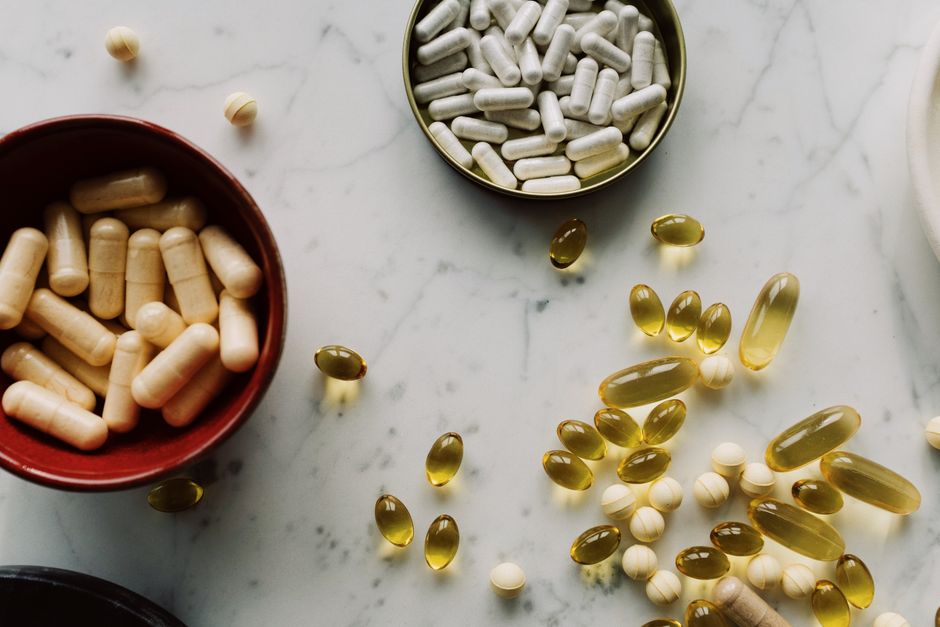
Biotin is a water-soluble B vitamin that your body needs for converting food into energy and for normal skin, hair, and nerve function. No official recommended daily allowance exists for biotin in the United States, but the Food and Nutrition Board has set an adequate intake level of 30 micrograms per day for adults. There is also no established tolerable upper intake level for biotin, which means no official daily ceiling has been set for healthy adults. Most supplement products sold in the US contain between 1,000 and 10,000 micrograms per dose, far above what the body actually needs.
How Much Biotin Do You Actually Need Each Day?
The amount your body needs is tiny compared to what supplement bottles typically contain. The Food and Nutrition Board, which sets nutrient reference values in the US, established adequate intake levels for biotin. For adults 19 and older, that level is 30 micrograms daily. For breastfeeding women, it is 35 micrograms daily.
Adequate intake is not the same as a recommended dietary allowance. It is used when there is not enough data to calculate an RDA. In biotin’s case, researchers have not been able to establish a reliable marker for biotin status in the general population, which is why the recommendation is expressed as an adequate intake rather than an RDA.
Biotin deficiency is rare in people who eat a varied diet. The vitamin is found in foods like eggs, nuts, seeds, salmon, sweet potatoes, and liver. It is also produced by bacteria in the gut, though the amount absorbed from this source is not well understood. Most people in the US get enough biotin through food without ever thinking about it.
Is There a Safe Upper Limit for Biotin?
No tolerable upper intake level has been established for biotin. This is not because high doses have been proven safe. It is because there has not been enough research to identify a level at which harm begins.
This distinction matters. When a nutrient has no UL, it means the data needed to set one are missing. It does not mean large doses are harmless. For biotin specifically, the lack of a UL reflects the absence of clear evidence of toxicity at high doses in the general population. It does not reflect a positive safety finding.
Biotin is water-soluble, which means excess amounts are excreted in urine rather than stored in the body. That is one reason serious toxicity from biotin alone has not been widely reported. Still, “not widely reported” is different from “proven safe at any dose.”
What Do Common Biotin Supplements Actually Contain?
Supplement doses vary widely, and the gap between what supplements contain and what the body needs is enormous. It is worth seeing the numbers side by side.
| Source | Biotin Amount |
|---|---|
| Adequate intake for adults (Food and Nutrition Board) | 30 mcg/day |
| Adequate intake for breastfeeding women | 35 mcg/day |
| Typical over-the-counter biotin supplement | 1,000 to 10,000 mcg per dose |
| High-dose hair and nail formulas | Up to 10,000 mcg or more per dose |
So a single 5,000 microgram tablet contains more than 150 times the adequate intake for an adult. Whether that excess provides any benefit beyond meeting nutritional needs is a separate question — and the evidence there is not strong.





Does Taking High-Dose Biotin Help Hair, Skin, or Nails?
The evidence for high-dose biotin improving hair, skin, or nails in people who are not deficient is limited and mixed. This is one of the most common reasons people buy biotin, so it is worth being honest about what the research shows.
Some small studies have suggested possible benefits for nail brittleness, and a few have looked at hair. But many of these studies were small, and some lacked control groups. Results have not been consistent across larger or better-designed trials. There is no strong body of evidence showing that biotin supplements improve hair growth or skin quality in people who already get enough biotin from food.
Biotin deficiency can cause hair thinning, skin rashes, and brittle nails. If someone is genuinely deficient, correcting that deficiency would be expected to help. But true biotin deficiency is uncommon in people eating a normal diet. In people who are not deficient, adding more biotin has not been clearly shown to improve these outcomes.
This is a case where biological reasoning and clinical evidence do not line up neatly. Biotin is involved in processes that affect hair and skin, which makes the supplement seem logical. But a plausible mechanism is not the same as proven benefit.
What Are the Real Risks of High-Dose Biotin?
The most documented risk of high-dose biotin is not toxicity — it is interference with laboratory tests. This is a well-established problem, and it can have serious consequences.
Many common medical tests use biotin in their detection chemistry. When someone takes a high-dose biotin supplement, the extra biotin in their blood can interfere with these tests. The result can be a falsely high or falsely low reading, depending on the test.
Tests that can be affected include certain thyroid function tests, some cardiac troponin tests used to detect heart attacks, and various hormone assays. A falsely normal troponin result, for example, could cause a heart attack to be missed. A falsely abnormal thyroid result could lead to unnecessary treatment or a missed diagnosis.
The FDA has issued safety communications about this interference. The concern applies mainly to people taking high doses, typically in the range of supplement products rather than dietary amounts. If you take biotin and are having blood tests, telling your doctor about the supplement matters.
Beyond test interference, some people report side effects like nausea or cramping, though these are not consistently documented in the research. Serious direct toxicity from biotin itself has not been widely reported, but the absence of reports is not the same as a clean safety record at every dose.
Who Should Be Careful With Biotin Supplements?
Certain groups have more reason to be cautious about high-dose biotin.
- Anyone scheduled for blood tests, especially thyroid or cardiac tests, should discuss biotin use with their doctor.
- People taking biotin who develop symptoms that could suggest a heart attack should not assume a normal test result rules it out if they have not disclosed the supplement.
- Pregnant and breastfeeding women should be especially careful. Biotin needs increase somewhat during pregnancy and breastfeeding, but no clinical guidelines support taking high-dose supplements for this purpose, and the effects of large doses on a developing fetus or infant are not well studied.
- People with kidney disease may clear biotin differently, and the implications of high doses in this group are not well established.
For pregnancy and breastfeeding specifically, no clinical guidelines currently exist for high-dose biotin supplementation. The adequate intake levels are 30 micrograms for adults and 35 micrograms for breastfeeding women, and those are the reference points that exist.
How Much Biotin Is Safe To Take Daily in Practice?
Because no upper limit has been set, there is no official answer to what dose is safe. What can be said is that the body’s need is around 30 micrograms daily for adults, and typical supplements exceed that by a very large margin.
Many people take 1,000 to 10,000 micrograms daily without reporting obvious problems. But the key documented concern — laboratory test interference — is a real and recognized risk at these doses, not a theoretical one. The FDA has warned about it, and clinical guidance exists for healthcare providers on how to manage it.
If you are considering biotin for hair, skin, or nails and you are not deficient, the evidence that it will help is weak. If you take it anyway, the most practical step is to tell your doctor, especially before any blood work. Stopping the supplement for a period before testing is something some clinicians recommend, but the exact timing depends on the dose and the test, and this should be discussed with a healthcare provider rather than guessed.
The honest summary is this: biotin is a nutrient your body needs in small amounts. The safe daily amount for nutritional purposes is around 30 micrograms for most adults. Higher doses are widely sold and commonly taken, but they are not backed by strong evidence of benefit for most people, and they carry a documented risk of interfering with important medical tests.
Frequently Asked Questions
How much biotin is safe to take daily?
No official upper limit for biotin has been established, so there is no set maximum safe dose. The adequate intake for adults is 30 micrograms per day, and most supplements contain far more than that.
Can you take too much biotin?
Biotin is water-soluble and serious toxicity has not been widely reported, but high doses can interfere with certain laboratory tests. This interference is a documented risk, not a theoretical one.
Does biotin actually help hair growth?
The evidence is limited and mixed for people who are not biotin deficient. Biotin deficiency can cause hair thinning, but true deficiency is uncommon in people eating a normal diet.
Should I stop biotin before a blood test?
You should tell your doctor if you take biotin, especially before thyroid or cardiac tests. Some clinicians recommend stopping it before testing, but the timing depends on your dose and the specific test.
