
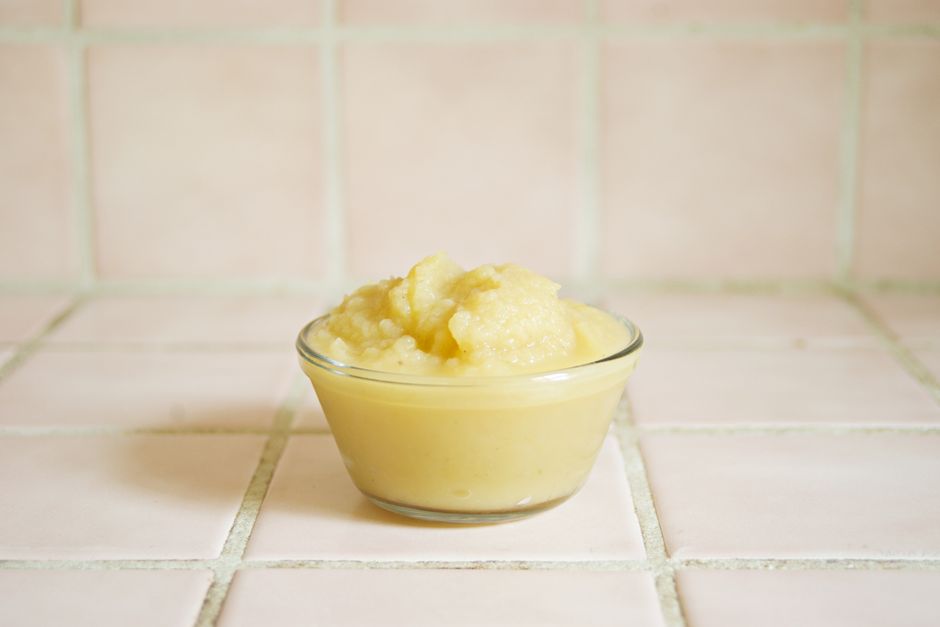
If you are baking and want to swap applesauce for an egg, the general rule is one quarter cup of unsweetened applesauce for each large egg. That is the standard substitution used in most baking guidance and it works best in recipes where the egg is there for moisture and binding rather than structure.
Applesauce is a common egg replacer, but it is not a universal one. It adds moisture and some sweetness, and it can change the texture of what you bake. Whether it works well depends heavily on what the egg is doing in your recipe. Cakes, muffins, and quick breads usually handle the swap. Recipes that lean on eggs for lift or structure, like sponge cakes or meringues, do not.
How Much Applesauce To Replace An Egg?
Use one quarter cup (4 tablespoons) of unsweetened applesauce per large egg. That is the figure you will find in most standard baking references, and it is the number to start with.
The measurement matters less than the type of applesauce you choose. Sweetened applesauce adds sugar your recipe did not call for, which can push a cake toward gummy or overly sweet. Unsweetened is the safer default. If your recipe already has a lot of sugar, the difference is small. If it is a lightly sweetened bread or muffin, sweetened applesauce can throw off the balance.
Some sources suggest slightly less, around three tablespoons, if you want a firmer crumb. The quarter-cup figure is the widely used starting point. Adjust from there based on how your first batch turns out.
Why Does Applesauce Work As An Egg Substitute?
Applesauce works because it brings moisture and a small amount of pectin, a natural fiber that can help hold a batter together. Eggs do several jobs at once: they add moisture, they bind ingredients, they add fat and protein, and in many recipes they help the batter rise and set.
Applesauce only covers part of that list. It adds moisture well. It provides some binding through pectin, though not as much as an egg. It adds almost no fat and no protein. And it cannot whip into foam the way egg whites do, so it contributes nothing to lift.
That last point explains most of the failures people run into. In a recipe where the egg is mainly a moisture source, applesauce is close to a direct swap. In a recipe where the egg is structurally important, applesauce alone will not do the job. This is why applesauce works in a banana bread but not in an angel food cake.
One detail worth knowing: applesauce is not the only fruit puree used this way. Mashed banana, pumpkin puree, and prune puree all follow roughly the same logic. They add moisture and some binding, and they all fall short on lift. The choice between them is mostly about flavor.
Which Recipes Work Best With Applesauce Instead Of Eggs?
Quick breads, muffins, cakes, pancakes, and brownies are the recipes where applesauce performs best. These are batters where the egg mainly provides moisture and a bit of binding, and where a slightly denser, moister result is acceptable or even welcome.
Recipes that tend to work well:
- Banana bread and other quick breads
- Muffins and loaf cakes
- Standard layer cakes and sheet cakes
- Pancakes and waffles
- Brownies and soft cookies
Recipes that tend to fail:
- Sponge cakes and angel food cake
- Meringues and macarons
- Souffles
- Any recipe where whipped egg whites provide the rise
The pattern is consistent. If the recipe depends on eggs for air and structure, applesauce will not replace them. If the recipe depends on eggs for moisture, it usually will.





How Does Applesauce Compare To Other Egg Substitutes?
No single egg replacer covers every job an egg does. Each one has a different strength and weakness, and the right choice depends on the recipe.
| Substitute | Amount per large egg | Best for | Limitation |
|---|---|---|---|
| Unsweetened applesauce | 1/4 cup | Cakes, muffins, quick breads | Adds no lift; can make baked goods dense |
| Mashed banana | 1/4 cup | Quick breads, muffins | Strong flavor; adds sweetness |
| Ground flaxseed + water | 1 tbsp flax + 3 tbsp water | Cookies, pancakes, denser baked goods | Nutty flavor; slightly gritty texture |
| Chia seed + water | 1 tbsp chia + 3 tbsp water | Similar to flax | Visible seeds; gel texture |
| Commercial egg replacer | Per package directions | General baking | Varies by brand; adds little moisture |
Ground flaxseed mixed with water is often the better choice when you want more binding, because the seed gel sets up firmer than applesauce. Applesauce tends to be the better choice when you want moisture and a neutral flavor. For a full breakdown of egg substitutes and how they behave, see our guide on egg substitutes for baking.
Does Applesauce Change The Taste And Texture?
Yes, and the change is usually noticeable. Applesauce makes baked goods moister and often denser. It can add a faint apple flavor, though in most recipes the other ingredients mask it.
The texture shift is the bigger issue. Because applesauce adds no fat and no protein, the finished product tends to be softer and less structured. Cookies may spread more. Cakes may be a little heavier. This is not a flaw, but it is a difference, and it is why some bakers blend applesauce with another substitute rather than using it alone.
One practical fix: if a recipe calls for more than one egg, try replacing only one with applesauce and using another substitute for the rest, or use a commercial egg replacer alongside it. Using applesauce for every egg in a recipe that calls for three or four often produces a wet, heavy result.
Does Applesauce Replace Eggs In Every Recipe?
No. Applesauce cannot replace eggs in recipes where eggs provide the main structure or lift. This is a hard limit, not a matter of adjusting the amount.
Think about what the egg is doing before you swap. In a muffin, the egg adds moisture and a little binding, and the baking powder or soda does the lifting. Applesauce can take over the moisture job. In a sponge cake, the eggs themselves are the lift, and there is no substitute that can whip into foam and hold air the way egg whites do.
There is also a food safety point worth stating plainly. Applesauce and other plant-based substitutes are not eggs, so the food safety considerations are different. Raw batter made with applesauce instead of eggs carries different risks than batter made with raw eggs. That does not make it automatically safe to eat raw, but the specific concern changes. If you are baking for someone with an egg allergy, check that all your other ingredients are egg-free, since some commercial products contain egg derivatives.
Frequently Asked Questions
How much applesauce equals one egg?
One quarter cup of unsweetened applesauce equals one large egg. Use unsweetened rather than sweetened to avoid adding sugar the recipe did not call for.
Can I use applesauce instead of eggs in a cake mix?
Yes, one quarter cup of unsweetened applesauce per egg works in most boxed cake mixes. The cake will be slightly denser and moister than one made with eggs.
Does applesauce make baked goods taste like apples?
Usually only faintly, since other ingredients mask the flavor. In lightly flavored recipes like plain muffins, you may notice a mild apple taste.
Can I replace all the eggs in a recipe with applesauce?
It works in recipes that call for one or two eggs, but using applesauce for three or more often makes the result wet and heavy. Mixing it with another substitute usually works better.
