
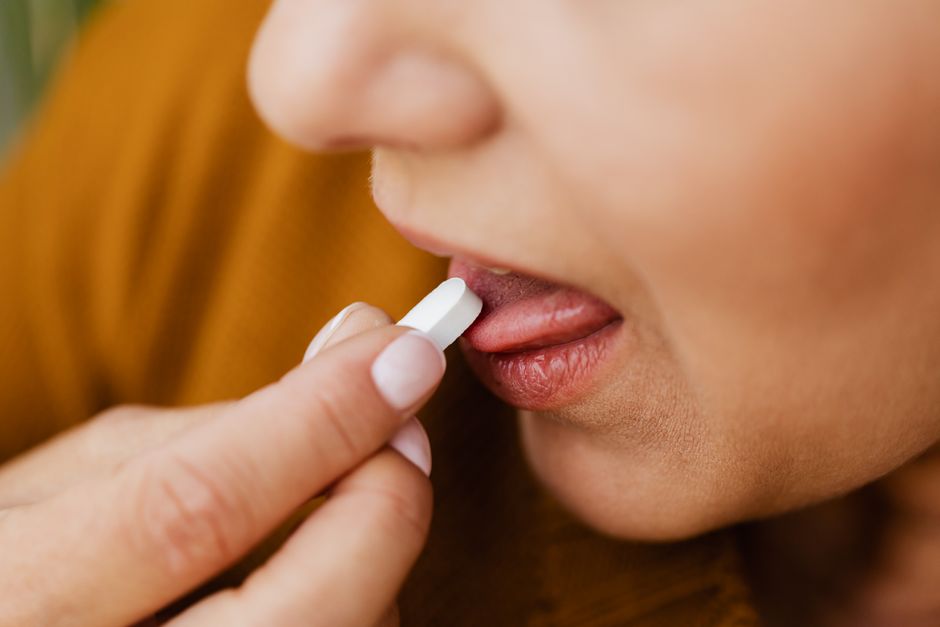
There is no official daily requirement for biotin, which surprises most people. The Food and Drug Administration has not set a Recommended Dietary Allowance for biotin because documented deficiency is rare in healthy people. Instead, an Adequate Intake level of 30 micrograms per day has been established for adults, including women. Most women already get this amount through food without trying.
How Much Biotin Should A Woman Take Daily?
For healthy adult women, 30 micrograms per day is the Adequate Intake level set by the Institute of Medicine (now the National Academy of Medicine). This is not a target you need to chase. It is an estimate of how much healthy populations appear to consume without developing deficiency.
Biotin is a water-soluble B vitamin. Your body does not store it in large amounts. Whatever you do not use is excreted in urine. That is one reason toxicity from food sources is not a documented concern.
The word “adequate” matters here. Unlike the RDA, which is set when there is enough evidence to calculate the average requirement for nearly all healthy people, an Adequate Intake is used when data are incomplete. It reflects observed intake in healthy groups, not a proven minimum threshold.
Biotin is found in a wide range of foods. Eggs, nuts, seeds, salmon, sweet potatoes, and liver all contain it. Gut bacteria also produce some biotin, though how much the body absorbs from this source is not well established.
What Does Biotin Actually Do in the Body?
Biotin serves as a cofactor for carboxylase enzymes. These enzymes are involved in fatty acid synthesis, gluconeogenesis, and amino acid metabolism. Without biotin, these metabolic pathways cannot function properly.
The symptoms of true biotin deficiency are specific and recognizable to clinicians: hair thinning, a scaly red rash around the eyes, nose, and mouth, conjunctivitis, and neurological symptoms like depression or lethargy. These symptoms do not appear from eating slightly less biotin than the Adequate Intake. They appear when something actively depletes the vitamin or blocks its absorption.
One of the more important and less widely known facts about biotin is its interaction with laboratory tests. High-dose biotin supplements can interfere with certain immunoassays, including tests for thyroid function and cardiac troponin. The FDA has issued safety communications about this. If you take high-dose biotin and your doctor orders blood work, tell them.
Do Most Women Need a Biotin Supplement?
No. Most healthy women eating a varied diet get enough biotin from food. Clinical biotin deficiency is rare in the general population.
Certain groups face higher risk:
- People who have had long-term intravenous feeding without biotin supplementation
- People taking certain anti-seizure medications for extended periods
- People with inherited disorders of biotin metabolism, such as holocarboxylase synthetase deficiency or biotinidase deficiency
- Pregnant women, who may have altered biotin metabolism — though the clinical significance of this is still being studied
- People who eat large amounts of raw egg whites over a long period, because a protein in raw eggs called avidin binds biotin and prevents absorption
For everyone else, the evidence does not support routine supplementation for the general purpose of “getting enough biotin.”




What About Biotin Supplements for Hair, Skin, and Nails?
This is where marketing and evidence part ways. Biotin supplements are widely sold for hair growth, stronger nails, and clearer skin. The evidence for these claims in people who are not biotin-deficient is weak.
Some studies suggest biotin may help in specific cases of brittle nail syndrome, but results vary and sample sizes have generally been small. For hair growth in people with normal biotin levels, no large controlled trials have confirmed benefit.
The logic often used is: “Biotin is involved in keratin production, so more biotin means more keratin.” That reasoning is not supported by clinical evidence. Having adequate biotin does not mean having extra biotin speeds up hair or nail growth. Once your body has what it needs for its enzyme reactions, additional biotin is excreted.
If you have hair loss, brittle nails, or skin issues, these can have many causes. Thyroid disorders, iron deficiency, hormonal changes, and autoimmune conditions are common ones. A supplement is not a diagnosis.
What Is a Typical Biotin Supplement Dose?
Biotin supplements in the US are commonly sold in doses of 5,000 to 10,000 micrograms. Some go higher. These amounts are many times the Adequate Intake of 30 micrograms.
No clinical guidelines recommend these doses for the general population. They exist because manufacturers choose them, not because research established them as necessary or optimal.
The FDA does not require biotin supplements to be proven effective before marketing, as long as no disease treatment claims are made. That means the dose on the label reflects a company’s decision, not a regulatory standard.
Biotin is generally considered to have low toxicity because it is water-soluble. However, “low toxicity” does not mean “no effect.” The lab test interference noted earlier is a real concern. There have been case reports of misdiagnosed thyroid conditions and missed heart attacks when high-dose biotin skewed test results.
Can You Get Too Much Biotin?
No tolerable upper intake level has been established for biotin. That is not the same as saying very high doses are proven safe for everyone.
The absence of a UL reflects a lack of evidence of harm from food sources, not a conclusion that any dose is harmless. For supplements at doses far above dietary levels, long-term safety data in healthy adults are limited.
What is documented is the interference with lab tests. The FDA recommends that patients tell their healthcare provider about biotin use before blood tests, and some labs now screen for it. If you take a high-dose supplement, stopping it before testing may be advised. Ask your doctor how long to stop beforehand, since clearance varies.
How Much Biotin Do Women Actually Get From Food?
Most mixed diets in the US provide more than 30 micrograms per day. Exact intake varies by food choices, but biotin is distributed across many food groups.
| Food | Approximate Biotin Content |
|---|---|
| Cooked egg (whole) | About 10 micrograms per egg |
| Salmon, 3 oz cooked | About 5 micrograms |
| Sweet potato, 1/2 cup cooked | About 2.5 micrograms |
| Almonds, 1/4 cup | About 1.5 micrograms |
| Spinach, 1/2 cup cooked | About 0.5 micrograms |
These values are approximate and vary by source and preparation. The point is not to count micrograms at every meal. It is to show that ordinary foods contribute meaningfully, and reaching 30 micrograms daily is not difficult for most people.
One clarification: raw eggs block biotin absorption because of avidin. Cooked eggs do not, because heat deactivates avidin. The concern about eggs and biotin applies to raw egg whites consumed regularly, not to scrambled eggs.
Should You Take Biotin or Not?
If you are a healthy woman eating a varied diet, you likely do not need a biotin supplement. Your body gets what it needs from food, and there is no established benefit to taking more.
If you have a diagnosed deficiency, a condition that affects biotin absorption or metabolism, or you are on long-term medication that depletes biotin, your doctor may recommend supplementation. That is a clinical decision based on your specific situation.
If you are taking biotin for hair, skin, or nails and are not deficient, the evidence does not support a benefit. That does not mean it is dangerous at typical doses. It means the reason you are taking it may not hold up.
Talk to your healthcare provider before starting any supplement, especially at high doses. And if you take biotin, mention it before any blood test.
Frequently Asked Questions
How much biotin should a woman take daily?
The Adequate Intake for adult women is 30 micrograms per day, which most women meet through food. No clinical guidelines recommend routine higher doses for healthy women.
Is 10,000 mcg of biotin a day too much?
No tolerable upper intake level has been set for biotin, so 10,000 micrograms is not classified as toxic. However, doses this high can interfere with certain blood tests, including thyroid and cardiac tests, so tell your doctor if you take it.
Does biotin really help hair grow?
No large controlled trials have confirmed that biotin helps hair growth in people who are not deficient. Hair loss has many causes, and a supplement is not a substitute for diagnosis.
Can I get enough biotin from food alone?
Yes — eggs, salmon, nuts, seeds, sweet potatoes, and liver all contain biotin, and most varied diets provide more than 30 micrograms daily. Deficiency from diet alone is rare in healthy people.
