
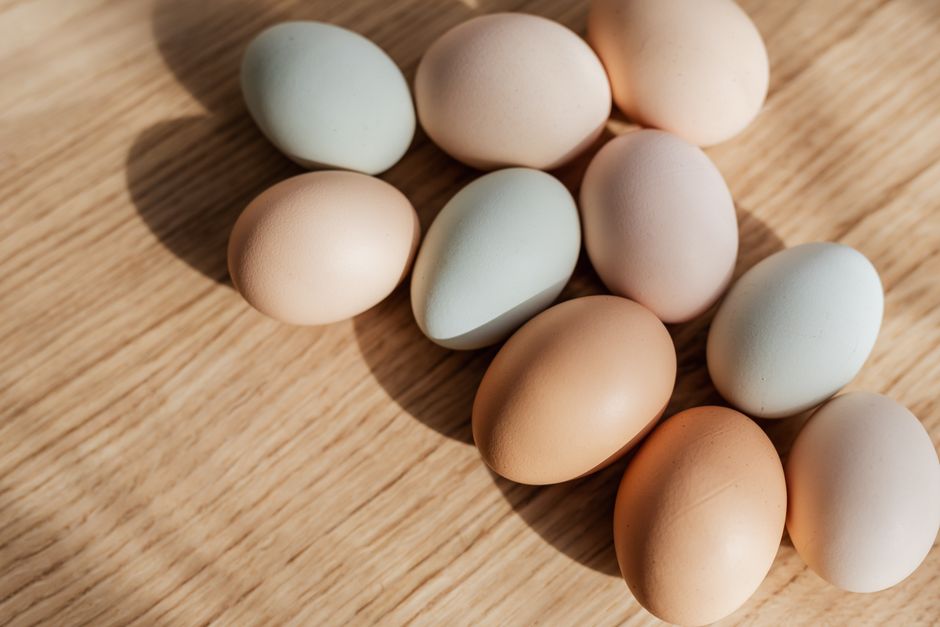
One large egg contains about 6 grams of protein. That number stays roughly the same whether you boil, scramble, fry, or poach it. The white holds a little more than half of that protein, and the yolk carries the rest. So a two-egg breakfast gives you around 12 grams, and a three-egg omelet lands near 18 grams.
That is the short answer. The longer answer involves egg size, what “large” actually means on a carton, how eggs compare to other protein sources, and whether the yolk deserves the reputation it has picked up over the years. All of that matters if you are counting protein for a reason.
How Many Protein In Eggs by Size?
Egg size is set by weight per dozen, not by how big an individual egg looks. The USDA defines the categories, and the protein differences between them are modest but real.
A large egg is the standard reference point in most nutrition data and in most recipes. Jumbo eggs carry more protein, but not as much more as people assume, because a good portion of the extra weight is water and fat.
| Egg Size | Protein (approx.) |
|---|---|
| Small | About 4.5 grams |
| Medium | About 5.5 grams |
| Large | About 6 grams |
| Extra Large | About 6.5 grams |
| Jumbo | About 7 grams |
These are approximate figures drawn from USDA nutrient data. If you are tracking protein closely, the practical takeaway is simple: a large egg is your baseline, and switching sizes moves the number by roughly half a gram to a gram.
How Much Protein Is in the Yolk vs the White?
The white contains slightly more protein than the yolk, but the split is closer than most people expect. In a large egg, the white contributes around 3.6 grams and the yolk around 2.7 grams.
What surprises people is the concentration. The yolk is smaller by weight but denser in nutrients, which is why it delivers nearly as much protein as the larger white. The yolk also carries most of the egg’s vitamins, minerals, and fat.
This matters for a common habit: tossing yolks to save calories or fat. You lose about 2.7 grams of protein per egg when you do that, plus a meaningful share of the vitamin A, vitamin D, choline, and B vitamins. Egg white omelets are not a protein upgrade. They are a protein downgrade with fewer nutrients.
Is Egg Protein Complete?
Egg protein is complete, meaning it supplies all nine essential amino acids your body cannot make on its own. That puts it in the same category as meat, fish, dairy, and soy.
Eggs are also unusually digestible. Nutrition science has long used egg protein as a reference standard when comparing protein quality across foods, partly because the body absorbs and uses it so efficiently. The technical term you may see is biological value, and egg protein scores near the top of that scale.
One clarification worth making: “complete protein” does not mean a food is a superior protein source in every practical sense. It means the amino acid profile is sufficient on its own. How much protein you actually absorb and use still depends on the total meal, your overall diet, and your body’s needs.




How Do Eggs Compare to Other Protein Foods?
Eggs hold up well against common breakfast proteins, though they are not the densest source per serving. The comparison below uses typical single servings.
| Food | Protein (approx.) |
|---|---|
| 1 large egg | 6 grams |
| 1 cup milk | 8 grams |
| 1 cup Greek yogurt | 15-20 grams |
| 3 oz cooked chicken breast | 26 grams |
| 3 oz cooked salmon | 22 grams |
| 1/2 cup cooked lentils | 9 grams |
Eggs win on convenience and cost per gram of protein. They lose on density. If your goal is hitting a high protein target, eggs work best as part of a meal rather than the whole meal.
A practical example: two eggs plus a cup of Greek yogurt gives you roughly 27 grams of protein at breakfast. Three eggs alone gives you 18. Neither approach is wrong. It depends on what you are aiming for across the day.
Does Cooking Change the Protein in Eggs?
Cooking does not reduce the protein content of an egg. The grams stay the same whether the egg is raw, boiled, scrambled, or fried.
What cooking does change is digestibility. Heat denatures the protein, which is a structural change, not a loss. For most people, cooked egg protein is easier for the body to break down and absorb than raw egg protein.
Raw eggs carry an additional problem. They can contain Salmonella bacteria, and the risk is not trivial. The FDA advises against eating raw or lightly cooked eggs, particularly for young children, older adults, pregnant women, and anyone with a weakened immune system. Pasteurized eggs are available for recipes that call for raw eggs.
One more point on raw eggs: the raw egg white contains a protein called avidin that binds biotin, a B vitamin. Cooking deactivates avidin. This is only a concern with regular raw egg consumption, not with the occasional undercooked egg.
How Much Protein Do You Actually Need?
The general adult recommendation is 0.8 grams of protein per kilogram of body weight per day. For a 150-pound adult, that works out to about 54 grams daily. Eggs can contribute to that, but they are unlikely to be the whole picture.
Protein needs rise in certain situations. People who are physically active, recovering from illness or surgery, or over age 65 often need more. Some research suggests older adults benefit from higher protein intake to help preserve muscle mass, though the exact target is still debated among researchers.
No single food has to carry the load. Eggs are one useful piece of a varied diet, not a requirement and not a magic bullet. If you eat eggs, you get high-quality protein at a low cost. If you do not, you can meet your needs just as well with other foods.
Are Eggs Good for You Overall?
For most adults, eggs fit comfortably into a healthy diet. They provide complete protein, vitamin D, choline, and several B vitamins in a small package.
The cholesterol question deserves an honest answer rather than a slogan. Eggs are high in dietary cholesterol, and for decades that was treated as a major concern. Current evidence indicates that for most people, dietary cholesterol has a smaller effect on blood cholesterol than saturated and trans fats do. That is why many dietary guidelines no longer set a strict daily limit on eggs for the general population.
The picture is not identical for everyone. People with diabetes or existing heart disease may respond differently, and some research has found associations between higher egg intake and cardiovascular risk in those groups. The evidence here is mixed, and it is reasonable to talk with a clinician about your own situation rather than applying a blanket rule.
What is clear: how eggs are prepared and what you eat with them matters. A boiled egg alongside vegetables is not the same meal as eggs fried in butter with sausage and white toast.
Frequently Asked Questions
How much protein is in one large egg?
One large egg contains about 6 grams of protein. The white provides roughly 3.6 grams and the yolk about 2.7 grams.
How many grams of protein are in two eggs?
Two large eggs give you about 12 grams of protein. Three large eggs provide about 18 grams.
Is egg white or yolk higher in protein?
The white has slightly more protein, about 3.6 grams versus 2.7 grams in the yolk of a large egg. Removing the yolk means losing that protein along with most of the egg’s vitamins and minerals.
Does cooking eggs destroy the protein?
No, cooking does not reduce the protein content. It changes the protein’s structure, which generally makes it easier to digest.
