
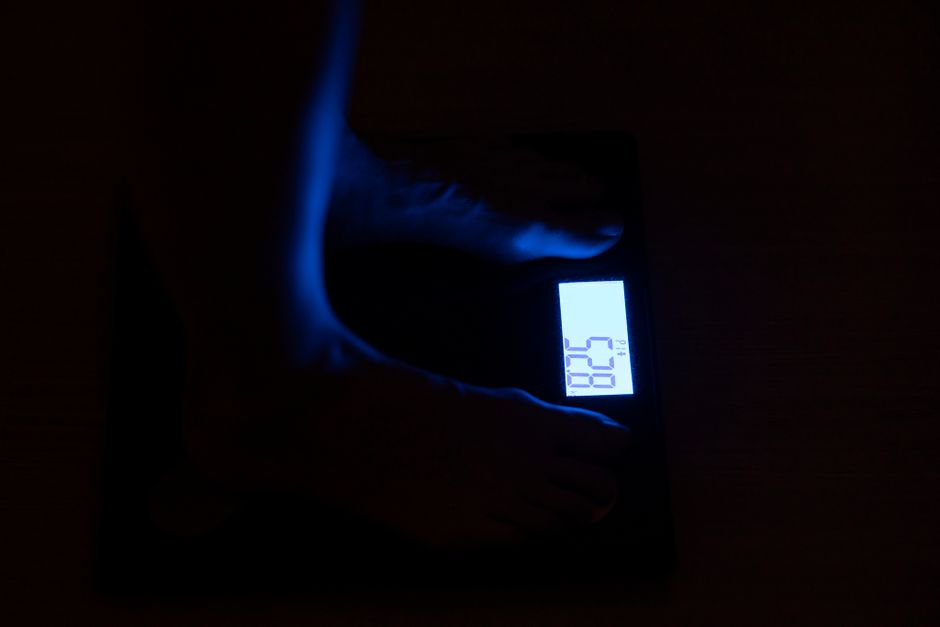
Losing weight is rarely a straight line. Most people want a clear number, and the most honest answer is this: a safe, sustainable rate is 4 to 8 pounds per month. That equals about 1 to 2 pounds per week. Faster loss happens, but it often comes with muscle loss, fatigue, and rapid regain. This guide breaks down the actual numbers, the science behind them, and why your personal number may differ.
What Is a Safe and Realistic Monthly Weight Loss?
Health experts generally agree that losing 1 to 2 pounds per week is safe and sustainable. Over a month, that translates to roughly 4 to 8 pounds. This range is based on the energy balance equation: one pound of body fat equals about 3,500 calories.
To lose one pound per week, you need a daily calorie deficit of about 500 calories. To lose two pounds per week, you need a daily deficit of about 1,000 calories. This can come from eating less, moving more, or a combination of both.
Dropping more than 2 pounds per week regularly is generally not recommended without medical supervision. Rapid weight loss can lead to gallstones, nutrient deficiencies, and a slower metabolism. It also increases the risk of losing lean muscle mass, which is the opposite of what you want for long-term health.
Why the Number on the Scale Fluctuates Daily
Your weight can swing by several pounds in a single day. This is not fat gain or loss. It is water weight, food in your digestive tract, and other normal bodily fluctuations.
Carbohydrates are a major factor. For every gram of carbohydrate stored in your muscles and liver, your body holds about 3 grams of water. If you eat a high-carb meal, you will weigh more the next morning. If you cut carbs, you will see a rapid drop on the scale that is mostly water, not fat.
Sodium also plays a role. High-sodium meals cause your body to retain fluid. Hormonal changes, especially in women, can cause significant water retention during certain phases of the menstrual cycle.
This is why weekly averages matter more than daily readings. Weigh yourself at the same time each day, ideally in the morning after using the bathroom. Track the weekly average rather than reacting to daily swings.
The 3,500-Calorie Rule and Its Limits
The idea that 3,500 calories equals one pound of fat has been taught for decades. It is a useful starting point, but it is oversimplified. The body does not work like a simple bank account.
When you eat fewer calories, your body adapts. Your metabolism slows down slightly. You may move less without realizing it. This is called adaptive thermogenesis. The result is that a 500-calorie daily deficit does not always produce exactly one pound of weight loss per week.
Research published in the International Journal of Obesity has shown that weight loss predictions based on the 3,500-calorie rule overestimate actual loss. The body fights back against calorie restriction. This is a survival mechanism that becomes stronger as you lose weight.
What does this mean for you? Expect the first few weeks to show faster loss, often water weight. Then expect the rate to slow. This is normal and not a sign of failure.





How Your Starting Point Affects Your Monthly Loss
Your starting weight significantly influences how fast you can lose. People who weigh more generally lose more pounds per month than lighter individuals. This is not a moral judgment. It is physics and biology.
A person weighing 250 pounds burns more calories doing the same activity as a person weighing 150 pounds. Their resting metabolic rate is higher. They can create a larger calorie deficit with the same dietary changes.
Someone who is closer to a healthy weight has less fat to lose. Their body may resist further loss. Losing 1 pound per week might be a strong result for someone who is already lean, while 4 pounds per week might be expected for someone starting at a much higher weight.
Body composition matters too. Muscle burns more calories at rest than fat. A person with higher muscle mass may lose weight faster initially. However, as you lose weight, your metabolic rate drops because there is less body mass to maintain.
What the Research Shows About Weight Loss Rates
Clinical trials on weight loss provide useful data. A large analysis of weight loss programs found that most participants lose about 5 to 10 percent of their starting body weight over 6 months. For a 200-pound person, that is 10 to 20 pounds over half a year.
This works out to roughly 1.5 to 3 pounds per month on average. That is slower than the 4 to 8 pounds often quoted. The difference is that clinical trial numbers include everyone, even those who do not follow the plan perfectly.
Early phases of weight loss programs often show faster results. Many structured programs report that participants lose 4 to 6 pounds in the first month. This initial drop includes water weight and glycogen depletion, not just fat.
After the first month, the rate typically slows to 1 to 2 pounds per week. This is the fat loss phase. It is slower but more sustainable. The people who maintain their weight loss long-term are usually the ones who accept this slower pace.
Factors That Slow Down or Speed Up Weight Loss
Several factors influence your personal rate of loss. Age matters. Muscle mass and metabolic rate naturally decline with age, which can slow weight loss.
Sleep is a significant factor. Studies have found that people who sleep fewer than 6 hours per night have higher levels of ghrelin, the hunger hormone, and lower levels of leptin, the fullness hormone. Poor sleep also increases cortisol, which can promote fat storage, especially around the abdomen.
Medications can affect weight. Certain antidepressants, steroids, and diabetes medications are associated with weight gain. Others, like some GLP-1 medications, are associated with significant weight loss.
Medical conditions can also play a role. Hypothyroidism, polycystic ovary syndrome (PCOS), and insulin resistance can make weight loss harder. If you are doing everything right and the scale is not moving, a medical evaluation is reasonable.
How to Calculate Your Personal Calorie Target
To lose weight, you need to know roughly how many calories you burn each day. This is your total daily energy expenditure (TDEE). It includes your resting metabolic rate, physical activity, and the energy needed to digest food.
A simple estimation method uses your body weight. For most people, maintenance calories are roughly 12 to 15 calories per pound of body weight. A 180-pound person might burn around 2,160 to 2,700 calories per day.
For weight loss, subtract 500 to 1,000 calories from your maintenance number. This should produce a loss of 1 to 2 pounds per week. Do not go below 1,200 calories per day for women or 1,500 for men without medical supervision. These minimums are not strict rules but general safety guidance.
These calculations are estimates. The only way to know your true number is to track your food intake and weight changes over a few weeks. Adjust based on your actual results.
Why Crash Diets Fail Long-Term
Very low-calorie diets, often under 800 calories per day, can produce rapid weight loss. Some people lose 10 or more pounds in a month. This is not sustainable and often leads to regain.
Severe calorie restriction causes muscle loss. Muscle is metabolically active tissue. Losing it lowers your resting metabolic rate. When you return to normal eating, your body burns fewer calories than before. This is why many people regain more weight than they lost.
Extreme diets also trigger hormonal changes. Leptin levels drop sharply, increasing hunger. Ghrelin levels rise. Your body actively works against the weight loss by making you feel hungrier and less satisfied after meals.
Psychological factors matter too. Deprivation diets are hard to maintain. They often lead to binge eating when willpower runs out. A moderate deficit that allows for occasional treats is more likely to be maintained for months or years.
Setting a Realistic Monthly Goal
Aim for 4 to 8 pounds per month if you are starting from a higher weight. If you are closer to your goal weight, expect 2 to 4 pounds per month. These are not hard rules but realistic expectations.
Focus on behaviors rather than the scale. Track your food intake, your steps, your sleep, and your strength training. These are things you control. The scale is an outcome that depends on many factors.
If you lose nothing in a given week, look at the monthly trend. A flat week is often followed by a drop. Water retention, digestion, and hormonal cycles can hide fat loss for a week or more.
Remember that weight loss is not linear. Some months you will lose 6 pounds. Others you will lose 2. The overall trend matters more than any single month.
How to Keep the Weight Off Once You Lose It
Maintenance is harder than loss for many people. Research consistently shows that about 80 percent of people who lose weight regain it within a year. This is not a lack of willpower. It is biology.
Your body has a set point it tries to defend. When you lose weight, your metabolism slows and hunger hormones increase. These changes can persist for years after weight loss.
To maintain weight loss, you need to keep tracking. Studies show that people who weigh themselves regularly and track their food intake are more likely to maintain their loss. Physical activity becomes more important during maintenance than during active weight loss.
Strength training is particularly valuable. Building muscle helps offset the metabolic slowdown that comes with weight loss. It also improves insulin sensitivity and overall metabolic health.
Frequently Asked Questions
Can I lose 20 pounds in a month?
Losing 20 pounds in a month is possible but not safe or sustainable for most people. It would require a daily calorie deficit of over 2,300 calories, which is extreme and typically leads to muscle loss and rapid regain.
How much weight loss is too fast?
Losing more than 2 pounds per week for several consecutive weeks is generally considered too fast. This rate increases the risk of gallstones, nutrient deficiencies, and muscle loss.
Why did I lose weight fast the first week then stop?
The first week of a diet often produces rapid loss because your body sheds water and glycogen stores. After that initial drop, fat loss is slower and can be masked by normal daily water fluctuations.
Is losing 1 pound per week worth it?
Yes. Losing 1 pound per week adds up to 52 pounds in a year. Slow, steady loss is more likely to come from fat rather than muscle and is easier to maintain long-term.
