
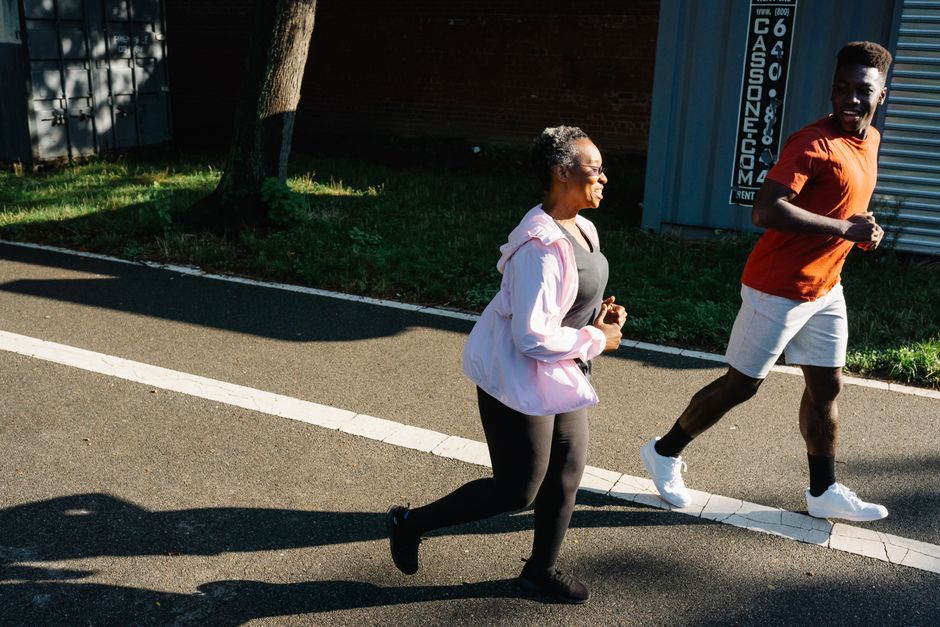
Walking can help you lose weight, but the results depend far more on how fast you walk and how often than on hitting a famous step number. Most people can burn meaningful calories with brisk walking, and the total comes down to three things: your pace, your body weight, and how long you keep it up. Here is what the evidence actually supports, and what it does not.
How Does Walking Actually Help You Lose Weight?
Weight loss happens when you burn more calories than you take in. Walking adds to the “burn” side of that equation. That is the whole mechanism, and it is well established.
A 154-pound (70 kg) adult burns roughly 250 to 300 calories during an hour of brisk walking. A heavier person burns more; a lighter person burns less. Walking uphill or carrying weight raises the number. Strolling at a slow pace burns considerably less.
Here is the part many people miss. Walking burns calories, but it does not burn a huge amount per minute compared with running or cycling. That is why duration and consistency matter so much. A single 30-minute walk will not change your weight. Doing it most days for months can.
Walking also builds and preserves muscle in the legs and hips to some degree, and muscle burns slightly more energy at rest than fat does. That effect is real but modest. It is not the main reason walking helps with weight. The calorie burn is.
How Many Steps a Day Do You Actually Need?
The 10,000-step target is a marketing number, not a medical one. It originated from a 1960s Japanese pedometer campaign and was never based on clinical research.
What the research does show is a relationship between step count and health outcomes, with benefits appearing well below 10,000 steps. Some large observational studies have found that health advantages begin to show up at roughly 4,000 to 6,000 steps a day, with additional benefit continuing to accumulate at higher counts. For weight specifically, the picture is less tidy, because diet plays a large role.
For weight loss, a practical way to think about it:
- Below about 5,000 steps a day is generally considered sedentary.
- 7,000 to 8,000 steps a day is a reasonable active baseline for many adults.
- 10,000 or more steps a day gives more room to create a calorie deficit through movement alone.
These are general reference points, not prescriptions. Your own starting point matters more than any target. If you currently walk 3,000 steps a day, getting to 6,000 is a bigger win than chasing 12,000.
Does Walking Speed Matter for Weight Loss?
Speed matters more than most people realize. Faster walking burns more calories per minute than slow walking, and it also raises your heart rate into a range that improves cardiovascular fitness.
Walking at a brisk pace is generally defined as moving fast enough that you can talk but not sing. For many people that lands around 3 to 4 miles per hour. A leisurely stroll at 2 miles per hour burns far fewer calories over the same time.
There is a second reason pace matters. Higher-intensity activity can raise your metabolic rate for a period after you stop, though the size of this “afterburn” from walking is small. Do not count on it as a major factor. The bigger benefit of walking faster is simply that you cover more distance and burn more calories in the same amount of time.
Interval walking is one approach some people use: alternate a few minutes of fast walking with a few minutes of easy walking. It can increase total calorie burn and may feel more manageable than sustaining a fast pace the whole time. The evidence that intervals are clearly superior to steady brisk walking for weight loss is not strong, so treat it as a preference, not a requirement.





How Long Should You Walk to Lose Weight?
Longer walks burn more calories, but consistency beats duration. A daily 30-minute brisk walk tends to outperform an occasional two-hour walk, both for calorie burn over time and for habit-building.
If weight loss is the goal, many guidelines point toward at least 150 minutes of moderate-intensity activity per week for general health, and more — often 250 to 300 minutes per week — when weight loss or weight maintenance is the specific aim. Walking briskly counts as moderate-intensity activity.
That works out to roughly 30 to 60 minutes on most days. You do not have to do it all at once. Three 10-minute brisk walks add up the same way one 30-minute walk does.
What Walking Speed and Step Tips Actually Work?
Small adjustments tend to stick better than big overhauls. These are the ones with the clearest practical value:
- Pick up the pace for part of the walk. Even a few faster minutes per session adds up over a week.
- Add incline. Walking uphill or on an incline setting raises calorie burn without requiring more speed.
- Break up sitting time. Short walking breaks through the day add steps without a dedicated workout.
- Track your baseline first. Knowing your current average step count tells you what a realistic increase looks like.
- Increase gradually. Jumping from 3,000 to 12,000 steps overnight often leads to soreness and quitting.
- Wear supportive shoes. Comfort affects how often you actually go.
One clarification worth stating plainly: walking alone rarely produces large weight loss if eating habits stay the same. Movement and diet work together. Walking can create a calorie deficit, but it is easier to erase that deficit with a few hundred extra calories of food than most people expect.
Can Walking Alone Cause Weight Loss Without Diet Changes?
It can, but the amount is usually modest and slow. This is one of the most misunderstood points in fitness.
Suppose a brisk daily walk burns an extra 300 calories. Over a week that is about 2,100 calories, which is less than one pound of fat (roughly 3,500 calories). If your eating stays exactly the same, that math suggests slow, steady loss. In practice, many people unconsciously eat a bit more after exercising, or move less during the rest of the day, which narrows the gap.
Walking is genuinely valuable for heart health, blood sugar control, mood, and joint health, and those benefits hold regardless of whether the scale moves. But if weight loss is the specific goal, pairing walking with attention to food intake is what the evidence supports. No single activity reliably overcomes a calorie surplus on its own.
Is Walking Better Than Other Exercise for Weight Loss?
Walking is not the most calorie-efficient exercise per minute. Running, cycling, and swimming generally burn more calories in the same time. But walking has real advantages that matter for weight loss over months and years.
It is easy on the joints, requires no equipment or gym, fits into most schedules, and carries a low injury risk. That means people tend to keep doing it. Consistency is where most weight-loss plans fail, and walking is one of the easiest activities to sustain.
So the honest comparison is this: higher-intensity exercise burns more per session, but walking is more likely to actually happen every day. For many people, the sustainable option wins over the efficient one.
If you are new to exercise, have heart or joint conditions, or take medications that affect heart rate, check with a clinician before starting a faster or longer routine. That is standard guidance, not a sign that walking is risky for most people.
Frequently Asked Questions
How many steps a day should I walk to lose weight?
There is no single required number, but aiming for 7,000 to 10,000 steps a day is a reasonable range for many adults. The 10,000-step figure is a marketing origin, not a medical threshold, and benefits appear at lower counts too.
Does walking faster burn more calories?
Yes. Brisk walking burns more calories per minute than slow walking, and it also improves cardiovascular fitness. A pace where you can talk but not sing is generally considered brisk.
Can I lose weight by walking without changing my diet?
It is possible but usually slow, because walking burns a modest number of calories per session. Pairing walking with attention to food intake is what the evidence supports for meaningful weight loss.
How long do I need to walk each day to see results?
Many guidelines point to at least 150 minutes of moderate activity per week for general health, and more when weight loss is the goal. That works out to roughly 30 to 60 minutes on most days.
