
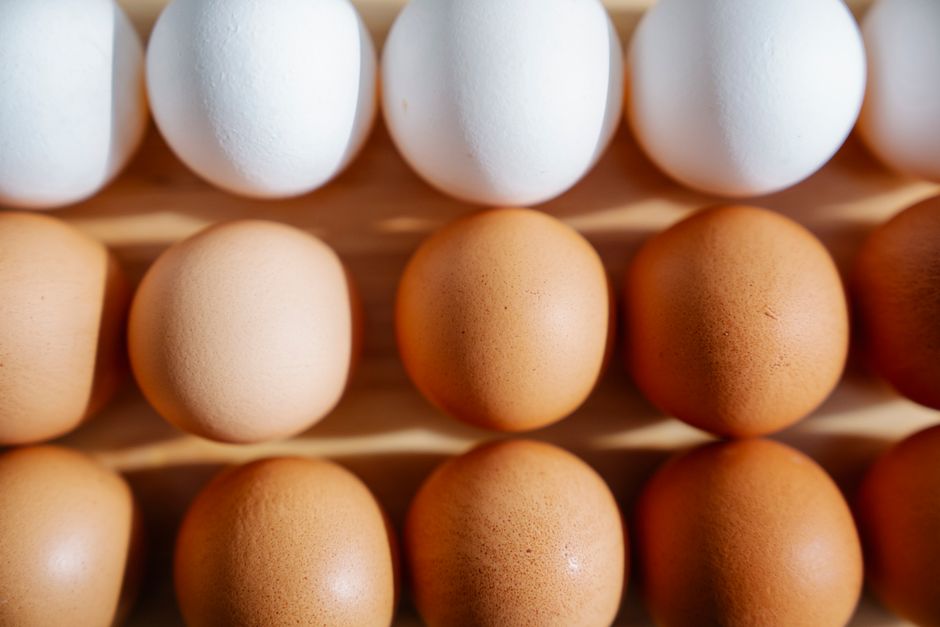
A single hen can lay at most one egg per day. That is the biological limit. No chicken on earth lays more than one egg in a 24-hour period. The reason is simple: it takes roughly 24 to 26 hours for a hen to form and lay one egg. So even the best layers, like Leghorns or Rhode Island Reds, max out at one egg per day — and they do not lay every single day. A healthy hen in her prime might lay five to six eggs per week. That is about 250 to 300 eggs per year. If you hear claims of a chicken laying two eggs in one day, those stories are either a rare fluke or a misunderstanding. Let us look at what the numbers actually mean.
Why Can a Chicken Only Lay One Egg Per Day?
The egg-making process in a hen takes almost a full day. After an egg is laid, the hen’s body begins a new cycle. The yolk forms in the ovary first. Then it moves into the oviduct where the egg white, membranes, and shell are added. This entire process takes between 24 and 26 hours.
Because the cycle takes longer than 24 hours, a hen cannot start a new egg the moment the previous one is laid. The timing shifts slightly each day. That is why a hen might lay at 8 AM one day, then 10 AM the next, and so on. Eventually the delay pushes the laying time so late that she skips a day entirely. This is called the “skip-a-day” pattern and it is completely normal.
Research from poultry science departments at universities like the University of Georgia and the University of California, Davis confirms that the 24-to-26-hour cycle is fixed for domestic chickens. No breed has evolved to produce eggs faster than that. The reproductive system simply cannot compress the process further.
How Many Eggs Does a Chicken Lay in a Year?
The annual egg count depends heavily on breed, age, and living conditions. A high-production breed like the White Leghorn can lay between 280 and 320 eggs per year under ideal management. That works out to roughly five to six eggs per week. Heritage breeds like the Wyandotte or Orpington produce fewer — around 180 to 250 eggs per year.
Age matters a lot. Hens start laying at about 18 to 20 weeks old. Their first year is the most productive. After that, egg production declines by about 10 to 15 percent each year. By the time a hen is three or four years old, she may lay only half as many eggs as she did in her first year. This decline is natural and well documented in agricultural extension publications from the USDA and land-grant universities.
Light exposure also plays a role. Hens need about 14 to 16 hours of light per day to maintain peak laying. In winter, when days are shorter, production naturally drops unless supplemental lighting is used. This is not a myth — it is a hormonal response driven by the pineal gland and light-sensitive cells in the hen’s brain.
Can a Chicken Ever Lay More Than One Egg Per Day?
In extremely rare cases, a hen may release two yolks within a short time and produce a double-yolk egg. That still counts as one egg. The hen does not lay two separate eggs that day. Double-yolk eggs happen in about 1 in every 1,000 eggs, according to data from the American Egg Board. They are more common in young hens whose reproductive systems are still regulating.
There are also occasional reports of a hen laying two eggs within a few hours of each other. These stories are almost always misidentified. What likely happened is that one egg was retained from the previous day and laid late, while the next day’s egg came early. That is not two eggs in one day — it is one delayed egg and one early egg overlapping by a few hours.
As of 2026, there is no clinical evidence of any hen reliably laying two eggs in a single 24-hour period. The biological mechanism does not allow it. If you see a video or a post claiming otherwise, it is almost certainly a misunderstanding or a hoax.





What Factors Affect Egg Production the Most?
Several factors determine how many eggs a hen actually lays, and they are all within your control if you keep chickens.
- Breed genetics — High-production breeds have been selected for decades to lay more eggs. Heritage and dual-purpose breeds lay fewer.
- Age — Peak production is the first year. After that, output declines steadily.
- Nutrition — Hens need a complete layer feed with at least 16 percent protein and adequate calcium. Without it, production drops and shell quality suffers.
- Light exposure — Fourteen to sixteen hours of light daily is the minimum for consistent laying. Artificial lighting can help in winter.
- Stress — Predators, loud noises, extreme temperatures, or changes in routine can stop laying for days or weeks.
- Molting — Once a year, hens stop laying for 8 to 12 weeks to shed and regrow feathers. This is natural and not a problem.
Research published in Poultry Science journal has shown that even minor stressors — like moving a hen to a new coop — can reduce egg production by 20 to 30 percent for up to two weeks. Consistency in environment matters more than most people realize.
How Many Eggs Can a Chicken Lay in a Week vs. a Month?
Let us translate the daily and yearly numbers into more practical time frames. A healthy hen in her first year of laying, with good nutrition and proper light, will produce about five to six eggs per week. That is roughly 20 to 24 eggs per month.
Here is a comparison table showing average egg production by breed type:
| Breed Type | Eggs Per Week | Eggs Per Year |
|---|---|---|
| White Leghorn | 5-6 | 280-320 |
| Rhode Island Red | 4-5 | 200-280 |
| Wyandotte | 3-4 | 180-220 |
| Orpington | 3-4 | 160-200 |
| Silkie | 2-3 | 100-120 |
These numbers assume ideal conditions. If a hen is stressed, underfed, or in poor health, the numbers will be lower. If a hen is in perfect conditions with high-quality feed and consistent light, she may hit the upper end of these ranges. The key point is that no hen averages more than one egg per day, and most do not lay every single day.
Common Misconceptions About Egg Laying
One of the most persistent myths is that hens need a rooster to lay eggs. That is false. Hens lay eggs regardless of whether a rooster is present. The eggs are simply unfertilized, which is what you buy at the grocery store. A rooster is only needed if you want fertile eggs for hatching chicks.
Another common claim is that feeding hens certain supplements can force them to lay more than one egg per day. This is not supported by any research. No feed additive, herbal supplement, or lighting trick can override the 24-to-26-hour biological cycle. Some products claim to boost production, but what they actually do is improve shell quality or help a hen maintain her natural laying rate during stress. They do not create extra eggs.
The idea that chickens lay eggs constantly and never stop is also incorrect. Every hen has a natural laying cycle. She lays for a stretch of days, then takes a break. Even the most productive hens have rest days. That is why the maximum is five to six eggs per week, not seven.
Frequently Asked Questions
Can a chicken lay two eggs in one day?
No. A hen’s reproductive cycle takes 24 to 26 hours, so only one egg can be laid per day. Rare double-yolk eggs still count as a single egg.
How many eggs can a chicken lay in a year?
High-production breeds like Leghorns lay 280 to 320 eggs per year. Heritage breeds lay 160 to 250. Most hens lay fewer as they age.
Do chickens lay eggs every day?
No. Even the best layers produce five to six eggs per week, not seven. They naturally skip days due to the timing of their egg formation cycle.
What breed of chicken lays the most eggs?
The White Leghorn is the most productive commercial layer, averaging 280 to 320 eggs per year. Rhode Island Reds are also strong layers at 200 to 280 eggs per year.
