
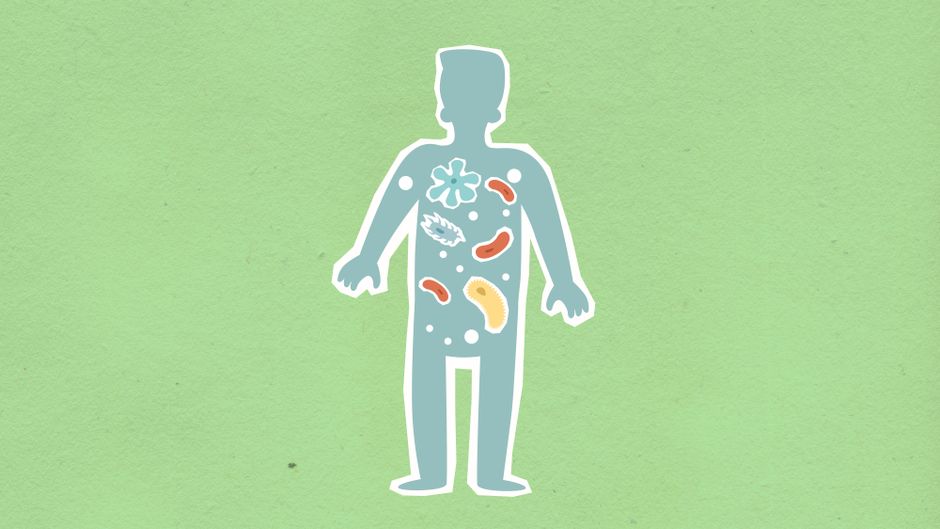
The human body contains an estimated 37.2 trillion cells. That number comes from a detailed 2013 study that combined data from hundreds of scientific papers. It is the best estimate scientists have, though the true number could range anywhere from 30 to 40 trillion, depending on body size and composition. To put that in perspective, there are more cells in your body than there are stars in the Milky Way galaxy.
Where Did the 37.2 Trillion Number Come From?
For decades, textbooks threw around numbers like 100 trillion cells without any real evidence. That changed in 2013 when a team of researchers published a comprehensive analysis in the journal Annals of Human Biology. The researchers reviewed existing studies on cell counts for every organ and tissue type in the body.
They found that the old 100 trillion estimate was simply wrong. The actual number is much lower. Their calculation of 37.2 trillion cells is now the standard reference point used by biologists and medical researchers worldwide.
It is worth noting that this number represents an average adult male. A smaller person, or a child, will have fewer cells. A larger person will have more. The margin of error is significant because counting cells in a living human is not possible — scientists have to estimate based on tissue samples and mathematical models.
Do Blood Cells Outnumber All Other Cells?
Red blood cells are the most numerous cell type in the body. They account for about 84% of your total cell count. That means roughly 31 trillion of your 37.2 trillion cells are red blood cells.
This surprises many people because red blood cells are tiny. They are about 7 to 8 micrometers in diameter, which is roughly one-tenth the width of a human hair. Their small size means millions of them fit into a single drop of blood.
The remaining 6 trillion or so cells are split between all other cell types. This includes muscle cells, skin cells, fat cells, nerve cells, and every other cell that makes up your organs and tissues.
Do Bacteria in the Body Outnumber Human Cells?
You have likely heard the claim that bacteria in your body outnumber your human cells by ten to one. That claim is false. It originated from a 1970s estimate that has been repeated so often it became accepted as fact.
In 2016, researchers at the Weizmann Institute of Science in Israel revisited this question. They calculated that the average adult human contains roughly 39 trillion bacterial cells, mostly in the gut. That puts the human-to-bacteria ratio at nearly one to one.
For a typical adult, the ratio is approximately 1.3 bacterial cells for every human cell. The exact ratio varies from person to person. It depends on gut health, diet, and recent illness. But the old ten-to-one claim is firmly debunked.





How Do Scientists Count Cells in the Body?
Scientists cannot count every cell individually. That would take centuries. Instead, they use a sampling method. Researchers take a known volume of tissue, count the cells in that sample under a microscope, and then multiply by the total volume of the organ.
For some cell types, the counting is more direct. Red blood cell counts are measured routinely in medical labs. A standard complete blood count test tells you exactly how many red blood cells are in a microliter of your blood. Multiply that by your total blood volume, and you get a precise number.
For organs like the liver or brain, the process is more complex. Researchers use stereology, a technique that estimates the number of cells in a three-dimensional structure based on two-dimensional tissue slices. This method is mathematically rigorous but still produces estimates with a margin of error.
Does the Number of Cells Change Throughout Life?
The number of cells in your body is not fixed. It changes dramatically from birth to adulthood. A newborn baby has roughly 2 to 3 trillion cells. A child has more. An adult has the full 37 trillion.
Your body is also constantly replacing cells. You lose about 50 to 70 billion cells every day through normal wear and tear. Your skin sheds millions of cells daily. Your intestines shed lining cells continuously. Red blood cells live only about 120 days before being replaced.
This means the body you have today is not made of the same cells you had a year ago. Most of your cells are replaced on a regular schedule. Some cell types, like neurons in the brain and muscle cells in the heart, are largely permanent and last your entire lifetime.
What About Cells That Are Not Human?
Your body is a walking ecosystem. Beyond your 37 trillion human cells, you carry trillions of microorganisms. Bacteria, fungi, and viruses live on your skin, in your mouth, and throughout your digestive tract.
These microorganisms are not human cells. They have their own DNA and their own biology. But they are essential to your health. Gut bacteria help digest food, produce vitamins, and regulate the immune system. Skin bacteria protect against harmful pathogens.
When scientists talk about the total number of cells in the human body, they usually mean human cells only. The microbiome is counted separately. Combined, the human body and its microbial passengers contain roughly 75 to 80 trillion cells.
Why Does the Exact Number Matter?
Knowing the number of cells in the body is not just a trivia question. It has real medical applications. Cell counts help doctors diagnose disease. Low red blood cell counts indicate anemia. High white blood cell counts signal infection or inflammation.
The 2013 study also corrected a scientific misunderstanding. For years, researchers assumed the body contained 100 trillion cells. This inflated number was used in research calculations and medical education. Correcting it to 37.2 trillion gives scientists a more accurate baseline for studying human biology.
Understanding cell counts also matters for cancer research. Cancer begins when a single cell divides uncontrollably. Knowing how many cells are in each organ helps researchers understand tumor growth rates and the likelihood of metastasis.
Frequently Asked Questions
How many cells are in the human body?
The human body contains approximately 37.2 trillion cells. This estimate comes from a 2013 study that remains the most comprehensive analysis of cell counts to date.
Are there more bacteria than human cells in the body?
No. The ratio of bacteria to human cells is roughly 1.3 to 1, not the often-quoted 10 to 1. For most adults, bacterial cells and human cells are nearly equal in number.
Which cell type is most common in the body?
Red blood cells are the most numerous, making up about 84% of all cells in the body. The average adult has roughly 31 trillion red blood cells.
Do all cells in the body have the same lifespan?
No. Red blood cells live about 120 days, skin cells are replaced every few weeks, and gut lining cells last only days. Brain neurons and heart muscle cells can last your entire lifetime.
