
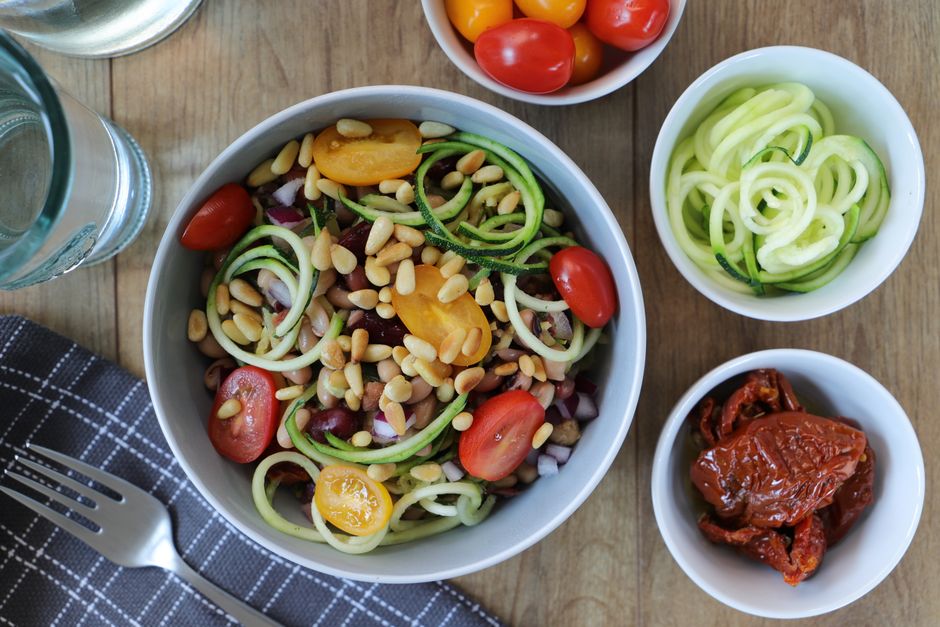
Zucchini is one of the lowest-carb vegetables you can eat. A one-cup serving of raw sliced zucchini contains about 3 grams of total carbohydrates and roughly 1 gram of net carbs. This makes it a staple for low-carb and keto diets, but it is also just a healthy, hydrating vegetable for anyone watching their carbohydrate intake.
How Many Carbs In Zucchini? Facts by Serving Size
Carb counts vary depending on how you measure the zucchini. A medium whole zucchini, which is about 6 to 7 inches long, contains roughly 6 grams of total carbohydrates. A full pound of zucchini contains about 9 grams of total carbs.
Here is the breakdown for common serving sizes:
- 1 cup raw sliced zucchini: ~3 grams total carbs, ~1 gram net carbs
- 1 medium zucchini (about 196 grams): ~6 grams total carbs
- 1 cup cooked zucchini: ~4 grams total carbs
- 1 cup spiralized zucchini noodles: ~3 grams total carbs
The fiber content is modest. A cup of raw zucchini provides about 1 gram of fiber. Net carbs, which are total carbs minus fiber, are what your body actually absorbs and uses for energy. For most people, zucchini is a very low-impact vegetable on blood sugar.
Nutritional Profile Beyond Carbs
Zucchini is mostly water. It is about 94 percent water by weight, which explains why it is so low in calories and carbohydrates. A one-cup serving has only about 20 calories.
It provides meaningful amounts of several nutrients. Zucchini is a good source of vitamin C, providing about 20 percent of the daily value per cup. It also contains vitamin B6, potassium, and manganese. The skin holds much of the fiber and antioxidants, so leaving it on is the better choice nutritionally.
Zucchini contains carotenoids like lutein and zeaxanthin. These compounds are associated with eye health, though the amounts in zucchini are not as high as in leafy greens or carrots.
How Zucchini Compares to Other Vegetables
Zucchini sits at the low end of the carbohydrate spectrum among vegetables. This is useful context when planning meals.
| Vegetable (1 cup raw) | Total Carbs | Net Carbs |
|---|---|---|
| Zucchini | ~3 grams | ~1 gram |
| Broccoli | ~6 grams | ~4 grams |
| Cauliflower | ~5 grams | ~3 grams |
| Green beans | ~8 grams | ~5 grams |
| Carrots | ~12 grams | ~9 grams |
| Corn | ~27 grams | ~24 grams |
These figures come from standard USDA food composition data. The comparison shows that zucchini is a reasonable choice even compared to other low-carb vegetables like broccoli and cauliflower.





Does Cooking Change the Carb Count?
Cooking does not change the actual carbohydrate content of zucchini. The vegetable contains the same amount of carbs whether raw or cooked. What changes is the volume.
Zucchini releases water when cooked. A cup of cooked zucchini contains more zucchini by weight than a cup of raw zucchini, which is why the carb count appears slightly higher. If you weigh your food, the carb count stays the same. If you measure by cup, cooked zucchini will have slightly more carbs per cup.
Frying or adding sauces changes the picture entirely. A breaded and fried zucchini slice is no longer a low-carb food. The coating adds significant carbohydrates. The same applies to zucchini cooked in sugary glazes or heavy batters.
Zucchini Noodles and Low-Carb Substitutions
Spiralized zucchini, often called zoodles, is one of the most popular low-carb substitutes for pasta. A cup of zucchini noodles has about 3 grams of total carbs. The same volume of cooked spaghetti has about 40 grams.
This substitution works well for many people, but there are practical differences. Zucchini noodles release water when cooked, which can make sauces watery. Salting the noodles and letting them sit for 10 minutes before cooking helps draw out excess moisture. Cooking them for only 2 to 3 minutes keeps them from turning mushy.
Zucchini also works as a substitute for lasagna sheets, tortillas, and even bread in some recipes. Each preparation changes the texture and moisture content, but the carbohydrate profile stays low.
Zucchini on Keto and Low-Carb Diets
Zucchini is widely accepted on ketogenic diets. A full cup of raw zucchini contains only about 1 gram of net carbs, which fits easily into even a strict 20-gram daily carb limit.
It is also a practical vegetable for low-carb eating because it is versatile. You can eat it raw with dip, grill it, roast it, or turn it into noodles. It does not have a strong flavor, so it takes on the seasoning of whatever you cook it with.
One caution applies to zucchini-based products sold in stores. Zucchini chips, zucchini bread, and pre-made zucchini pasta dishes often contain added flour, sugar, or other high-carb ingredients. Check the label. A food made from zucchini is not automatically low in carbs.
Blood Sugar Impact
Zucchini has a minimal effect on blood sugar. Its glycemic index is low, and the small amount of carbohydrate it contains is released slowly because of the fiber and water content.
For people with diabetes or prediabetes, zucchini is a safe vegetable choice. It provides volume and nutrients without causing glucose spikes. The American Diabetes Association includes non-starchy vegetables like zucchini on its list of foods to emphasize, though specific recommendations can change over time.
That said, zucchini alone will not lower blood sugar. No food does. It simply does not raise blood sugar much, which makes it a useful part of a balanced meal.
Common Myths About Zucchini and Carbs
One myth is that zucchini is a “negative calorie” food. This idea suggests that digesting zucchini burns more calories than the vegetable provides. No reliable evidence supports this. Zucchini is very low in calories, but the energy cost of digestion does not exceed the calories it contains.
Another myth is that all green vegetables are equally low in carbs. This is not true. Peas and corn are much higher in carbohydrates than zucchini. Even some leafy green vegetables contain more carbs per cup than zucchini, though the differences are small.
A third misconception is that zucchini noodles are nutritionally equivalent to pasta. They are lower in carbs and calories, but pasta provides more iron and B vitamins. If you replace pasta with zucchini noodles, you may need to get those nutrients from other foods.
Frequently Asked Questions
Is zucchini a low-carb vegetable?
Yes, zucchini is one of the lowest-carb vegetables available. A cup of raw sliced zucchini has about 3 grams of total carbs and roughly 1 gram of net carbs.
How many net carbs are in a whole zucchini?
A medium whole zucchini contains about 6 grams of total carbs and approximately 4 to 5 grams of net carbs. The exact amount depends on the size of the vegetable.
Can I eat zucchini on a keto diet?
Yes, zucchini fits easily into a keto diet. A one-cup serving contains about 1 gram of net carbs, which leaves plenty of room within a typical daily carb limit.
Does cooking zucchini increase its carb content?
No, cooking does not change the carbohydrate content of zucchini itself. The carb count appears slightly higher per cup when cooked because water loss makes the zucchini more concentrated by volume.
