
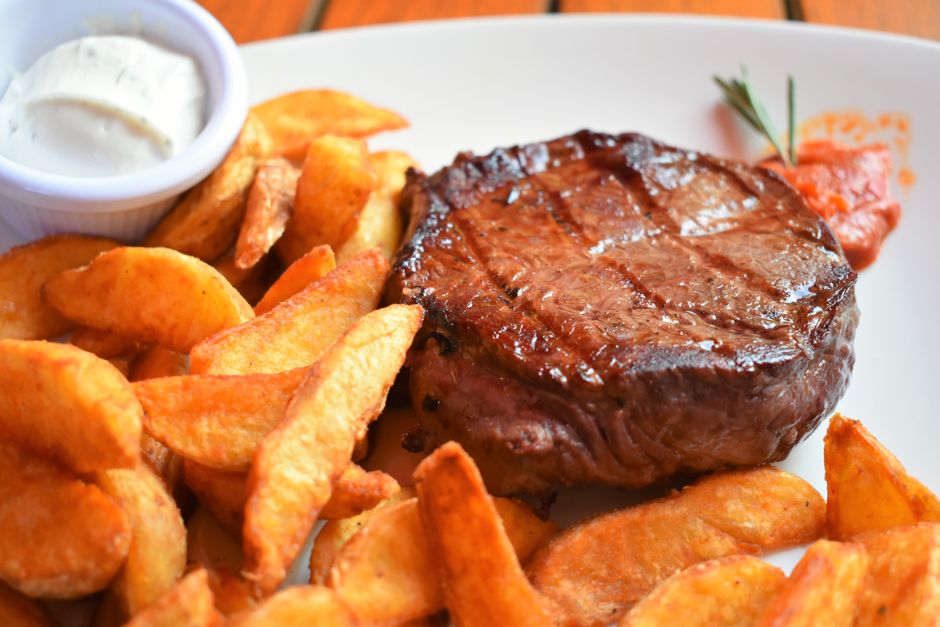
Steak calories depend on three things: the cut, how much fat it contains, and how you cook it. A 3-ounce serving of lean sirloin has about 160 calories, while the same size ribeye can have 290 calories or more. Cooking methods that add fat, like pan-searing with butter, increase the final calorie count. To get an accurate number, you need to look at the specific cut, trim level, and any added oil or butter.
How Many Calories Are in Different Cuts of Steak?
The USDA provides standardized calorie data for common beef cuts. Numbers are for a 3-ounce cooked portion (about the size of a deck of cards) after visible fat is trimmed.
- Top Sirloin (lean): 150–160 calories
- Filet Mignon (tenderloin, lean): 180–190 calories
- Strip Steak (New York strip): 200–220 calories
- T-Bone (includes strip and tenderloin): 220–240 calories
- Ribeye (heavy marbling): 270–290 calories
- Flank Steak (lean, chewy): 160–170 calories
- Skirt Steak (moderate marbling): 200–210 calories
These figures assume the steak is cooked without added fat. Marbling—the white flecks of fat within the muscle—is the main reason ribeye has more calories than sirloin.
How Does Fat Content Affect Calorie Count?
Fat provides 9 calories per gram, while protein provides 4. A steak that is 80% lean and 20% fat will have more than double the fat calories of a 95% lean cut. The USDA assigns lean cuts as having less than 10 grams of fat per 100 grams of meat. Regular steaks can have 20 grams or more per 100 grams.
Visible fat—the white rim on the edge of the steak—adds about 50 to 100 extra calories per ounce if eaten. Trimming that fat before or after cooking reduces the calorie count significantly. But the fat inside the muscle (marbling) cannot be removed, so highly marbled cuts like ribeye will always be higher in calories regardless of trimming.
One gram of fat from steak has the same 9 calories as one gram of butter fat. The type of fat is mostly saturated and monounsaturated, but the calorie density is the same.
How Does Cooking Method Change the Calories?
Grilling, broiling, or roasting steak without added oil adds zero extra calories. The moisture loss during cooking concentrates the existing calories, but the total calorie content of the meat itself does not increase.
Pan-searing changes things. If you cook steak in a skillet with oil or butter, some of that fat stays on the steak. A tablespoon of cooking oil (olive, canola, avocado) adds about 120 calories. A tablespoon of butter adds about 100 calories. If you baste the steak with butter repeatedly during cooking, you can add 100 to 200 extra calories depending on how much butter is absorbed.
Butter basting is common in restaurants. A restaurant filet mignon may have 180 calories from the meat alone but end up at 300 to 350 calories after butter basting. At home, you control how much added fat you use.
Frying steak in deep oil is uncommon but would add substantial calories—roughly 50 to 100 calories per tablespoon of oil absorbed, depending on breading.





Does Trimming the Fat Reduce Calories?
Yes. Removing visible fat before eating reduces fat intake and lowers the calorie count. A 3-ounce ribeye with a 1/4-inch fat cap can have 30 to 50 more calories than the same cut trimmed completely.
However, trimming does not remove the marbled fat inside the muscle. A trimmed ribeye will still have more calories than a trimmed sirloin because of marbling. The USDA considers “lean” beef to have less than 10 grams total fat per 100 grams. Many steaks exceed that even after trimming.
If you are counting calories closely, choose cuts that are naturally lean (sirloin, flank, tenderloin) and trim any external fat before cooking.
How Many Calories in Steak With Butter or Oil?
This depends on how much fat you add. A quick estimate:
- 1 teaspoon oil or butter: about 30–40 calories
- 1 tablespoon oil: about 120 calories
- 1 tablespoon butter: about 100 calories
- Butter basting (2–3 tablespoons used, some absorbed): 100–200 extra calories
If you pan-sear a 3-ounce sirloin (160 calories) in 1 tablespoon oil, the total is about 280 calories. If you baste a ribeye (290 calories) with 2 tablespoons butter, the total can reach 490 calories or more.
Restaurant steaks often have more added fat than home-cooked ones. You can ask for no added butter or oil when dining out.
Does Steak Doneness Affect Calories?
Doneness itself does not change the calorie content of the meat. A rare steak and a well-done steak have the same number of calories per gram of protein and fat. The difference is moisture loss. Well-done steak loses more water weight, so a 3-ounce serving of well-done steak contains slightly more protein and fat (and therefore slightly more calories) by weight than a 3-ounce serving of rare steak, because more water has evaporated. But if you weigh the raw steak and cook it, the total calories in the whole piece do not change. The effect is minimal for most people—roughly 5 to 10 calories difference per 3 ounces.
Frequently Asked Questions
How many calories in a ribeye steak?
A 3-ounce cooked ribeye steak with visible fat trimmed has about 270 to 290 calories. A 6-ounce ribeye has about 540 to 580 calories before any added oil or butter.
How many calories in a sirloin steak?
A 3-ounce cooked top sirloin steak has about 150 to 160 calories. It is one of the leanest common steak cuts.
Does cooking with butter increase calories?
Yes. Each tablespoon of butter adds about 100 calories. If you baste the steak with butter during cooking, you can add 100 to 200 extra calories.
How many calories in a 6-ounce steak?
It depends on the cut. A 6-ounce sirloin has about 300 to 320 calories. A 6-ounce ribeye has about 540 to 580 calories. Cooking with oil or butter adds more.
