
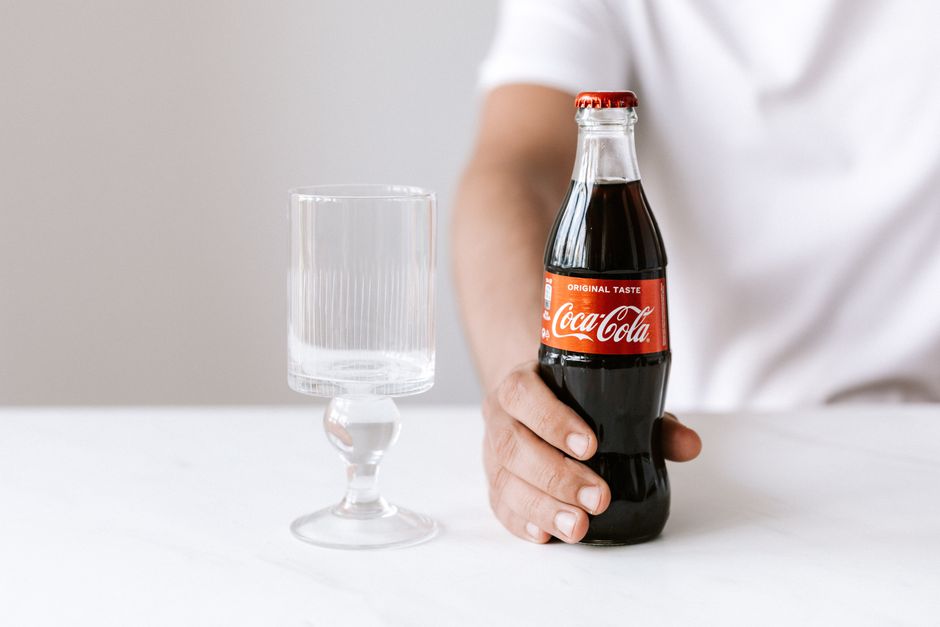
A standard 12-ounce can of Coca-Cola contains 140 calories. That number comes from the sugar in the drink and nothing else. There is no fat, no protein, and no fiber in a regular Coke — just carbonated water, sweetener, caramel color, phosphoric acid, natural flavors, and caffeine.
That 140-calorie figure applies to the classic red can sold in the United States. Different sizes and different versions of the drink carry different numbers, and those differences matter more than most people realize.
How Many Calories Does A Can Of Coca Cola Have?
A 12-ounce can of regular Coca-Cola has 140 calories, all of them from added sugar. The can contains 39 grams of carbohydrate, entirely in the form of sugar, and 39 grams of sugar equals roughly 10 teaspoons.
The math is straightforward. Sugar provides about 4 calories per gram. Multiply 39 grams by 4 and you get 156, but the actual label rounds to 140 because not all of the carbohydrate content is fully metabolized the same way. The number on the Nutrition Facts panel is the one to trust.
For context, the American Heart Association advises that most women limit added sugar to no more than 25 grams per day and most men to no more than 36 grams per day. A single 12-ounce can exceeds both of those daily limits on its own.
One detail worth knowing: the calories in a Coke are entirely “empty” in the nutritional sense. The drink provides no vitamins, no minerals, no protein, and no fiber. It is sugar water with flavoring.
How Many Calories Are In Different Sizes And Versions?
Calorie counts scale with volume, so the size of the container is the main variable. Coca-Cola’s own published nutrition data lists the following values.
| Product | Size | Calories | Sugar |
|---|---|---|---|
| Coca-Cola Classic | 7.5 fl oz mini can | 90 | 25 g |
| Coca-Cola Classic | 12 fl oz can | 140 | 39 g |
| Coca-Cola Classic | 16.9 fl oz bottle | 200 | 55 g |
| Coca-Cola Classic | 20 fl oz bottle | 240 | 65 g |
| Coca-Cola Classic | 1 liter bottle | 400 | 108 g |
| Diet Coke | 12 fl oz can | 0 | 0 g |
| Coke Zero Sugar | 12 fl oz can | 0 | 0 g |
Diet Coke and Coke Zero Sugar contain no calories because they are sweetened with non-nutritive sweeteners such as aspartame instead of sugar or high-fructose corn syrup. The two products use different sweetener blends and flavor systems, which is why they taste different from each other, but neither contributes calories.
The jump from a 12-ounce can to a 20-ounce bottle is worth pausing on. That larger bottle adds 100 calories and 26 grams of sugar — more than doubling the sugar load of the can most people picture when they think of “a Coke.”
Does The Type Of Sugar Change The Calorie Count?
No. Whether the drink is sweetened with high-fructose corn syrup or cane sugar, the calorie count per ounce is essentially the same, because both are roughly half glucose and half fructose.
This is where a persistent myth lives. “Mexican Coke,” made with cane sugar rather than high-fructose corn syrup, is widely marketed as a healthier alternative. From a calorie and sugar standpoint, it is not. A 12-ounce bottle of cane-sugar Coke contains the same 140 calories and 39 grams of sugar as the standard version.
The difference between the two is flavor and mouthfeel, not nutrition. Some people prefer the taste of cane sugar. That is a legitimate preference. It is not a health advantage.
There is ongoing scientific debate about whether fructose and glucose are handled differently by the body in ways that affect metabolism and appetite. The evidence there is mixed and involves much more than soda. What is not in dispute is that a can of Coke delivers the same total calories regardless of which sugar was used to make it.





Why Liquid Calories Are Easy To Overlook
Calories from drinks tend to be less satiating than calories from solid food. This is one of the more consistent findings in nutrition research, and it helps explain why sugary drinks are so often linked to weight gain.
When you eat 140 calories of food, you chew, you swallow, your stomach fills, and hormones that signal fullness get released. When you drink 140 calories of soda, much of that mechanical and hormonal signaling is reduced. People who drink their calories often do not compensate by eating less later.
That does not mean a single can of Coke will cause weight gain. It means the calories in it are easier to consume without noticing than the same number of calories on a plate.
For someone drinking one can a day, that is about 51,000 calories over a year. Whether that translates into weight change depends on the rest of the diet and on total energy balance, but the arithmetic shows why daily soda habits tend to matter.
What Else Is In A Can Besides Calories?
A 12-ounce can of Coca-Cola contains 34 milligrams of caffeine and 45 milligrams of sodium. It also contains phosphoric acid, which gives the drink its tartness.
The caffeine content is roughly a third of what you would get from a typical 8-ounce cup of coffee. For most healthy adults, that amount is not a concern. For people who are sensitive to caffeine, or who drink several cans a day, it adds up.
The phosphoric acid is worth a brief mention because it comes up in discussions about bone health. Some observational studies have suggested an association between cola consumption and lower bone mineral density, particularly in women. The evidence is not conclusive, and it is difficult to separate the effect of the soda itself from the fact that people who drink a lot of soda may drink less milk. The relationship is not well established.
What is well established is simpler: the main thing a regular Coke delivers is sugar and calories.
How Does A Can Compare To Other Common Drinks?
Comparing a Coke to other beverages helps put the 140 calories in perspective. The values below reflect standard US formulations.
- Orange juice, 12 fl oz: about 165 calories, mostly from naturally occurring fruit sugar
- Whole milk, 12 fl oz: about 220 calories, with protein and fat
- Sweetened iced tea, 12 fl oz: varies widely, often 100 to 120 calories
- Black coffee, 12 fl oz: about 2 calories
- Sparkling water, 12 fl oz: 0 calories
Orange juice is a useful comparison because it is often assumed to be healthier. It does contain vitamin C and some naturally occurring nutrients that Coke lacks. But it carries a similar sugar load and a similar calorie count. Fruit juice and soda are not nutritionally identical, but they are closer in sugar content than most people expect.
The drink with the biggest gap is water. Replacing one daily can of Coke with water removes 140 calories and 39 grams of sugar from the day without requiring any other change.
Frequently Asked Questions
How many calories are in a 12 oz can of Coca-Cola?
A standard 12-ounce can of regular Coca-Cola contains 140 calories. All of those calories come from 39 grams of added sugar.
Does Diet Coke have any calories?
No, Diet Coke contains zero calories because it is sweetened with non-nutritive sweeteners instead of sugar. The same is true for Coke Zero Sugar.
Is Mexican Coke healthier than regular Coke?
No. Cane-sugar Coke has the same 140 calories and 39 grams of sugar per 12 ounces as the standard version. The difference is taste, not nutrition.
How much sugar is in a can of Coke?
A 12-ounce can contains 39 grams of sugar, which is roughly 10 teaspoons. That exceeds the American Heart Association’s recommended daily limit for added sugar for both men and women.
