
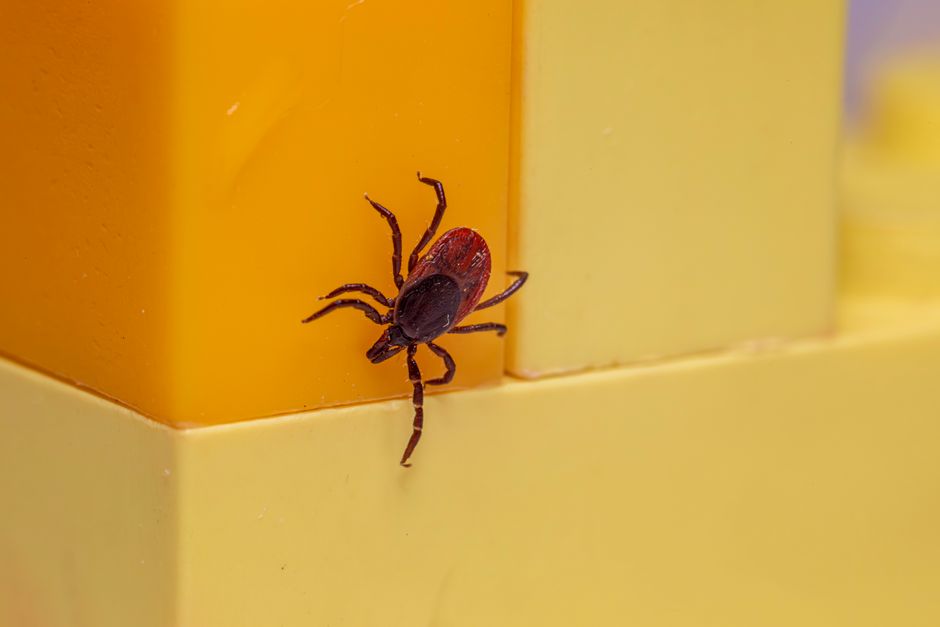
A tick’s survival without a host depends heavily on its life stage and species. Most ticks die within days to weeks if they cannot find a host, but some species can survive for months under the right conditions. The key factor is how much energy the tick has stored and what the environment provides.
Understanding tick survival matters for anyone who spends time outdoors, owns pets, or manages a yard. It helps explain why ticks seem to appear out of nowhere and why simply waiting them out is not a reliable strategy.
How Long Will A Tick Survive Without A Host?
Most ticks survive without a host for a period measured in weeks to months, not days. A newly hatched larva has the shortest window. An adult tick that has already fed at least once can last considerably longer.
The reason comes down to biology. Ticks are built to wait. Unlike mosquitoes that must feed frequently, ticks can slow their metabolism dramatically between meals. They enter a state of reduced activity and live off stored reserves from their previous blood meal.
Three variables control how long that lasts:
- Life stage — larvae have the least stored energy, adults the most
- Species — some ticks are far more resilient than others
- Environment — temperature and humidity change everything
In warm, dry conditions, a tick dehydrates and dies faster. In cool, humid conditions, it can wait much longer. This is why tick activity tends to spike in spring and fall rather than the hottest part of summer.
Which Tick Species Survives the Longest?
The blacklegged tick, also called the deer tick, is among the most resilient. It transmits Lyme disease and other infections. Its ability to survive extended periods without feeding is part of why it spreads so effectively across regions.
The American dog tick and lone star tick are also common in the United States. Each has slightly different survival patterns. The brown dog tick is unusual because it can complete its entire life cycle indoors, meaning it does not depend on outdoor humidity the way other species do.
Survival differences between species are real but not dramatic enough for a homeowner to plan around. The practical takeaway is the same: assume ticks in your area can survive longer than you might expect.
How Does Life Stage Affect Tick Survival?
A tick goes through four stages: egg, larva, nymph, and adult. Each feeding stage requires a blood meal before it can move to the next. If it cannot find a host, it eventually runs out of energy.
Larvae are the most vulnerable. They hatch with limited reserves and need to feed relatively soon. Nymphs are hardier, and adults are the most durable. An adult tick that has already fed once can survive many months without another meal.
This staged survival has a direct consequence for disease risk. Nymphs are small — roughly the size of a poppy seed — and easy to miss during a skin check. They are also responsible for a large share of tick-borne disease transmission because they feed in spring and early summer when people are outdoors.





What Environmental Conditions Keep Ticks Alive Longer?
Humidity is the single biggest factor. Ticks lose water through their outer surface, and in dry air they dehydrate and die. In humid environments, they can replace that water loss and remain dormant for extended periods.
Temperature plays a secondary role. Cold slows a tick’s metabolism, which conserves energy but also limits movement. Warmth speeds up metabolism, which burns reserves faster. Extreme heat combined with low humidity is lethal fairly quickly.
This explains a common misconception. People assume a hard freeze kills off ticks for the season. It does not reliably do so. Many ticks survive winter by sheltering in leaf litter, under bark, or in other insulated spots. Some remain active on mild winter days.
Can Ticks Survive Inside a House Without a Host?
Most ticks that end up indoors do not survive long. A tick that hitchhikes inside on clothing or a pet faces dry indoor air and no host. Under typical home conditions, it will usually die within days to a few weeks.
The brown dog tick is the clear exception. It can live and reproduce entirely indoors, hiding in cracks, behind baseboards, and in pet bedding. An infestation of this species does not require any outdoor exposure at all.
For other species, finding a tick indoors is not a sign of an indoor infestation. It is a sign that one tick came in from outside. The bigger concern is the pet or person it may have already fed on.
What Does This Mean for Tick Control?
Because ticks can survive for weeks or months without feeding, you cannot simply wait them out. Control has to target the tick at every stage and in the places it hides.
Practical steps grounded in established public health guidance include:
- Keep grass short and clear leaf litter from areas where people and pets spend time
- Create a barrier of wood chips or gravel between lawn and wooded areas
- Check pets and people thoroughly after time outdoors
- Use tick repellent and treat clothing according to product label directions
- Remove a tick promptly if you find one attached
Prompt removal matters because disease transmission is not instant. For most infections, a tick generally needs to remain attached for an extended period before it can transmit pathogens. Removing a tick sooner rather than later reduces that risk.
If you find an attached tick, use fine-tipped tweezers and pull straight up with steady pressure. Do not crush the tick, and do not apply petroleum jelly, nail polish, or a lit match. Those methods are not supported by evidence and can increase the chance of the tick releasing its contents into the bite.
Why Tick Survival Time Matters for Disease Risk
A tick that survives longer has more chances to find a host. That is the core reason tick-borne diseases spread so efficiently in some regions and not others.
Climate and habitat shape tick populations over years, not days. Warmer winters and longer warm seasons have been linked in research to expanded tick ranges in parts of North America. This does not mean every warm year produces more ticks everywhere, but the general trend has been documented.
The bottom line for anyone spending time outdoors is simple. Ticks are patient. They can wait weeks or months for a host, and they are often hard to see. Regular checks and prompt removal remain the most reliable defenses.
Frequently Asked Questions
How long can a tick live without a host?
Most ticks survive without a host for weeks to months, depending on species, life stage, and environment. Adults generally last longer than larvae, and humid conditions extend survival.
Do ticks die in the winter?
Not reliably. Many ticks survive cold weather by sheltering in leaf litter, under bark, or in other insulated spots, and some stay active on mild winter days.
Can ticks live indoors without a host?
Most ticks that come indoors die within days to a few weeks because of dry air and no host. The brown dog tick is the exception and can complete its life cycle entirely indoors.
How long does a tick need to be attached to transmit disease?
For many tick-borne infections, transmission generally requires the tick to remain attached for an extended period, often many hours to days. Removing a tick promptly reduces that risk.
