
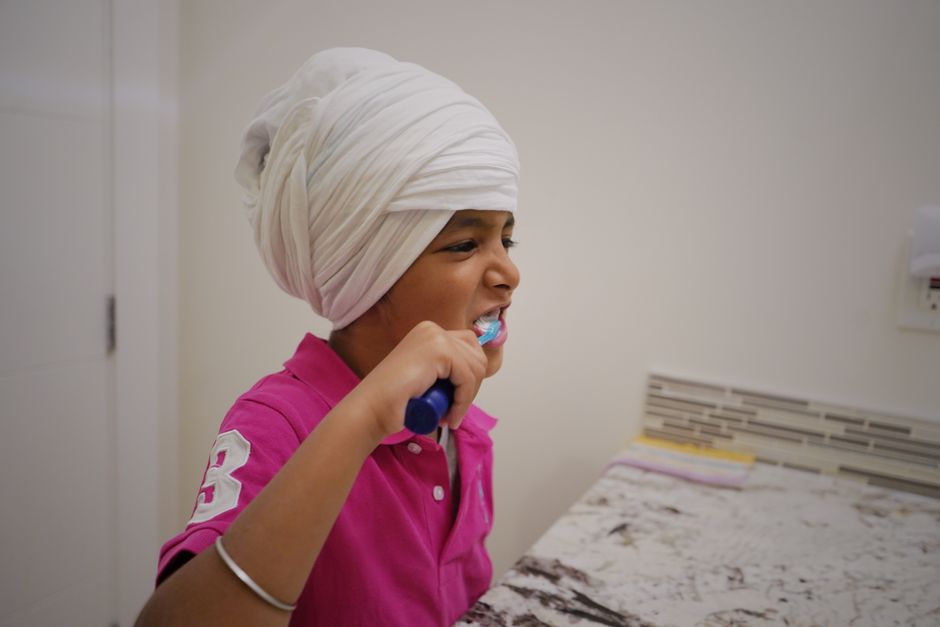
Most dentists recommend brushing your teeth for two minutes, twice a day. This is the standard advice from major dental organizations worldwide. Brushing for less than two minutes leaves plaque behind, while brushing longer does not add meaningful benefit and can actually damage your enamel and gums.
Why Two Minutes Is the Standard
The two-minute rule is not a random number. Research has looked at how long it actually takes to remove plaque from all surfaces of your teeth. Studies consistently show that two minutes is the minimum time needed to clean all tooth surfaces effectively.
Most people significantly overestimate how long they brush. In studies where people were asked to brush and then timed, most brushed for only 45 to 70 seconds. They believed they had brushed for two minutes or longer. This gap between perception and reality is why many dentists recommend using a timer.
Plaque is a sticky film of bacteria that forms on teeth constantly. It takes time to physically disrupt that film. Rushing through your brushing leaves plaque in the hard-to-reach areas, especially along the gumline and between teeth.
What Happens When You Brush Too Little
Brushing for less than two minutes leaves plaque behind. Over time, that plaque hardens into tartar, which cannot be removed by brushing alone. Tartar buildup leads to gum inflammation and cavities.
The areas most often missed are the inner surfaces of the back teeth and the gumline. These are the hardest areas to reach and the first places where gum disease develops. When you shorten your brushing time, these areas suffer the most.
Bacteria in plaque produce acids that attack tooth enamel. The longer plaque sits on your teeth, the more damage it does. A 30-second brush removes only the most obvious debris and leaves the bacterial film largely intact.
What Happens When You Brush Too Long
Brushing longer than two minutes does not clean better. Once plaque is removed, additional brushing only wears away enamel and irritates gums. Some people brush for five or ten minutes thinking more is better. This is a mistake.
Overbrushing can cause enamel erosion and gum recession. When gums recede, the roots of your teeth become exposed. This leads to sensitivity and increases your risk of decay on the root surfaces.
The pressure you apply matters as much as the time. Many people brush too hard. Aggressive brushing can damage teeth even within the two-minute window. The goal is gentle, thorough cleaning, not scrubbing.





How to Brush for the Full Two Minutes
Most people need a strategy to reach the full two minutes. Here are approaches that work:
- Use a timer or the timer on your phone
- Split your mouth into four quadrants and spend 30 seconds on each
- Use an electric toothbrush with a built-in two-minute timer
- Play a two-minute song while you brush
Electric toothbrushes with timers are particularly helpful. Many models pulse every 30 seconds to tell you when to move to the next quadrant of your mouth. This takes the guesswork out of timing.
If you prefer a manual toothbrush, the quadrant method works well. Spend 30 seconds on the upper right, 30 seconds on the upper left, then the lower right and lower left. This ensures every area gets equal attention.
Technique Matters More Than Time
Two minutes of poor technique is not enough. How you brush matters as much as how long you brush.
Hold your toothbrush at a 45-degree angle to your gums. Use short, gentle strokes. Brush in small circles rather than sawing back and forth. Clean the outer surfaces, inner surfaces, and chewing surfaces of every tooth.
Do not forget your tongue. Bacteria collect on the tongue and contribute to bad breath. Gently brush your tongue or use a tongue scraper as part of your routine.
Replace your toothbrush every three to four months. If the bristles are frayed, replace it sooner. Frayed bristles do not clean effectively and can harbor bacteria.
Is Brushing More Than Twice a Day Helpful?
Brushing twice a day is the established recommendation. Brushing after every meal is not necessary and can sometimes cause harm.
If you brush immediately after eating acidic foods or drinks, you brush acid into your enamel. Your enamel softens temporarily after acidic exposure. Brushing during this window can accelerate enamel wear. If you want to brush after a meal, wait at least 30 to 60 minutes.
Rinsing with water after meals is a reasonable alternative if you feel the need to do something. Chewing sugar-free gum also stimulates saliva, which helps neutralize acids and wash away food particles.
How Long Should You Brush Your Teeth for Children
Children should also brush for two minutes. The same timing applies once children have teeth that need cleaning.
For children under three, a smear of fluoride toothpaste the size of a grain of rice is sufficient. For children three and older, a pea-sized amount is appropriate. Parents should supervise brushing until children have the manual dexterity to brush effectively, usually around age seven or eight.
Children often need help building the two-minute habit. Using a timer or a fun song can make the process more engaging. Many children’s electric toothbrushes have built-in timers and playful features that encourage full brushing time.
What the Evidence Shows About Brushing Time
Research on brushing time has produced consistent findings. Studies measuring plaque removal at different brushing durations show that two minutes removes significantly more plaque than one minute. Extending beyond two minutes produces minimal additional plaque removal.
Some research suggests that even small increases in brushing time produce measurable improvements. Moving from 45 seconds to two minutes can meaningfully reduce plaque levels. This is why the two-minute recommendation is so firmly established.
The evidence on brushing frequency is also clear. Brushing twice daily is associated with lower rates of cavities and gum disease. Brushing once a day, regardless of duration, leaves plaque in place for extended periods.
Signs You Are Brushing Wrong
Certain signs indicate your brushing routine needs adjustment. If you notice any of these, talk to your dentist:
- Bleeding gums when you brush or floss
- Tooth sensitivity to hot, cold, or sweet foods
- Visible gum recession or longer-looking teeth
- Persistent bad breath
Bleeding gums are often a sign of gum inflammation, not a reason to brush harder. Many people respond to bleeding by brushing more aggressively. This makes the problem worse. Gentle, thorough brushing plus flossing is the correct approach.
If your gums bleed regularly, see your dentist. Bleeding can indicate gingivitis, which is reversible with good oral hygiene. Left untreated, it can progress to periodontitis, a more serious form of gum disease.
Frequently Asked Questions
Is brushing for two minutes twice a day enough?
Yes, for most people. Two minutes twice daily is the standard recommendation from dental organizations, and it is sufficient when combined with daily flossing.
What happens if I brush for only one minute?
One minute removes less plaque than two minutes, leaving more bacteria on your teeth and along your gumline. Over time, this increases your risk of cavities and gum disease.
Can brushing for five minutes damage my teeth?
Yes. Brushing longer than two minutes does not clean better and can wear away enamel and irritate your gums, leading to sensitivity and gum recession.
Does an electric toothbrush clean better than a manual one?
Electric toothbrushes are effective and many have built-in timers that help you brush for the full two minutes. Both types can clean well when used with proper technique.
