

Ultraviolet (UV) light can kill fungus in as little as a few seconds to a few minutes of direct exposure, but the exact time depends on the type of fungus, the UV wavelength, the intensity of the light, and whether the light can actually reach the fungus. For most household surfaces, a handheld UV-C device needs at least 10 to 30 seconds of direct, unobstructed exposure to inactivate surface fungi, while porous materials like fabric or wood may require several minutes or may never be fully treated because the fungus hides below the surface.
How Does UV Light Actually Kill Fungus?
UV light kills fungus by damaging its DNA and RNA. When fungal cells absorb UV radiation, particularly in the UV-C range, the energy creates bonds between adjacent thymine bases in the DNA strand. These bonds, called thymine dimers, distort the DNA structure and prevent the fungus from replicating or producing the proteins it needs to survive.
This damage is not instant cell death. A fungus that has absorbed a lethal dose of UV radiation may still appear intact under a microscope. It simply cannot reproduce. For practical purposes, the fungus is considered “inactivated” because it can no longer grow or spread, even though the physical spore or cell body may remain on the surface for some time.
The key distinction here is between killing and inactivating. Many studies measure UV effectiveness by whether the fungus can form a new colony after exposure. This is a more useful measure for real-world settings than whether the cell visibly disintegrated.
How Long Does It Take For UV Light To Kill Fungus?
The shortest answer is that a high-intensity UV-C lamp can inactivate fungal spores on a smooth, non-porous surface in under 10 seconds. Most commercial UV sanitizing wands and boxes are designed to deliver a dose that achieves this within 10 to 60 seconds of direct exposure.
However, the practical time is almost always longer than the theoretical minimum. Fungal spores are among the hardiest organisms on earth. They have thick protective walls that shield the genetic material inside. Some spores, particularly those from molds like Aspergillus or Stachybotrys, require a higher UV dose than common bacteria like E. coli or Staph.
Research consistently shows that UV-C light is highly effective against a broad range of fungi. The challenge is not whether UV works — it does — but whether the conditions allow it to work. The light must strike the fungus directly. UV light does not penetrate solid materials. It cannot go around corners, through dust, or into the fibers of a carpet.
Why Does Surface Type Change the Time?
UV light works on line of sight. If the light cannot see the fungus, the fungus survives. This single fact explains most of the variation in kill times across different surfaces.
On smooth, non-porous surfaces like glass, metal, plastic, or glazed tile, fungal spores sit on the surface where they are fully exposed. A UV-C lamp can inactivate them quickly — often in 10 to 30 seconds. These surfaces are the best candidates for UV treatment.
On porous surfaces like wood, drywall, concrete, fabric, or upholstery, the situation changes completely. Fungal spores and hyphae (the thread-like structures that make up the fungus) can lodge in microscopic crevices, pores, or between fibers. UV light cannot penetrate these spaces. The surface may look clean after treatment, but live fungus remains just below the visible surface.
For porous materials, UV light is not a reliable treatment. Some clinicians and researchers note that treating the surface with UV may reduce surface contamination but will not eliminate the fungal reservoir. In these cases, physical removal — scrubbing, vacuuming, or replacing the material — is necessary.
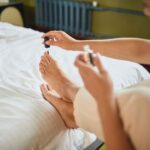


What About UV Light for Toenail Fungus?
UV light is frequently marketed for treating toenail fungus. The evidence here is limited and the biology is challenging. Toenail fungus lives within and beneath the nail plate, not just on the surface. UV-C light cannot penetrate the nail keratin to reach the fungus underneath.
Some devices use UV-A light, which penetrates deeper than UV-C, but UV-A is far less effective at damaging fungal DNA. No large human trials have confirmed that UV light alone can cure toenail fungus. The evidence is mixed, and most dermatologists do not recommend UV devices as a standalone treatment for nail infections.
Oral antifungal medications and topical prescription treatments remain the standard of care for toenail fungus. If you are considering a UV device for this purpose, the honest position is that the evidence does not currently support it as a reliable cure.
Can UV Light Treat Mold in Your Home?
UV light can inactivate mold spores that are directly exposed to the light. This has been demonstrated repeatedly in laboratory settings. In real-world home conditions, however, the story is more complicated.
Mold growth in a home usually means the fungus has colonized a material — drywall, wood, insulation, or carpet. The visible dark spots are colonies of millions of spores and hyphae. Many of these spores are embedded in the material, not sitting on the surface. UV light will kill the surface spores it reaches, but the deeper colony remains alive and will continue to release new spores.
Some air purifiers incorporate UV-C lamps to kill mold spores in the air. These devices can be effective at inactivating airborne spores that pass through the unit. They do not, however, address mold that is already growing on surfaces. The mold colony must be physically removed.
If you have visible mold growth, the correct approach is to identify and fix the moisture source, then remove the contaminated material or clean it thoroughly with appropriate methods. UV treatment alone will not solve a mold problem.
Are UV Sanitizing Wands Safe to Use?
UV-C light is dangerous to human skin and eyes. Direct exposure can cause sunburn-like skin damage and a painful condition called photokeratitis, which is essentially a sunburn on the cornea. These injuries can occur in seconds of exposure, not minutes.
If you use a UV sanitizing device, follow these safety practices:
- Never look directly at the light source.
- Ensure the device automatically shuts off if it is turned face-up or tilted.
- Leave the room while the device is operating.
- Keep children and pets away from the area during and immediately after use.
- Do not use UV devices to treat skin conditions without explicit medical supervision.
The FDA has issued warnings about some UV wands that emit unsafe levels of radiation. Some devices also fail to deliver a sufficient dose to actually kill pathogens. If you purchase a UV device, choose one from a reputable manufacturer that provides third-party testing data.
What Is the Best Way to Use UV Light for Fungus?
For surfaces that are good candidates, the process is straightforward. Clean the surface first to remove dust and debris. UV light cannot penetrate a layer of dust, and particles can shadow the fungus from the light. Then position the UV lamp so it directly faces the surface at close range. The further the light is from the surface, the lower the intensity and the longer the required exposure time.
Most effective devices are designed to be used at a distance of 1 to 2 centimeters from the surface. At this distance, exposure times of 10 to 30 seconds are typically sufficient for smooth surfaces. If the device is held further away, increase the exposure time proportionally.
Move the device slowly across the surface to ensure every area receives adequate exposure. Overlapping passes are better than leaving gaps. After treatment, wipe the surface to remove dead spores and debris.
Remember that UV treatment is a surface disinfection method. It does not replace cleaning. It works best as an additional step after physical cleaning, not as a substitute for it.
When UV Light Is Not the Answer
UV light is not effective for treating fungal infections on the body. Skin, nails, and hair are living tissues that absorb UV radiation and can be damaged by it. The dose required to kill a fungal infection on skin would likely damage the skin itself.
UV light is also not a solution for systemic fungal infections, which affect internal organs. These require prescription antifungal medications taken orally or intravenously.
For environmental mold, UV light is a supplementary tool, not a primary treatment. The primary treatment is always moisture control and physical removal of contaminated materials.
If you have a fungal infection that is persistent, spreading, or causing significant symptoms, see a healthcare provider. Over-the-counter treatments and home devices have limits, and a medical professional can offer treatments that are proven to work.
Frequently Asked Questions
Can UV light kill fungus on skin?
UV light is not safe or effective for treating fungal infections on skin. The dose needed to kill fungus would likely damage the skin, and no clinical guidelines recommend this approach.
Does UV light kill mold spores in the air?
UV-C air purifiers can inactivate mold spores that pass through the unit. These devices do not treat mold already growing on surfaces, which requires physical removal.
How long should I use a UV wand on a surface?
For smooth, non-porous surfaces, hold the wand 1 to 2 centimeters away and move it slowly for 10 to 30 seconds per area. Porous surfaces like fabric or wood cannot be reliably treated with UV light.
Is UV light effective for toenail fungus?
The evidence is limited and no large human trials confirm UV light can cure toenail fungus. Standard treatment involves prescription oral or topical antifungal medications.
