
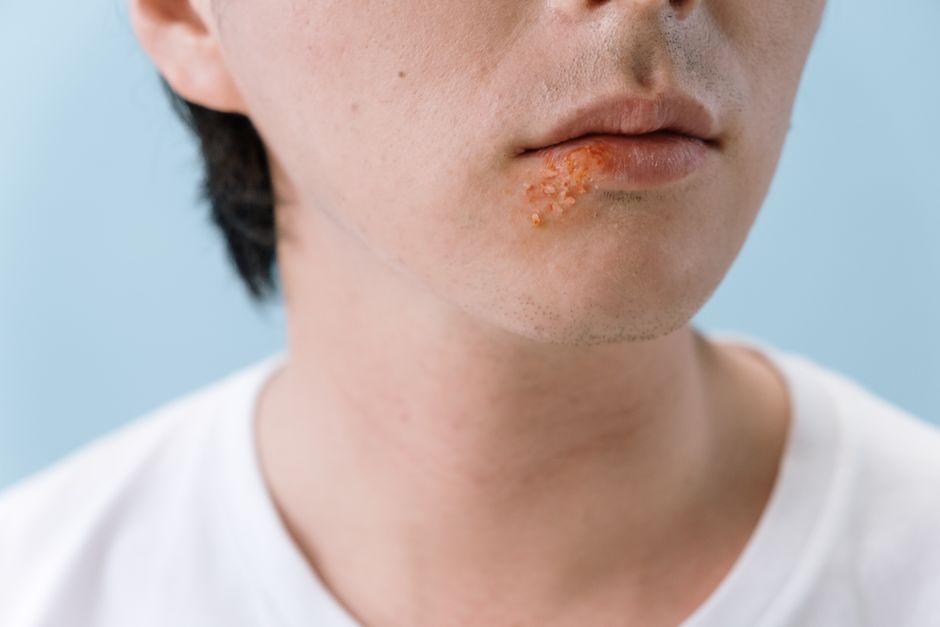
A cold sore outbreak typically lasts about 8 to 12 days from the first tingling sensation to complete healing. The process follows five distinct stages: tingling, blistering, weeping, crusting, and finally healing. While there is no cure for the herpes simplex virus that causes cold sores, antiviral treatments can shorten an outbreak and reduce its severity when started early.
What Causes Cold Sores?
Cold sores are caused by the herpes simplex virus, most commonly type 1 (HSV-1). The virus spreads through direct contact with an infected person’s skin or saliva. This includes kissing, sharing utensils, drinking glasses, lip balm, or towels.
Once you are infected, the virus stays in your body for life. It travels to nerve cells near your spine and remains dormant there. Most of the time, the virus causes no symptoms. But certain triggers can reactivate it and cause a new outbreak.
Common triggers include stress, illness, fever, fatigue, hormonal changes, sun exposure, and a weakened immune system. Some people get cold sores several times a year. Others may only have one outbreak and never have another.
How Long Do Cold Sores Last Stages And Treatment?
A cold sore runs its course in roughly 8 to 12 days. The timeline can vary from person to person. Some outbreaks resolve in as little as a week, while others may take up to two weeks or longer, especially if the sore becomes infected or the person has a weakened immune system.
The first outbreak after initial infection is often the most severe and can last longer than recurrent outbreaks. Recurrent outbreaks tend to be milder and shorter because your immune system has already developed antibodies against the virus.
Treatment can shorten the duration. Antiviral medications such as acyclovir, valacyclovir, and famciclovir are most effective when started within the first 24 to 48 hours of symptoms. These medications do not kill the virus or remove it from your body. They stop the virus from multiplying, which limits the size of the sore and speeds up healing.
The Five Stages of a Cold Sore
Cold sores develop in a predictable sequence. Knowing the stages helps you recognize an outbreak early and start treatment at the most effective time.
Stage 1: Tingling and Itching
This stage lasts 1 to 2 days. You may feel a burning, tingling, or itching sensation on or around your lip. This happens before any visible sore appears. The virus is active and multiplying in the skin cells at this point. This is the best time to start antiviral treatment.
Stage 2: Blister Formation
Small, fluid-filled blisters appear. These blisters are usually clustered together and may be red and swollen at the base. This stage typically lasts 1 to 2 days. The fluid inside the blisters contains live virus particles and is highly contagious.
Stage 3: Weeping and Ulceration
The blisters burst and release their fluid. This leaves a shallow, open sore that may look gray or yellowish. This is the most painful stage. It typically lasts 1 to 2 days. The risk of spreading the virus to others is highest during this stage.
Stage 4: Crusting and Scabbing
A crust or scab forms over the open sore. The scab may crack or bleed, especially when you move your mouth to eat or talk. This stage lasts about 3 to 4 days. The sore is still contagious even though the visible fluid is gone.
Stage 5: Healing
The scab falls off, revealing new skin underneath. The area may look slightly red or pink for a few days. This final stage lasts about 2 to 3 days. The skin may feel tight or dry as it finishes healing.




When Are Cold Sores Contagious?
A cold sore is contagious from the moment you feel the tingling sensation until the scab completely falls off. That means you can spread the virus even before you see a blister. Many people do not realize they are contagious during this early stage.
The virus can survive outside the body for a short time on surfaces like towels, cups, and lip balm. However, direct skin-to-skin contact is the most common way the virus spreads. Avoid kissing, oral sex, and sharing personal items until the sore is fully healed.
Cold sores can also spread to other parts of your own body. Touching a cold sore and then touching your eye can cause a serious eye infection called herpes keratitis. Washing your hands frequently during an outbreak reduces this risk.
Treatment Options for Cold Sores
Treatment falls into two categories: prescription antiviral medications and over-the-counter products. The right choice depends on how often you get outbreaks and how severe they are.
Prescription Antiviral Medications
These are the most effective treatment. They are available as pills or as a topical cream. Pills are usually prescribed for people who get frequent or severe outbreaks. A typical course lasts 5 to 10 days. Some doctors prescribe a higher dose for just 1 to 2 days at the first sign of an outbreak.
People who get more than six outbreaks per year may benefit from daily suppressive therapy. This means taking a lower dose of antiviral medication every day to prevent outbreaks. This approach reduces the frequency of outbreaks and lowers the risk of transmitting the virus to others.
Over-the-Counter Options
Docosanol cream, sold under the brand name Abreva, is the only FDA-approved non-prescription treatment for cold sores. It works by preventing the virus from entering healthy skin cells. It is most effective when applied at the first tingling sensation.
Other over-the-counter creams contain ingredients like benzocaine or lidocaine. These numb the area and relieve pain but do not shorten the outbreak. They can be helpful for comfort while the sore heals.
Lip balms with sunscreen may help prevent outbreaks triggered by sun exposure. Look for a product with SPF 30 or higher and apply it daily, even when you do not have a cold sore.
Home Remedies: What Works and What Does Not
Applying a cold, damp cloth to the sore can reduce pain and swelling. This is safe and provides temporary relief. Some people find that aloe vera gel soothes the area, though clinical evidence for its effectiveness is limited.
Lysine supplements are a popular home remedy. Some small studies suggest lysine may reduce the frequency of outbreaks, but the evidence is not strong enough for a firm recommendation. The results are mixed, and no large clinical trials have confirmed a clear benefit.
Do not pop or pick at a cold sore. This can introduce bacteria and cause a secondary infection. It can also slow healing and increase the risk of scarring.
When to See a Doctor
Most cold sores heal on their own and do not require medical attention. But some situations warrant a doctor’s visit.
See a doctor if the cold sore does not heal within two weeks. This could indicate a secondary bacterial infection or another underlying condition. Seek medical care immediately if the cold sore spreads to your eyes, or if you develop eye pain, redness, or vision changes.
People with weakened immune systems — including those undergoing chemotherapy, taking immunosuppressive medications, or living with HIV — should contact a doctor at the first sign of an outbreak. The infection can be more severe and may require a longer course of antiviral treatment.
If you get frequent outbreaks that interfere with your daily life, talk to your doctor about suppressive therapy. A healthcare provider can help you decide if daily medication is right for you.
Can You Prevent Cold Sores?
You cannot completely prevent cold sores because the virus stays in your body for life. But you can reduce how often outbreaks occur and how severe they are.
Identify your personal triggers. If sun exposure triggers your outbreaks, use lip balm with SPF daily. If stress is a trigger, find ways to manage it through exercise, sleep, or relaxation techniques. If you notice a pattern tied to illness or fatigue, prioritize rest and good nutrition.
If you feel the tingling sensation that signals an outbreak, start treatment immediately. Antiviral medication works best when taken early. Even if you cannot stop the outbreak entirely, you can make it shorter and less painful.
Avoid sharing personal items like lip balm, toothbrushes, and utensils. This is especially important during an active outbreak but is good practice at all times, since the virus can shed from the skin even without visible symptoms.
Cold Sore vs. Canker Sore: What Is the Difference?
People often confuse cold sores with canker sores, but they are completely different conditions. A cold sore is a viral infection caused by HSV-1. It appears on the outside of the mouth, usually on or around the lips. Cold sores are contagious.
A canker sore is not caused by a virus. It is a shallow ulcer that appears inside the mouth, on the inside of the cheeks, lips, or under the tongue. Canker sores are not contagious. They are often triggered by minor injury to the mouth, food sensitivities, or stress. They typically heal on their own in 7 to 14 days.
The distinction matters because treatment differs. Antiviral medication does not help canker sores, and canker sore treatments do not help cold sores. If you are unsure which type of sore you have, look at the location. Outside the mouth on the lip is almost certainly a cold sore. Inside the mouth is almost certainly a canker sore.
Frequently Asked Questions
How long does a cold sore take to heal completely?
A cold sore typically heals completely in 8 to 12 days. Antiviral treatment started early can shorten this to about a week.
What is the fastest way to get rid of a cold sore?
Prescription antiviral medication taken within the first 24 to 48 hours of symptoms is the fastest way to shorten an outbreak. Over-the-counter docosanol cream is the fastest non-prescription option.
Is a cold sore contagious after the scab forms?
Yes, a cold sore remains contagious until the scab falls off completely. The virus can still be present in the scab and surrounding skin.
Can you spread a cold sore to other parts of your body?
Yes, touching a cold sore and then touching another area can spread the virus. This can cause infection in the eyes, fingers, or genitals.
