
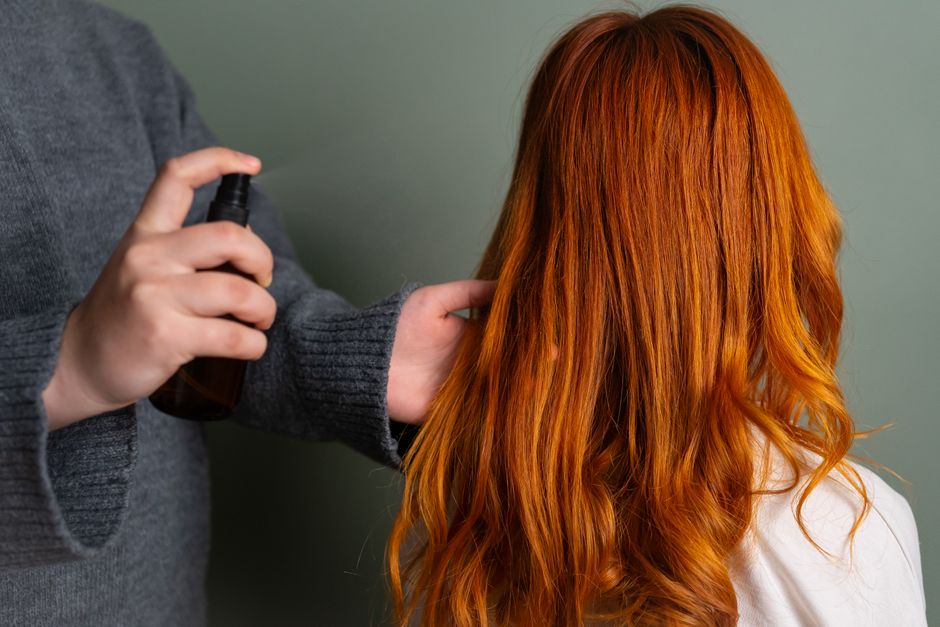
How long hair colour lasts depends mostly on how the colour was applied, not on the brand name on the box. Permanent dye can hold its tone for six to eight weeks before roots and fading become obvious. Demi-permanent colour typically fades over four to six weeks. Semi-permanent colour, the kind that sits on the surface of the hair, usually washes out in four to eight shampoos. Temporary colour lasts one to two washes. After that, it is not really the colour that has vanished. It is the hair itself that has changed.
How Long Does Hair Colouring Last on Average?
Most people get somewhere between four and eight weeks of colour they are happy with, depending on the type of dye and how fast their hair grows.
The single biggest factor is not fading at all. It is new growth. Hair grows from the root at roughly half an inch per month on average. That means a visible line of natural colour appears at the part within about four weeks for most people. Permanent colour does not wash out of the hair it has already coloured. The pigment stays locked inside the strand until that hair is cut off. What you see as “my colour is gone” is usually the contrast between the coloured length and the new growth at the root.
Fading is a separate process. Permanent dye molecules react with the hair’s internal structure and become trapped there. Over time, though, washing, sunlight, heat styling, and water minerals can strip some of the surface pigment and shift the tone, especially in reds and warm browns. So permanent colour can both fade and grow out at the same time.
Why Does Permanent Hair Colour Fade?
Permanent colour fades because the outer layer of the hair, called the cuticle, gradually lifts and lets pigment escape.
To deposit permanent colour, a developer lifts the cuticle and allows dye to enter the cortex, the inner layer of the strand. The dye reacts and becomes trapped. But the cuticle does not close perfectly afterward. Every wash, every hot tool, and every hour in the sun opens it a little more. Each time, a small amount of pigment can leach out.
Some shades are more vulnerable than others. Red and copper tones have dye molecules that are smaller and less firmly bound, which is why reds are widely reported to fade faster than other shades. Blonde and lightened hair can turn brassy because underlying warm pigments become more visible as the toner fades.
Water matters too. Hard water, which contains higher levels of dissolved minerals, can leave deposits on the hair that dull the colour and interfere with how it reflects light. This is one reason colour can look flat even when the pigment is still present.
How Long Does Demi-Permanent and Semi-Permanent Colour Last?
Demi-permanent colour generally lasts four to six weeks. Semi-permanent colour typically lasts four to eight shampoos. These two are often confused, but they work differently.
Demi-permanent dye uses a low-volume developer. It deposits colour mostly in the outer layers of the hair without fully lifting the cuticle or lightening the natural pigment. Because the colour sits closer to the surface, it fades gradually rather than growing out with a hard line. It is often used to blend grey, add shine, or refresh tone.
Semi-permanent colour contains no developer at all. It coats the outside of the strand and washes away. It cannot lighten hair, and it cannot cover grey reliably. Direct dyes in this category, including many vivid fashion colours, tend to fade with each wash and can leave a faint tint behind even after the main colour is gone.
Temporary colour, such as sprays and colour-depositing rinses, lasts one to two washes and is designed to sit entirely on the surface.
| Type of Colour | Typical Duration | How It Works |
|---|---|---|
| Temporary | 1–2 washes | Sits on the surface, no penetration |
| Semi-permanent | 4–8 shampoos | Coats the outside of the strand |
| Demi-permanent | 4–6 weeks | Deposits in outer layers with low developer |
| Permanent | 6–8 weeks before noticeable regrowth | Enters the cortex and becomes trapped |





What Makes Hair Colour Fade Faster?
Several everyday habits speed up fading, and most of them are within your control if you want the colour to hold longer.
- Frequent washing. Each wash opens the cuticle slightly. Washing less often, or using a gentler cleanser, can slow the process.
- Hot water. Hot water lifts the cuticle more than cool or lukewarm water does.
- Sun exposure. Ultraviolet light breaks down dye molecules. This is one of the more underrated causes of fading, and it happens even when you are not swimming.
- Heat styling. Flat irons, curling wands, and high-heat blow dryers repeatedly open the cuticle.
- Chlorine and salt water. Pool chlorine and ocean salt can strip colour and leave hair looking dull.
- Hard water minerals. Deposits build up and mute the tone over time.
A clarifying shampoo removes product buildup well, but it also strips colour faster. If you have recently coloured your hair, most stylists suggest using it sparingly.
Does Hair Colour Last Longer on Some Hair Types?
Yes. Hair texture and porosity affect how long colour holds, and the difference can be significant.
Porous hair, which is common after lightening, chemical straightening, or repeated heat damage, absorbs colour quickly but also releases it quickly. The cuticle is more open, so pigment enters easily and leaves easily. This is why freshly bleached hair can grab a toner fast and then lose it within a couple of weeks.
Low-porosity hair, which tends to be smooth and resistant, can be harder to colour in the first place. Dye may not penetrate as evenly, but once it does, the colour often holds longer because the cuticle is tighter.
Grey hair behaves differently again. Grey strands lack melanin, the natural pigment that gives hair its colour. They also tend to have a coarser texture and a more resistant cuticle, so they can be harder to cover. Demi-permanent colour often will not fully cover grey. Permanent colour generally does, but grey roots become visible quickly because the contrast between grey and coloured hair is high.
How Can You Make Hair Colour Last Longer?
You can extend colour by reducing the things that open the cuticle and by protecting the hair from light and heat.
Washing less often is the simplest step. When you do wash, lukewarm or cool water is gentler than hot. Colour-protecting shampoos and conditioners are widely sold, and while the evidence for specific formulations varies, the general principle of gentle cleansing and conditioning holds up. Conditioning after washing helps smooth the cuticle back down, which can slow pigment loss.
Heat protection matters, but it is not a guarantee. Products labeled as heat protectants can reduce damage from styling tools, though no product makes hair fully immune to high heat. Keeping tools on lower settings and limiting how often you use them helps more than any single product.
If you spend time outdoors, covering your hair with a hat or using a leave-in product with UV protection can reduce sun-related fading. Some research suggests UV exposure is a meaningful contributor to colour loss, particularly for red and lighter shades.
Touch-up timing is worth planning. Because roots show at around four weeks for many people, most permanent colour clients return every four to eight weeks. Going longer is not harmful, but the regrowth line becomes more noticeable.
When Should You See a Professional?
Some colour situations are genuinely difficult to fix at home, and a professional is the safer route.
Lightening hair more than a shade or two, going from dark to blonde, correcting an uneven or patchy result, and colouring over previously bleached hair all carry real risk of damage or an unintended result. These are not cases where a stronger box dye solves the problem. In fact, applying permanent dye over already-lightened hair can cause breakage.
If your scalp burns, itches intensely, or develops a rash after colouring, that is a reaction, not a normal part of the process. Reactions can occur even with products you have used before. Stop using the product and seek medical advice if symptoms are significant or spreading. Anyone with a known allergy to hair dye ingredients should not use those products.
If you are pregnant or breastfeeding and considering hair colour, the evidence on safety is limited, and guidance varies. Some clinicians advise waiting until after the first trimester for any chemical treatment, while others consider occasional colouring low risk. Because the evidence is not strong enough to give a firm answer, the honest position is that this is a decision to discuss with your own clinician rather than one with a clear-cut answer.
Frequently Asked Questions
How long does permanent hair colour last?
Permanent colour stays in the hair until it is cut off, but noticeable regrowth usually appears within about four weeks and most people refresh the colour every six to eight weeks. Fading of the tone can also happen over time with washing, sun, and heat.
Does hair colour wash out completely?
Semi-permanent and temporary colour wash out, usually within four to eight shampoos or one to two washes respectively. Permanent colour does not wash out completely because the pigment is trapped inside the hair shaft.
Why does red hair colour fade so fast?
Red dye molecules are smaller and less firmly bound inside the hair, so they escape more easily with washing and sun exposure. This is why reds and coppers are widely reported to fade faster than other shades.
Can I make my hair colour last longer?
Washing less often, using cooler water, limiting heat styling, and protecting hair from sun exposure can all slow fading. Conditioning after washing also helps smooth the cuticle and reduce pigment loss.
