
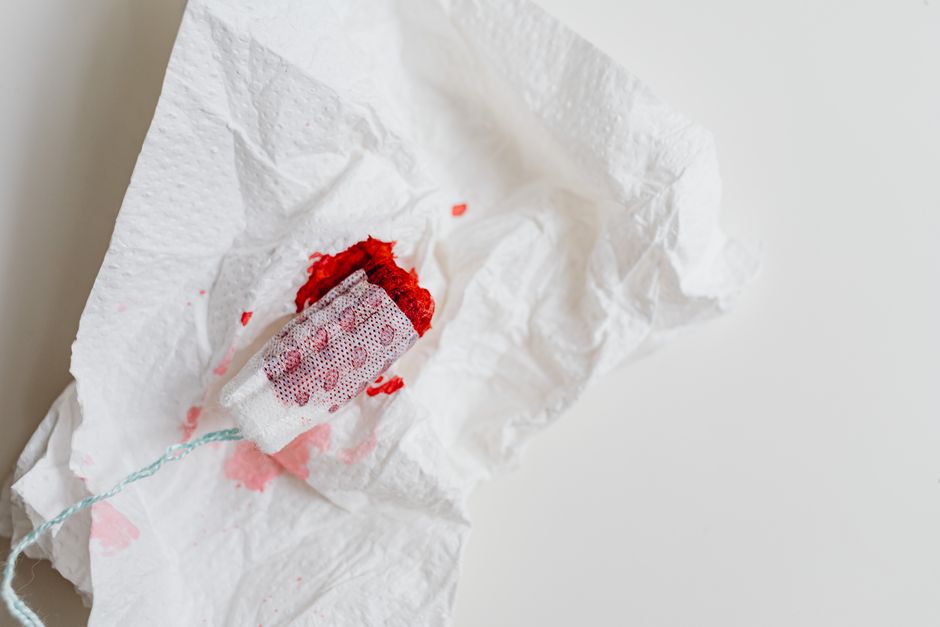
Breakthrough bleeding usually lasts anywhere from a day or two to about a week, depending on the cause. The most common triggers are starting or switching hormonal birth control, missed pills, and the first months on a new method. Most of this bleeding settles on its own within the first three months of a new hormonal method.
What it looks like matters as much as how long it lasts. Light spotting that needs a panty liner is different from bleeding that fills a pad. Doctors define breakthrough bleeding as any unexpected bleeding between periods or outside the normal bleeding pattern of a birth control method. That definition covers everything from a few brown spots to a heavier flow, and the timeline and what to do next depend on which one you are having.
What Counts as Breakthrough Bleeding?
Breakthrough bleeding is any vaginal bleeding that happens when you do not expect it. For someone on hormonal birth control, that means bleeding between scheduled withdrawal bleeds, or bleeding at the wrong time in the cycle.
Spotting is the lightest form. It is a few drops or light staining that does not need a pad or tampon. Breakthrough bleeding is heavier. It may need protection and can look more like a short period.
This is different from a real period. On combined hormonal methods, the bleeding that comes during the placebo or pill-free week is a withdrawal bleed, not a true menstrual period. On methods like the hormonal IUD, many people stop bleeding entirely over time. Any bleeding that does not fit the expected pattern of your method is worth noting.
One point that often gets missed: the amount of bleeding is not a reliable sign of how well a birth control method is working. Light spotting does not mean the method has failed. It is a side effect pattern, not a measure of effectiveness.
How Long Does Breakthrough Bleeding Last on Birth Control?
On most hormonal methods, breakthrough bleeding lasts from a few days up to about a week at a time. It often comes and goes over the first few months before the pattern settles.
The timeline depends heavily on which method you use and how long you have been on it.
- Combined pill: Irregular bleeding is most common in the first three cycles and usually improves after that. Missed or late pills can trigger a short episode of bleeding that lasts a few days.
- Progestin-only pill: Irregular bleeding is a common side effect and can persist longer than with combined methods. Some people have unpredictable spotting for several months.
- Hormonal IUD: Spotting and irregular bleeding are common in the first three to six months after insertion. Most people see bleeding decrease significantly after that.
- Contraceptive implant: Irregular bleeding is the most common reason people have the implant removed. The pattern can stay unpredictable for some users rather than settling into a regular cycle.
- Contraceptive injection: Early irregular bleeding is common. Many people stop having periods the longer they stay on it.
These are general patterns, not rules. Your own timeline can be shorter or longer. If bleeding is heavy, is getting worse, or continues past three months on a new method, that is a reason to check in with a clinician rather than wait it out.
Does Breakthrough Bleeding Mean My Birth Control Is Failing?
No. Breakthrough bleeding on a hormonal method does not mean the method has stopped working. It is a side effect of how the hormones affect the uterine lining, not a sign of contraceptive failure.
This is one of the most common worries, and it is worth stating plainly. The hormones thin the lining of the uterus. That thinner lining can shed unpredictably, which is what causes spotting and light bleeding. The same hormones are still doing their job of preventing pregnancy.
There is one important exception. If you have missed pills, been late with a pill, or had a problem with a method like a slipped patch or a broken condom, then unexpected bleeding could be related to a lapse in protection. In that case, the bleeding is a reason to think about backup contraception and possibly emergency contraception, not because the bleeding itself caused a failure but because the two may share a cause.
If you have used your method correctly and still have breakthrough bleeding, the bleeding alone does not mean you are unprotected.





What Else Can Cause Unexpected Bleeding?
Birth control is the most common cause in people who use it, but it is not the only one. Unexpected bleeding can come from several other sources, and some need medical attention.
Common non-contraceptive causes include:
- Changes in hormone levels around perimenopause
- Infection, such as a cervical or vaginal infection
- Polyps or fibroids in the uterus or cervix
- Irritation or small tears from sex or from a device
- Thyroid problems or other hormonal conditions
- In rare cases, changes in the cells of the cervix or uterus
Age and pattern help narrow this down. Bleeding after sex, bleeding that is heavy enough to soak through protection quickly, or bleeding that comes with pain or fever are all reasons to see a clinician. Bleeding after menopause is always a reason to get checked, and it should never be assumed to be a minor issue.
No symptom pattern can tell you the cause on its own. A clinician may use a pelvic exam, ultrasound, or other tests to sort it out. That is normal and does not mean something serious is wrong.
When Should You See a Doctor About Breakthrough Bleeding?
See a clinician if the bleeding is heavy, keeps getting worse, or lasts beyond the first few months on a new method. Also seek care if you have bleeding after sex, bleeding with pain or fever, or any bleeding after menopause.
Signs that point toward getting checked sooner:
- Bleeding that soaks through a pad or tampon in an hour for several hours
- Bleeding with severe pain, dizziness, or fainting
- Bleeding with fever or unusual discharge
- Bleeding that continues or worsens past three months on a new method
- Any unexpected bleeding after menopause
These signs do not automatically mean something serious. They mean the cause should be looked at rather than assumed. Heavy bleeding with dizziness or fainting is a reason to seek urgent care.
Can You Stop Breakthrough Bleeding?
Sometimes the bleeding settles on its own, and sometimes a change in method or dose helps. What works depends on the cause, and no single approach fixes every case.
For pill-related bleeding, taking the pill at the same time every day can reduce irregular bleeding. Some clinicians adjust the type or dose of hormone, but this is a decision made with a prescriber, not something to change on your own. For an IUD or implant, the bleeding pattern often improves over the first several months, though not always.
There is no reliable home remedy that has been shown to stop breakthrough bleeding. The evidence for most over-the-counter approaches is limited or absent. If the bleeding is bothersome or persistent, the useful step is talking with a clinician about your options rather than trying products that claim to regulate bleeding.
One practical note: do not stop a hormonal method suddenly to try to fix spotting without talking to your prescriber first. Stopping can change your bleeding pattern in ways that make it harder to figure out what is going on.
How Do You Track Breakthrough Bleeding?
Tracking helps you and your clinician see the pattern. Note the date, how heavy the bleeding is, and whether it lines up with anything like a missed pill or a new method.
A simple log works best. Record whether it was spotting or heavier bleeding, how long it lasted, and any symptoms like pain or cramping. Bring it to your appointment. A clear record often answers questions that are hard to sort out from memory alone.
Pattern matters more than any single episode. One short episode of spotting is common and usually not a concern. Bleeding that keeps returning, gets heavier, or does not fit your method’s usual pattern is the kind of information a clinician can actually use.
Frequently Asked Questions
How long does breakthrough bleeding last?
Most episodes last from a few days up to about a week. On a new hormonal method, irregular bleeding often settles within the first three months.
Is breakthrough bleeding a sign of pregnancy?
It can be, but it is not a reliable sign either way. If pregnancy is possible, a home pregnancy test is the way to know.
Should I stop my birth control if I have breakthrough bleeding?
No, do not stop without talking to your prescriber. Stopping can change your bleeding pattern and make the cause harder to identify.
When should I worry about breakthrough bleeding?
Get checked if bleeding is heavy, keeps getting worse, comes with pain or fever, or lasts past three months on a new method. Any bleeding after menopause should also be checked.
