
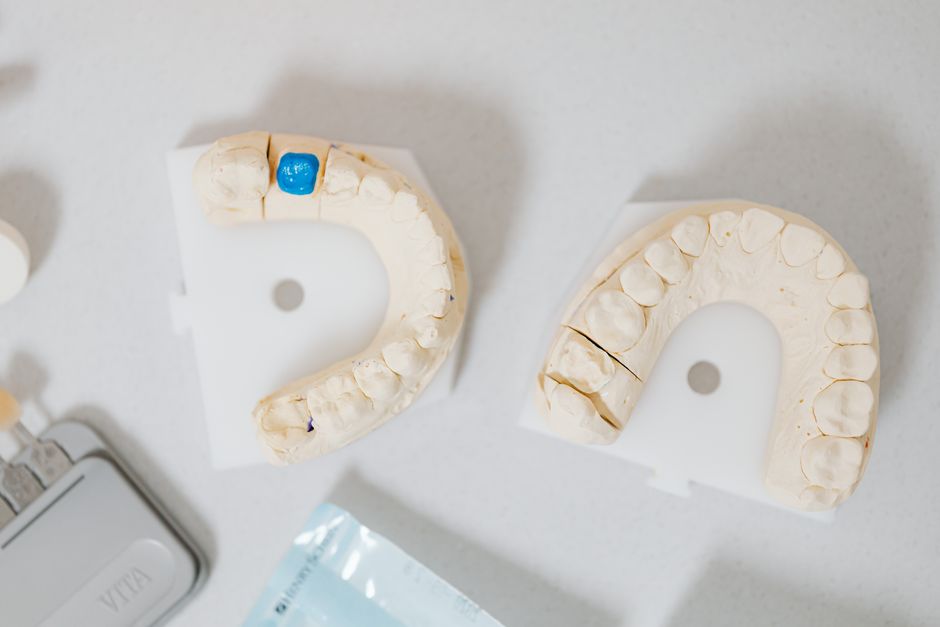
A temporary dental crown typically lasts between 2 and 3 weeks. This is the standard timeframe your dentist plans for before placing your permanent crown. Most temporary crowns are designed to hold up during this short period, but they are not built for long-term chewing or grinding. If your permanent crown appointment is delayed beyond 3 weeks, the temporary crown may crack, fall off, or cause gum irritation. Understanding exactly what affects this timeline can help you avoid emergency visits and keep your tooth protected.
What Is a Temporary Crown Made Of and Why Does It Matter?
Temporary crowns are usually made from acrylic or a type of plastic called polymethyl methacrylate. These materials are strong enough for everyday eating and cleaning but much weaker than the ceramic or metal used in permanent crowns. The acrylic is designed to be easily removed by your dentist, which is why it does not bond permanently to your tooth.
The material matters because it directly affects how long the crown lasts. Acrylic can break under heavy chewing pressure. It can also wear down over time if you grind your teeth. Some dentists use a stronger bis-acryl composite material for temporaries, which may hold up slightly longer. Even the best temporary crown material is not meant to last beyond a few weeks. The American Dental Association notes that temporary crowns are an interim restoration, not a long-term solution.
One non-obvious point: the cement used for temporary crowns is intentionally weak. Dentists use a soft, temporary cement so the crown can be removed without damaging the underlying tooth. This cement dissolves faster in the mouth than permanent cement. If you eat sticky foods, the cement can break down sooner, and the crown can loosen or fall off.
How Long Does a Temporary Crown Last Before It Needs to Be Replaced?
Research shows that a temporary crown lasts about 2 to 3 weeks under normal conditions. A study published in the Journal of Prosthetic Dentistry found that most temporary crowns fail between the second and fourth week if not replaced with a permanent one. The study noted that failure rates increase significantly after 3 weeks, with about 30 percent of temporary crowns needing repair or replacement by week four.
Your specific timeline depends on several factors. Where the crown is placed matters. A temporary crown on a molar, which handles the most chewing force, is more likely to break than one on a front tooth. Your bite alignment also plays a role. If your teeth do not meet evenly, the temporary crown may take more pressure than it can handle.
The risk of failure rises sharply if the temporary crown is left on for more than 4 weeks. By week six, many temporary crowns have visible cracks or have completely dislodged. If your dentist schedules your permanent crown appointment more than 3 weeks out, ask if a stronger temporary material is available.
What Causes a Temporary Crown to Fail Early?
The most common reason a temporary crown fails is eating the wrong foods. Sticky foods like caramel, taffy, or gum can pull the crown off the tooth. Hard foods like nuts, ice, or hard candy can crack the acrylic. Chewing on that side of your mouth at all increases the risk, but sticky and hard foods are the main culprits.
Poor oral hygiene also causes early failure. Plaque buildup around the temporary crown can irritate your gums. Inflamed gums may recede slightly, which loosens the grip of the temporary cement. If your gums swell, the crown may no longer fit snugly. The CDC recommends gentle brushing around a temporary crown and avoiding flossing directly between the crown and the adjacent tooth until the permanent crown is placed.
- Sticky foods – caramel, gum, dried fruit, taffy
- Hard foods – nuts, ice, hard candy, popcorn kernels
- Chewing on the crowned side – avoid completely if possible
- Teeth grinding or clenching – can crack or wear down the acrylic
- Poor fit – a temporary crown that is too high can cause pain and loosen
Teeth grinding, also called bruxism, is another hidden cause. Many people grind their teeth at night without realizing it. The constant pressure can crack the temporary crown or wear it down unevenly. If you know you grind your teeth, tell your dentist. They may recommend a night guard even during the temporary phase.





What Should You Do If Your Temporary Crown Falls Off or Breaks?
If your temporary crown falls off, call your dentist the same day. Do not wait until your scheduled appointment. The exposed tooth underneath is vulnerable to sensitivity, decay, and movement of neighboring teeth. Your dentist can usually re-cement the crown quickly if you bring it with you. Do not try to glue it back on yourself. Household adhesives are not safe for your mouth and can damage the tooth.
If the crown breaks but stays on your tooth, call your dentist as well. A cracked temporary crown may still protect the tooth, but it can also trap bacteria. Your dentist will decide whether to repair it or make a new one. In the meantime, avoid chewing on that side and stick to soft foods.
Some people report that temporary crowns fall off more often at night. This is because saliva flow decreases during sleep, which can dry out the temporary cement slightly. If you wake up with a loose crown, call your dentist first thing in the morning. Gently rinse the crown and store it in a clean container. Do not try to push it back on yourself — you may damage the tooth or swallow the crown.
How to Make Your Temporary Crown Last as Long as Possible
You can extend the life of your temporary crown with a few simple habits. The most important one is avoiding sticky and hard foods on that side of your mouth. The American Dental Association recommends a soft food diet for the first few days after a temporary crown is placed. After that, you can eat normally but avoid the specific foods that cause problems.
Brush gently around the crown. Use a soft-bristled toothbrush and avoid aggressive scrubbing. When flossing, do not snap the floss up and down between the temporary crown and the adjacent tooth. Instead, slide the floss out from the side rather than pulling it upward. This prevents the floss from catching the edge of the crown and pulling it off.
If you grind your teeth, wear a night guard during the temporary phase. Your dentist can provide a simple over-the-counter guard or a custom one. The guard absorbs the pressure and protects the temporary crown from cracking. Some dentists even recommend avoiding chewing gum entirely while the temporary crown is in place.
Your permanent crown appointment is the most important step. Do not delay it unless your dentist advises otherwise. If you need to reschedule, ask if your dentist can adjust the temporary crown or switch to a stronger temporary material. Most dentists can accommodate a short delay, but a delay of more than 3 weeks increases the risk of problems significantly.
Common Misconceptions About Temporary Crowns
One common myth is that a temporary crown is just as strong as a permanent one. This is not true. Temporary crowns are made from weaker materials and are not bonded permanently. They are designed to protect the tooth and maintain space for a few weeks, not to last for years. Treating a temporary crown like a permanent one will likely lead to breakage or loss.
Another misconception is that you can eat anything as long as you chew carefully. Even careful chewing on a temporary crown can cause it to crack or loosen. The material is simply not designed for heavy or repeated chewing pressure. The safest approach is to avoid chewing on that side entirely.
Some people believe that if a temporary crown falls off and you swallow it, it is harmless. Swallowing a temporary crown is usually not dangerous, but it can cause choking or get stuck in your digestive tract. If you swallow a crown, watch for signs of choking, pain, or difficulty swallowing. Call your dentist and your doctor if you have any concerns. Most small crowns pass through the body without issue, but it is not something to ignore.
Frequently Asked Questions
How long can a temporary crown stay on without problems?
A temporary crown can usually stay on for 2 to 3 weeks without problems. After 3 weeks, the risk of cracking, loosening, or falling off increases significantly.
What happens if my permanent crown is delayed beyond 3 weeks?
Your dentist may need to replace the temporary crown with a new one if the delay is longer than 3 weeks. The temporary material can wear out, and the fit may change over time.
Can I eat normally with a temporary crown?
You should avoid sticky and hard foods on the side with the temporary crown. Soft foods are safest, and chewing on the crowned side should be minimized.
Will a temporary crown protect my tooth if it cracks?
A cracked temporary crown still provides some protection but may trap bacteria. Call your dentist to have it checked and repaired as soon as possible.
