
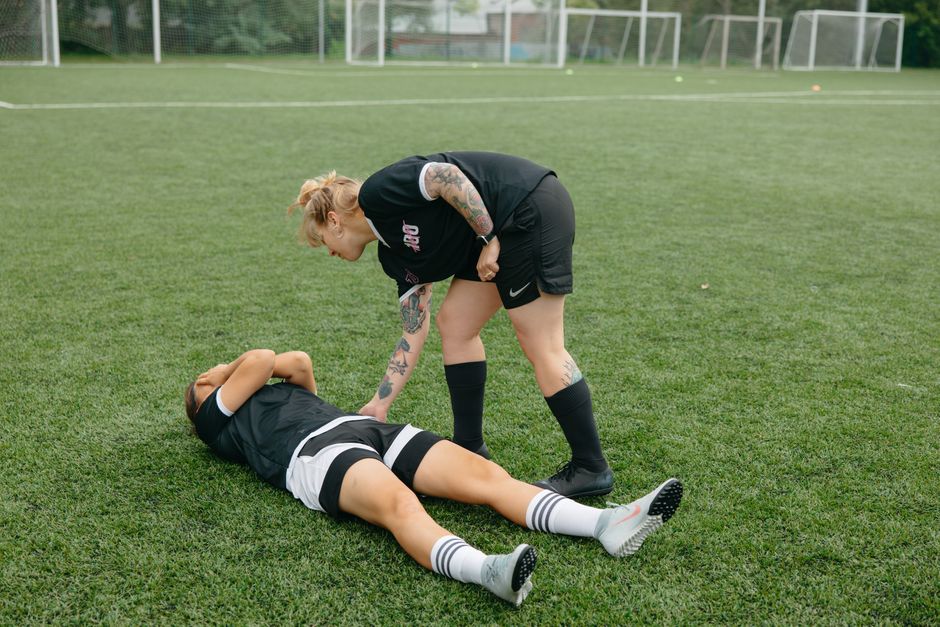
For most minor injuries, ice is used for the first 48 to 72 hours after the injury happens. Apply it for about 15 to 20 minutes at a time, with at least a 1 to 2 hour break in between sessions. After that window, the main benefit has largely passed, and other steps like gentle movement matter more.
That is the short answer. The longer answer involves why ice helps, when it can actually slow healing, and why the advice you grew up with has shifted in recent years.
Why Do You Ice an Injury in the First Place?
Ice reduces pain and limits swelling in the early hours after tissue damage. When you injure a muscle, ligament, or joint, small blood vessels tear and fluid leaks into the surrounding tissue. That fluid buildup is what causes the visible puffiness and much of the throbbing discomfort.
Cold slows blood flow to the area and reduces the speed of nerve signals. That is why ice feels numbing and why pain often drops within minutes of applying it. This is well established physiology. Cold therapy has been used for injuries for centuries, and the basic mechanism is not in dispute.
What is in dispute is how much ice actually helps long-term healing. More on that below.
How Long Do You Ice an Injury? The Timeline That Matters
The useful window for ice is roughly the first 48 to 72 hours. During this period, swelling and pain are at their peak, and cold application can make both more manageable.
After about 72 hours, the evidence for continued icing is weak. Swelling has usually peaked and begun to resolve on its own. At that point, the priority shifts to restoring movement and strength, which ice does not help with.
Some clinicians still recommend ice beyond 72 hours for specific situations, such as ongoing pain flare-ups or certain chronic conditions. That is common practice, not a strong evidence-based recommendation. If you are still icing an injury a week later and it is not improving, that is a signal to get it looked at, not to keep icing.
How Long Should Each Ice Session Last?
Apply ice for 15 to 20 minutes per session. This is the most widely cited range in sports medicine and clinical guidance.
Shorter than 10 minutes may not deliver much benefit. Longer than 20 minutes raises the risk of cold-related tissue damage, especially on thin skin over bony areas like the knee, elbow, or ankle.
Leave at least 1 to 2 hours between sessions. This gives the skin and underlying tissue time to return to normal temperature and blood flow before you cool it again.
A common mistake is leaving ice on until the area goes completely numb and then leaving it longer. Numbness is not a sign to keep going. It is a sign that the tissue has been cooled enough.





How Should You Actually Apply Ice?
Never put ice directly against bare skin. That is one of the few near-universal rules in cold therapy.
Wrap the cold source in a thin cloth, towel, or pillowcase. A gel pack, a bag of frozen peas, or a plastic bag of crushed ice all work. The delivery method matters less than the barrier between the cold and your skin.
- Keep the limb elevated if possible during icing. Elevation helps with swelling on its own.
- Do not ice over an area with poor circulation or numbness you cannot feel.
- Do not ice before activity if you are trying to warm up. Cold reduces power and flexibility.
- Check the skin every few minutes, especially in the first session. Skin that turns bright red or white and waxy needs the ice removed.
People with diabetes, peripheral vascular disease, or reduced sensation should be especially careful. If you cannot reliably feel how cold the skin is getting, icing carries more risk of injury than benefit. The same caution applies to young children, who have thinner skin and less ability to describe what they feel.
Does Ice Actually Speed Up Healing?
No. Ice manages symptoms. It does not appear to speed tissue repair, and some research suggests it may slow it.
This is where the old advice and the current evidence part ways. For decades, the standard was rest, ice, compression, and elevation. That framework has been revised. Several sports medicine organizations have moved away from prolonged rest and aggressive icing in favor of early, protected movement.
The reasoning is straightforward. Healing requires blood flow. Blood carries the cells and nutrients that rebuild damaged tissue. Cold reduces blood flow, which is exactly why it limits swelling, but that same reduction may also limit the delivery of repair signals. Some studies suggest that excessive or prolonged cooling can interfere with the inflammatory process that the body needs to heal.
So ice is best understood as a comfort tool, not a healing tool. It helps you function in the first day or two. It does not make the injury repair faster, and pushing it too hard may work against you.
What Should You Do Instead of Icing After 72 Hours?
After the first few days, gentle movement usually does more for recovery than cold. Protected, pain-free motion helps restore blood flow, prevents stiffness, and rebuilds strength.
Compression and elevation remain useful for swelling during this period. Some people find heat more comfortable once the acute phase has passed, since warmth can relax tight muscles and increase blood flow. There is no strong evidence that heat speeds healing either, but it is generally safe after the initial swelling has settled.
If pain or swelling is getting worse rather than better after a few days, or if you cannot bear weight or move the joint normally, see a clinician. Ice is not a substitute for an evaluation when something is clearly wrong.
What About the RICE Method — Is It Still Recommended?
The classic RICE approach — rest, ice, compression, elevation — has been largely replaced in sports medicine with variations that emphasize early movement over rest.
The change is not because ice was proven harmful. It is because prolonged rest and aggressive icing did not hold up well when tested against approaches that prioritized getting the joint moving again sooner. The evidence for ice as a pain reliever is solid. The evidence for ice as a recovery accelerator is not.
That does not mean you should throw out the ice pack. It means ice is one tool among several, and it belongs to the first couple of days, not the whole recovery.
When Should You Not Use Ice?
Skip ice if you have a circulation problem, nerve damage, or a condition that makes your skin unusually sensitive to cold. In those cases, the risk of cold injury outweighs the modest benefit.
Do not use ice on an open wound, and do not use it as a substitute for medical care after a serious injury. A suspected fracture, a joint that will not bear weight, or a rapidly expanding bruise all need assessment, not an ice pack.
There is also a rare condition called cold urticaria, in which cold triggers hives or a more serious reaction. If you have ever had a reaction to cold exposure, avoid icing and talk to a clinician about alternatives.
Frequently Asked Questions
How long do you ice an injury for?
Ice for 15 to 20 minutes per session, with at least 1 to 2 hours between sessions. Continue this for the first 48 to 72 hours after the injury.
Can you ice an injury for too long?
Yes. Leaving ice on longer than 20 minutes can damage skin and tissue, especially over bony areas. Numbness is a sign to stop, not to keep going.
Should you ice an injury after 48 hours?
There is little evidence that icing helps much beyond the first 48 to 72 hours. After that, gentle movement and compression are usually more useful.
Does ice actually help healing?
Ice reduces pain and swelling, but it does not appear to speed tissue repair. Some research suggests prolonged icing may even slow the healing process.
