
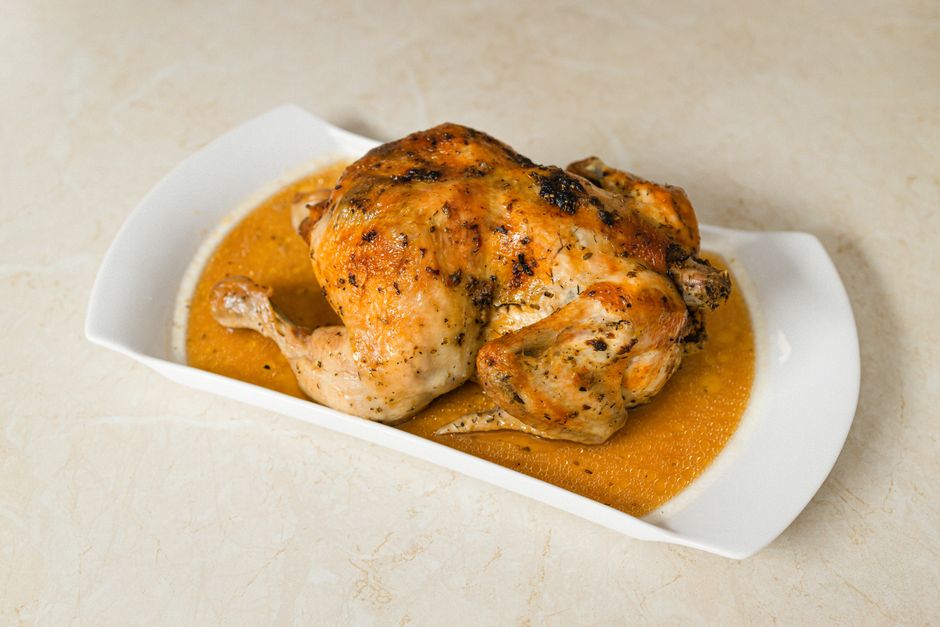
Baking chicken is one of the most reliable ways to cook it, but the timing depends on the cut, the oven temperature, and whether the meat has bones. For boneless, skinless chicken breasts at 400°F, plan for 20 to 30 minutes. Bone-in thighs and drumsticks take 35 to 45 minutes at the same temperature. The only way to know for sure is to check the internal temperature with a meat thermometer.
What Temperature Should Chicken Reach?
The United States Department of Agriculture (USDA) sets the safe minimum internal temperature for all poultry at 165°F. This applies to breasts, thighs, wings, and whole birds. At this temperature, harmful bacteria like Salmonella and Campylobacter are killed instantly.
You must measure the temperature in the thickest part of the meat, avoiding bone and fat. Insert the thermometer probe sideways into the thickest section of a breast or into the center of a thigh without touching the bone. If the reading is below 165°F, the chicken is not safe to eat yet.
Resting matters too. After you pull the chicken from the oven, the internal temperature will continue to rise by 5 to 10°F while it sits. Many cooks pull chicken at 160°F for breasts and let carryover cooking finish the job. That is safe as long as the final temperature reaches 165°F during the rest period.
How Long Do You Bake Chicken For at 400°F?
At 400°F, most chicken cuts cook quickly and develop a nicely browned exterior. This is the most common temperature for weeknight baking because it balances speed with even cooking.
- Boneless, skinless chicken breasts: 20 to 30 minutes
- Bone-in chicken breasts: 35 to 40 minutes
- Boneless chicken thighs: 25 to 30 minutes
- Bone-in chicken thighs and drumsticks: 40 to 45 minutes
- Whole chicken (stuffed or unstuffed): 60 to 75 minutes
- Chicken wings: 40 to 50 minutes for crispy skin
These times assume the chicken starts cold from the refrigerator and the oven is fully preheated. Thicker pieces need more time. A 1.5-inch chicken breast will take longer than a thin cutlet. Use the thermometer as your final authority, not the clock.
Does the Oven Temperature Change the Time?
Yes. Lower temperatures require longer cooking times, and higher temperatures cook faster but can dry out lean cuts. Baking at 350°F is the classic all-purpose temperature. It takes about 25 to 30 minutes for boneless breasts and 45 to 50 minutes for bone-in thighs.
Baking at 425°F speeds things up. Boneless breasts can be done in 15 to 20 minutes at this temperature. The trade-off is a higher risk of overcooking the outside before the center reaches 165°F. This matters most for thick cuts.
The best approach is to pick one temperature and stick with it. Adjusting the oven mid-cook creates uneven results. If you want crispy skin, use a higher temperature like 425°F. If you want tender, juicy meat with less risk of drying out, 375°F or 400°F works well.


How Can You Tell Chicken Is Done Without a Thermometer?
You cannot reliably tell with visual cues alone. The old advice about cutting into the meat to check if the juices run clear is not a dependable safety check. The only accurate way to confirm doneness is a thermometer reading of 165°F.
Some cooks use the touch test, comparing the firmness of the meat to the flesh between your thumb and index finger. This method is not reliable for home cooks and can easily lead to undercooked chicken. Even experienced chefs use thermometers for poultry.
Digital instant-read thermometers are inexpensive and widely available. They give a reading in seconds and remove all guesswork. If you cook chicken regularly, this is the single most useful tool you can own.
Why Does Chicken Breast Dry Out in the Oven?
Chicken breasts are lean meat with very little fat to keep them moist. When the internal temperature passes 165°F, the muscle fibers contract and squeeze out moisture. This happens quickly, which is why a breast can go from perfectly juicy to dry in just a few minutes.
Bone-in, skin-on cuts are more forgiving. The bone conducts heat slowly, and the skin traps moisture. Dark meat like thighs and drumsticks contains more fat and collagen, so it stays tender even when cooked past 165°F. In fact, dark meat often tastes better at 175 to 185°F because the collagen breaks down into gelatin.
Brining helps lean cuts stay moist. A simple saltwater soak for 30 minutes to a few hours before baking changes the protein structure so it holds onto more water during cooking. Even a dry brine — rubbing salt on the surface and letting it sit — makes a noticeable difference.
What Is the Best Way to Bake Chicken for Juicy Results?
Start with even thickness. If you are baking boneless breasts, pound them to a uniform 1-inch thickness. This ensures the whole piece cooks at the same rate, so you do not end up with a dry thin end and an undercooked thick end.
Season the chicken and let it sit at room temperature for 15 to 20 minutes before baking. This takes the chill off the meat so it cooks more evenly. Do not leave raw chicken out longer than that — bacteria multiply rapidly at room temperature.
Oil the surface lightly before baking. A thin coat of olive oil or melted butter helps the seasoning stick and promotes browning. Place the chicken on a wire rack set inside a baking sheet. This lifts the meat off the pan so hot air circulates underneath, cooking the bottom as evenly as the top.
How Long Do You Bake Chicken For if It Is Frozen?
You can bake chicken from frozen, but it takes about 50 percent longer than thawed meat. A frozen boneless breast at 400°F may need 35 to 45 minutes instead of 20 to 30. The outside may brown before the center is done, so a thermometer is absolutely essential.
Thawing in the refrigerator overnight is the safer and more reliable option. A frozen breast takes 24 hours to thaw in the fridge. If you need it faster, use the cold water method: seal the chicken in a bag and submerge it in cold water, changing the water every 30 minutes. A pound of chicken thaws this way in about an hour.
Never thaw chicken on the counter at room temperature. The surface warms into the danger zone between 40°F and 140°F, where bacteria multiply quickly, while the center stays frozen. This increases the risk of foodborne illness.
Does Chicken Need to Rest After Baking?
Yes. Resting is not optional for the best texture. When you pull chicken from the oven, the juices are concentrated in the center. Resting for 5 to 10 minutes lets those juices redistribute throughout the meat. Cut into it immediately and the juices run out onto the cutting board, leaving dry meat behind.
Resting also completes the cooking process through carryover heat. A breast pulled at 160°F will reach 165°F during the rest. This is why the thermometer reading at the moment you pull the chicken from the oven is not the final number.
Cover the chicken loosely with foil while it rests. A tight seal traps steam and softens the skin. A loose tent keeps it warm without ruining the texture you worked to create.
What Are the Most Common Baking Mistakes?
The most common mistake is trusting the recipe time instead of the thermometer. Ovens run hot or cold, chicken pieces vary in size, and starting temperatures differ. The clock is a rough guide, not a guarantee.
Opening the oven door repeatedly is another frequent error. Every time the door opens, heat escapes and the oven temperature drops. This extends cooking time and produces uneven results. Resist the urge to peek. Use the oven light and the window instead.
Overcrowding the pan causes steaming rather than baking. When chicken pieces touch each other, the trapped moisture prevents browning and slows cooking. Leave space between pieces so hot air can circulate freely. If you are cooking a large batch, use two pans or cook in shifts.
Frequently Asked Questions
How long do you bake chicken breast at 400°F?
Boneless, skinless chicken breasts take 20 to 30 minutes at 400°F. Always confirm doneness with a thermometer reading of 165°F in the thickest part.
How long do you bake chicken thighs at 375°F?
Bone-in chicken thighs take about 45 to 55 minutes at 375°F. Boneless thighs are done in 25 to 30 minutes at the same temperature.
Can you bake chicken at 350°F?
Yes. At 350°F, boneless breasts take 25 to 30 minutes and bone-in pieces take 45 to 50 minutes. The lower temperature cooks more gently, which reduces the risk of drying out.
Is it safe to eat chicken at 160°F?
Not immediately. The USDA safe minimum is 165°F for all poultry. You can pull chicken at 160°F if you let it rest, because carryover cooking will raise the temperature to 165°F.
