
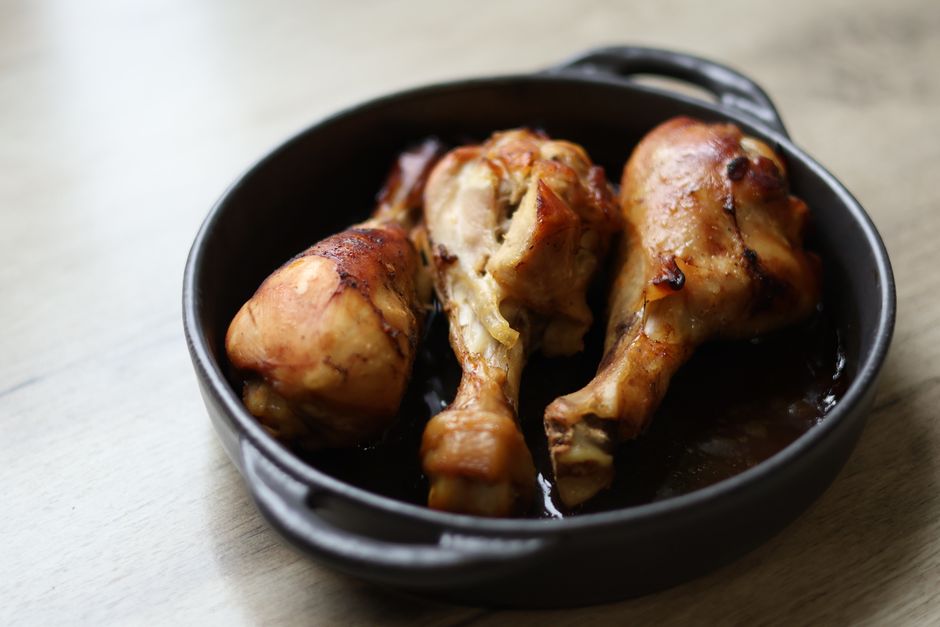
Baking chicken at 375°F is the temperature most recipes and food safety guidance point to for bone-in pieces, while 425°F works well for boneless breasts and thighs that need browning. The single most important number is not the oven setting at all — it is the internal temperature of the meat. The USDA says chicken must reach 165°F throughout to be safe to eat.
That internal number is what separates juicy chicken from dry chicken. Oven temperature controls how fast the outside browns and how evenly the meat cooks. Internal temperature tells you when it is actually done. Get both right and baked chicken becomes one of the easiest proteins to cook well.
What Temp To Bake Chicken At in the Oven?
Most home ovens handle chicken best between 350°F and 425°F. The right choice depends on the cut, not on a single universal rule.
Bone-in chicken with skin — thighs, drumsticks, breasts, and leg quarters — does well at 375°F. That heat is high enough to crisp the skin and render fat, but low enough that the meat near the bone cooks through before the outside burns. Bone-in pieces generally take longer than boneless ones because the bone slows heat transfer to the center.
Boneless, skinless breasts are lean and dry out quickly. Many cooks use 425°F for a shorter time to get browning without overcooking the interior. Boneless thighs are more forgiving because their higher fat content keeps them moist across a wider temperature range.
Whole chickens are usually roasted at 350°F to 375°F. A lower oven gives the large bird time to cook evenly from the outside in.
Here is a quick reference for common cuts at their typical oven temperatures:
| Cut | Typical oven temp | Why |
|---|---|---|
| Boneless, skinless breast | 425°F | Fast cooking, less time to dry out |
| Bone-in breast or thigh | 375°F | Even cooking around the bone |
| Drumsticks and wings | 400°F to 425°F | Crisps skin, renders fat |
| Whole chicken | 350°F to 375°F | Large size needs gentler, even heat |
These are common starting points, not fixed rules. Ovens vary. An oven that runs hot will brown chicken faster than the dial suggests. An inexpensive oven thermometer is one of the most useful tools for anyone who bakes chicken often.
Why Does Internal Temperature Matter More Than Oven Temperature?
Food safety for chicken is defined by internal temperature, not oven setting. The USDA states that poultry must reach a minimum internal temperature of 165°F to be considered safe.
That number is tied to Salmonella and Campylobacter, two bacteria commonly found on raw poultry. Both are killed at 165°F. Cooking to a lower internal temperature is not a safe shortcut, even if the meat looks done on the outside.
Color is not a reliable indicator. Chicken can look white and opaque before it is safely cooked, and it can still look pinkish near the bone even when it has reached a safe temperature. The pink color near bones in fully cooked chicken often comes from the bone marrow, not from undercooking. A thermometer removes the guesswork.
Insert the thermometer into the thickest part of the meat, avoiding bone and fat, which conduct heat differently than muscle. For a whole chicken, check the thickest part of the breast and the innermost part of the thigh.
How Long Should You Bake Chicken?
Time depends on the cut, the thickness, the oven temperature, and whether the meat is bone-in or boneless. Because those variables shift so much, time alone is a weak guide. Use it as a rough window, then confirm with a thermometer.
As a general range, boneless breasts at 425°F often finish in about 20 to 30 minutes, depending on thickness. Bone-in pieces at 375°F commonly take 35 to 45 minutes. A whole chicken usually needs longer, often an hour or more depending on its weight. These are approximate windows — the thermometer is the final word.
A few things change the timing in predictable ways:
- Thicker cuts take longer than thin ones at the same temperature.
- Bone-in pieces take longer than boneless pieces of similar size.
- A crowded pan steams the chicken instead of roasting it, which slows browning.
- Chicken straight from the fridge takes longer than chicken that has sat out briefly.
If you are cooking several pieces at once, arrange them in a single layer with a little space between them. This helps them cook evenly and brown rather than steam.


Does a Higher Oven Temperature Cook Chicken Better?
Higher heat does not cook chicken faster in a way that improves it. It browns the surface faster, which can be an advantage for skin-on pieces and a disadvantage for lean cuts.
The browning that makes roasted chicken appealing comes from the Maillard reaction, a chemical process between amino acids and sugars that creates the browned crust and savory flavor. That reaction speeds up as heat rises. This is why wings and drumsticks often do well at 400°F to 425°F — the surface browns before the interior dries out.
For boneless, skinless breasts, high heat is a trade-off. It browns the outside quickly, but the lean interior has little fat to protect it. If the breast is thick, the outside can brown before the center reaches 165°F. A slightly lower temperature, or a shorter cook time, often gives a better result.
One clarification worth knowing: searing or baking at high heat does not “seal in” juices. That idea is a persistent cooking myth. Searing browns the surface and adds flavor, but it does not create a moisture barrier. Juiciness comes from not overcooking the meat past 165°F.
Should You Cover Chicken While Baking?
Covering chicken with foil traps steam, which slows browning and keeps moisture in. Whether to cover depends on what you want the finished chicken to look like.
Uncovered chicken browns and crisps on the surface. Covered chicken stays moist but pale and soft. Many cooks start uncovered for browning, then cover loosely if the outside is browning faster than the inside is cooking.
Foil can also be used at the end. If a piece is browning too quickly, tenting it loosely with foil slows the surface browning while the center finishes. This is a practical fix, not a required step.
For whole chickens, some recipes cover the breast with foil partway through because the breast cooks faster than the thighs. Removing the foil near the end lets the skin crisp.
What About Marinades, Brines, and Resting?
Brining — soaking chicken in a saltwater solution before cooking — can help the meat hold moisture. The salt draws water into the muscle tissue, and some research suggests brined poultry can retain more moisture during cooking. The effect is real but modest, and it does not change the required internal temperature of 165°F.
Marinades add flavor mostly at the surface. They do not penetrate deeply into the meat, so they season the outside more than the inside. Acidic marinades can also make the surface texture softer if left on too long.
Resting matters. After chicken comes out of the oven, letting it sit for a few minutes before cutting allows the juices to redistribute. Cutting immediately can let moisture escape onto the board. For a whole chicken, resting for around 10 to 15 minutes is common practice, though the exact time is not critical.
None of these steps replace the thermometer. A perfectly brined chicken can still be undercooked, and a plain one can still be juicy if it is pulled at the right internal temperature.
Common Mistakes When Baking Chicken
The most common mistake is relying on time or color instead of a thermometer. Recipes give time ranges because ovens and cuts vary, but the only reliable signal is the internal temperature.
Another frequent error is baking at too high a temperature for lean cuts. Boneless breasts need a balance between browning and drying out. High heat with a long cook time is a recipe for dry meat.
Overcrowding the pan is a third issue. When pieces touch and pile up, they release steam that keeps the surface from browning. Spreading them out gives better results.
Finally, skipping the rest lets juices run out when the chicken is cut. A few minutes of patience keeps more moisture in the meat.
Frequently Asked Questions
What temperature do you bake chicken at?
Most chicken bakes well between 350°F and 425°F, with 375°F being a common choice for bone-in pieces and 425°F for boneless breasts. Whatever the oven setting, the chicken must reach 165°F internally to be safe.
Is it better to bake chicken at 350 or 400?
Neither is universally better. A lower temperature like 350°F cooks more gently and suits whole chickens, while 400°F browns the surface faster for skin-on pieces. The right choice depends on the cut and whether you want browning.
How long does it take to bake chicken at 375°F?
Boneless pieces often finish in about 20 to 30 minutes and bone-in pieces commonly take 35 to 45 minutes at 375°F. These are rough windows, so always confirm the internal temperature reaches 165°F.
Can you bake chicken at 425°F?
Yes, 425°F works well for boneless breasts, wings, and drumsticks because it browns the surface quickly. Watch lean cuts closely so they do not dry out before the center reaches 165°F.
