
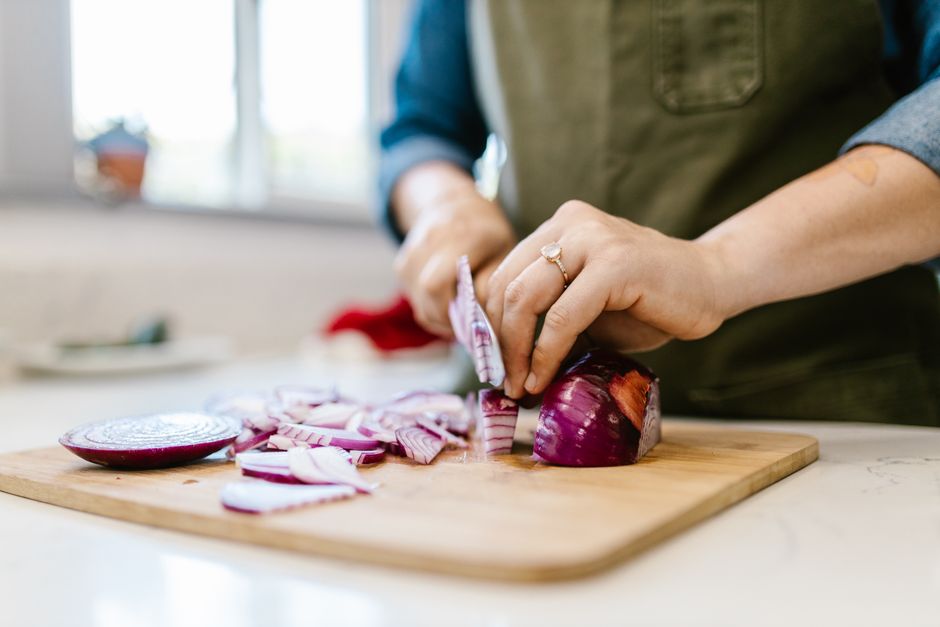
Onions are one of the longest-lasting vegetables you can keep in a kitchen, but how long they stay fresh depends almost entirely on the type of onion and how you store it. Dry, whole onions kept in a cool, dark, well-ventilated spot generally last about one to two months, and some keep for three months or longer under good conditions. Cut or peeled onions are a different story — those need refrigeration and should be used within about a week. The single biggest mistake people make is storing whole onions in the refrigerator, which actually speeds up spoilage.
How Long Do Onions Stay Fresh?
Storage life comes down to two things: the onion’s moisture content and the environment around it. Dry onions are cured after harvest, meaning their outer layers are dried to form a protective skin. That skin slows moisture loss and helps block microorganisms. As long as the onion stays dry and cool, it can sit for weeks.
Here is a general guide for whole, dry onions stored properly:
- Yellow onions: About one to two months, often longer in ideal conditions.
- Red onions: Roughly one to two months, though they tend to soften a little sooner than yellow.
- White onions: Around one to two months, similar to yellow.
- Sweet onions (like Vidalia and Walla Walla): Only about one to two weeks, because their higher water and sugar content makes them spoil faster.
These are general ranges, not precise deadlines. An onion stored at 60°F in a dark pantry will outlast one sitting on a sunny countertop by a wide margin. Temperature and humidity matter more than the calendar.
Green onions and scallions are a separate category entirely. They are not cured, so they stay fresh only a short time. Refrigerated in a plastic bag, they typically keep about one week.
Why Do Onions Last So Long?
The answer is mostly about water. Fresh produce spoils faster when it holds a lot of moisture, because moisture encourages the growth of mold, bacteria, and yeast. Cured dry onions have had much of their surface water removed, and their papery outer skin acts as a barrier.
Onions also contain natural sulfur compounds. These give onions their sharp smell and taste, and they appear to play a role in resisting some spoilage organisms. This is part of why a well-cured onion can sit for weeks without refrigeration when a strawberry cannot last a few days.
The trade-off is that onions are still living tissue. They slowly lose moisture and use up stored sugars. Over time they become soft, then sprout, then eventually rot. Sprouting is not the same as spoiling — a sprouted onion is still safe to eat — but it marks the point where quality starts to drop.
Should You Refrigerate Onions?
No, not whole dry onions. Refrigeration is cold and humid, and that combination is the opposite of what a dry onion needs. Cold temperatures convert some of the onion’s starch into sugar, which makes it taste sweeter and softer. High humidity promotes mold and mushiness.
There is one important exception. Once an onion is cut, peeled, or chopped, the rules change completely. A cut onion loses its protective skin, and its moist interior becomes a good surface for bacterial growth. Cut onions should be refrigerated in a sealed container and used within about seven days.
Sweet onions are a gray area. Because they spoil so quickly at room temperature, some people refrigerate them and accept the texture change. If you do, use them within a couple of weeks and expect them to soften faster than dry storage would allow.





How to Store Onions So They Last Longer
Good storage is really about controlling air, light, and moisture. Onions need airflow, darkness, and a cool temperature. They also need to stay away from certain other produce.
Here is what helps:
- Keep them in a mesh bag, a basket, or a paper bag with holes. These allow air to move around the onions.
- Store them in a dark, dry place — a pantry, a cellar, or a cabinet. Aim for a cool spot if you have one.
- Keep them away from potatoes. Potatoes release moisture and a gas that can make onions sprout faster, and onions can make potatoes sprout too.
- Leave the papery skin on until you are ready to use the onion. The skin is a protective layer.
- Keep them out of plastic bags. Plastic traps moisture against the onion and invites mold.
Do not store onions near ripening fruit like bananas or apples. Those fruits release ethylene gas, which can push onions to sprout sooner. The same gas is why onions speed up the spoilage of nearby produce.
If you grow your own onions or buy them fresh from a farm, curing them first makes a real difference. Curing means letting the onions dry in a warm, airy spot until the necks are tight and the skins are papery, which usually takes a couple of weeks. Store-bought onions have already been cured.
Can You Freeze Onions?
Yes, and freezing is one of the better ways to keep onions for the long term. Frozen onions stay safe to eat for many months, though their texture changes. Freezing breaks down cell walls, so thawed onions turn soft and release water. That makes them a poor choice for a fresh salad but a fine choice for soups, stews, sauces, and anything cooked.
To freeze onions, peel and chop them, then spread them on a tray to freeze individually before moving them into a sealed bag or container. This keeps the pieces from clumping. Chopped raw onions can go straight into a freezer bag if you do not mind them sticking together.
For cooked onions, such as caramelized onions or sautéed onions, let them cool first, then pack them in airtight containers. Cooked onions generally hold their quality in the freezer for a few months.
How Can You Tell If an Onion Has Gone Bad?
The signs are usually easy to spot once you know what to look for. Fresh onions are firm, dry, and smell mild when whole. As they age, they change in predictable ways.
Watch for these signs:
- Soft or mushy spots: A clear sign the onion is breaking down.
- Dark or black mold: Visible fuzz or black patches mean it is time to discard it.
- A bad smell: A sour or rotting odor is a strong warning sign.
- Wet or slimy skin: Healthy onion skin is dry and papery, not damp.
- Green sprouts: Sprouting alone does not mean the onion is unsafe, but it does mean the flavor is fading.
A single soft or moldy onion can spread spoilage to the ones around it. If you find one, remove it right away and check the rest. When in doubt about an onion that is soft, discolored, or smelly, throw it out. There is no reliable way to make a rotting onion safe again.
One note on cut onions: if a cut onion has been left at room temperature for more than a couple of hours, it is safest to discard it. This is standard food safety guidance, not a sign of a fragile onion.
Do Different Onion Types Last Different Amounts of Time?
Yes, and the difference is worth knowing when you shop. The table below summarizes typical storage life for whole onions kept under good conditions.
| Onion Type | Typical Storage Life | Best Storage |
|---|---|---|
| Yellow onion | 1–2 months (sometimes longer) | Cool, dark, dry, ventilated |
| Red onion | 1–2 months | Cool, dark, dry, ventilated |
| White onion | 1–2 months | Cool, dark, dry, ventilated |
| Sweet onion (Vidalia) | 1–2 weeks | Cool, dark, dry; refrigerate if needed |
| Green onion / scallion | About 1 week | Refrigerator |
| Cut or peeled onion | About 7 days | Refrigerator, sealed container |
These ranges assume the onions started out fresh and firm. An onion that was already soft when you brought it home will not last as long, no matter how well you store it.
Does a Sprouted Onion Mean It Is Bad?
No. A sprouted onion is not spoiled and is generally safe to eat. The green shoot that pushes out of the top is the onion trying to grow a new plant, using the energy stored in its layers.
The catch is quality. Once an onion sprouts, it is using up its sugars and moisture to feed the sprout, so the bulb becomes softer and its flavor turns milder or sometimes bitter. You can cut away the sprout and use the rest of the onion, or chop the green shoot and use it like a mild scallion. If the onion is also soft, mushy, or smelly, that is spoilage rather than sprouting, and it should be discarded.
To slow sprouting, keep onions cool and away from ethylene-producing fruits, and buy only as many as you will use within a month or two.
Frequently Asked Questions
How long do onions last at room temperature?
Whole dry onions kept in a cool, dark, well-ventilated spot generally last about one to two months, and sweet onions only about one to two weeks. Warmth, light, and humidity shorten that time.
Should onions be kept in the fridge?
Whole dry onions should not be refrigerated, because cold and humidity make them soft and moldy faster. Cut or peeled onions are the exception and should be refrigerated in a sealed container and used within about seven days.
How long do cut onions last in the fridge?
Cut, peeled, or chopped onions keep for about seven days in a sealed container in the refrigerator. Discard any cut onion left at room temperature for more than a couple of hours.
Can you eat an onion that has sprouted?
Yes, a sprouted onion is generally safe to eat, though its flavor and texture decline. If it is also soft, mushy, or smells bad, that is spoilage and it should be thrown out.
