
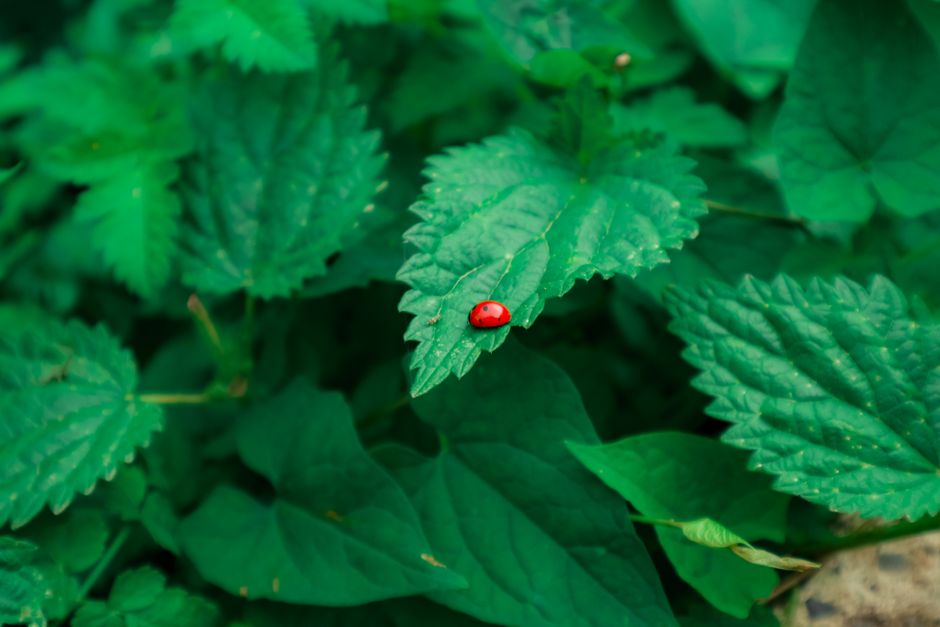
A ladybug’s life is short, but it is packed with dramatic change. From the moment it hatches as a tiny larva to the day it becomes a flying adult, the process takes about 3 to 4 weeks. The full lifespan, from egg to natural death, usually spans 1 to 2 years, though most adults live around 1 year in the wild.
What Are the Four Stages of a Ladybug’s Life?
Ladybugs do not grow up slowly like humans or dogs. They go through a process called complete metamorphosis. This means they change shape entirely at each stage.
There are exactly four stages: egg, larva, pupa, and adult. Each stage looks completely different from the last. A ladybug larva does not look anything like the round, spotted beetle you see on a leaf.
How Long Does the Egg Stage Last?
The life cycle begins when a female ladybug lays a cluster of tiny yellow eggs. She usually places them on the underside of a leaf, close to a food source like aphids.
The eggs hatch quickly. In warm weather, they typically hatch in 3 to 5 days. Cooler temperatures can slow this down, stretching the egg stage to about 7 days.
Ladybug eggs are very small, often smaller than a pinhead. They are vulnerable to predators, including other ladybugs. Some ladybug species eat unhatched eggs when food is scarce.
How Long Is the Ladybug Larva Stage?
Once the egg hatches, a tiny larva emerges. It looks like a small, spiky alligator. It is dark colored with orange or blue markings, and it moves quickly across leaves.
The larval stage lasts about 2 to 3 weeks. During this time, the larva eats constantly. It feeds on aphids, mites, and other soft-bodied insects. A single larva can eat hundreds of aphids before it pupates.
The larva grows rapidly and sheds its skin several times. Each shedding phase is called an instar. Most ladybug species go through four instars before they are ready to pupate.




What Happens During the Pupa Stage?
When the larva is fully grown, it attaches itself to a leaf or stem. It stops moving and forms a pupa. This is the resting stage, similar to a butterfly’s chrysalis.
The pupa stage lasts about 5 to 7 days. Inside, the larva’s body breaks down and reorganizes into an adult beetle. This is a delicate time. The pupa cannot move or defend itself, so it relies on camouflage and location for protection.
When the transformation is complete, the adult ladybug emerges. Its wings are soft and pale at first. The shell hardens and darkens over the next few hours. The spots may also appear or darken during this time.
How Long Do Ladybugs Live From Egg To Adult?
Combining all the stages gives a clear timeline. The egg takes 3 to 5 days. The larva takes 2 to 3 weeks. The pupa takes 5 to 7 days.
In total, the journey from egg to adult takes about 3 to 4 weeks. This depends on temperature, humidity, and food availability. Warmer conditions speed up development. Cooler conditions slow it down.
This rapid development is common among insects. It allows ladybugs to produce multiple generations in a single year, especially in warm climates.
How Long Do Adult Ladybugs Live?
Once the adult emerges, its lifespan depends heavily on the species and the environment. Many common species, like the seven-spotted ladybug, live for about 1 year in the wild.
Some ladybugs can live up to 2 years under good conditions. Captive ladybugs, kept in controlled environments with steady food, have lived for 2 years or more.
The adult stage is divided into two phases. The first phase is active feeding and reproduction during warm months. The second phase is dormancy, called diapause, during winter. Ladybugs gather in large groups and hide under bark, rocks, or inside buildings to survive the cold.
During diapause, they do not eat or move much. Their metabolism drops dramatically. This resting period extends their overall lifespan significantly.
What Do Ladybugs Eat at Each Stage?
Ladybugs are predators in both larval and adult stages. This makes them valuable for gardens and farms.
Larvae eat soft-bodied insects, primarily aphids. They are aggressive hunters despite their small size. Adult ladybugs also eat aphids, but they will eat other foods too.
Adults consume pollen, nectar, and honeydew when insects are scarce. Some species eat mildew and mold. A few species are plant eaters, like the Mexican bean beetle, but these are the exception rather than the rule.
One adult ladybug can eat thousands of aphids in its lifetime. This is why gardeners often release them as natural pest control.
Why Do Ladybug Lifespans Vary So Much?
Several factors determine how long a ladybug lives. Species is the biggest factor. Some species naturally live longer than others.
Climate matters too. Ladybugs in warmer regions may stay active year-round, which can shorten their lifespan. Ladybugs in colder regions enter diapause, which extends their life.
Food availability plays a role. A ladybug that cannot find enough aphids will not survive long. Predators also take a toll. Birds, spiders, and larger insects eat ladybugs at every stage.
Pesticides are a major threat. Many common garden chemicals kill ladybugs directly. Even if the ladybug survives, pesticide residues on plants can poison them over time.
How Can You Tell a Ladybug Larva From a Pest?
Many gardeners mistake ladybug larvae for pests. This is understandable because they look nothing like adult ladybugs.
A ladybug larva is elongated, dark, and covered in small spikes. It moves quickly and has six visible legs. It does not look like a caterpillar or a beetle grub.
If you see these larvae on your plants, leave them alone. They are eating aphids, not your plants. Removing them will only increase your pest problem.
Adult ladybugs are easy to identify by their round, dome-shaped bodies and bright colors. Most are red or orange with black spots, but some are black with red spots or have no spots at all.
Do Ladybugs Bite or Harm Humans?
Ladybugs do not bite humans in the traditional sense. They have chewing mouthparts, but they rarely use them on people.
Some people experience a mild pinch if a ladybug is pressed against the skin. This is not dangerous and does not break the skin in most cases.
Ladybugs can release a yellow fluid from their leg joints when threatened. This fluid has a strong odor and can stain fabric. It is not harmful to humans, but it can trigger allergic reactions in rare cases.
Asian lady beetles, which look similar to native ladybugs, are more likely to enter homes in large numbers during fall. They are looking for warm places to overwinter. They do not damage homes, but they can be a nuisance.
How to Support Ladybugs in Your Garden
If you want ladybugs to live longer in your garden, focus on their needs at every stage.
First, avoid broad-spectrum pesticides. These kill ladybugs along with pests. Use targeted treatments only when necessary.
Plant flowers that provide nectar and pollen. Ladybugs use these as backup food sources. Good options include dill, fennel, marigold, and yarrow.
Leave some leaf litter and garden debris in place. Ladybugs use these areas for shelter and overwintering. A messy corner of the garden can be a ladybug haven.
If you buy ladybugs for pest control, release them in the evening. They are less likely to fly away at dusk. Mist the plants with water first so they can drink.
Frequently Asked Questions
How long does a ladybug stay in each stage?
The egg stage lasts 3 to 5 days, the larva stage lasts 2 to 3 weeks, and the pupa stage lasts 5 to 7 days.
Do ladybugs live longer in captivity?
Yes, ladybugs in captivity can live past 2 years, while wild ladybugs typically live about 1 year.
What do baby ladybugs look like?
Baby ladybugs, called larvae, look like tiny black and orange alligators with spiky bodies, not like adult ladybugs.
How many aphids does a ladybug eat in its lifetime?
An adult ladybug can eat thousands of aphids over its lifetime, and a single larva can eat hundreds before it pupates.
