
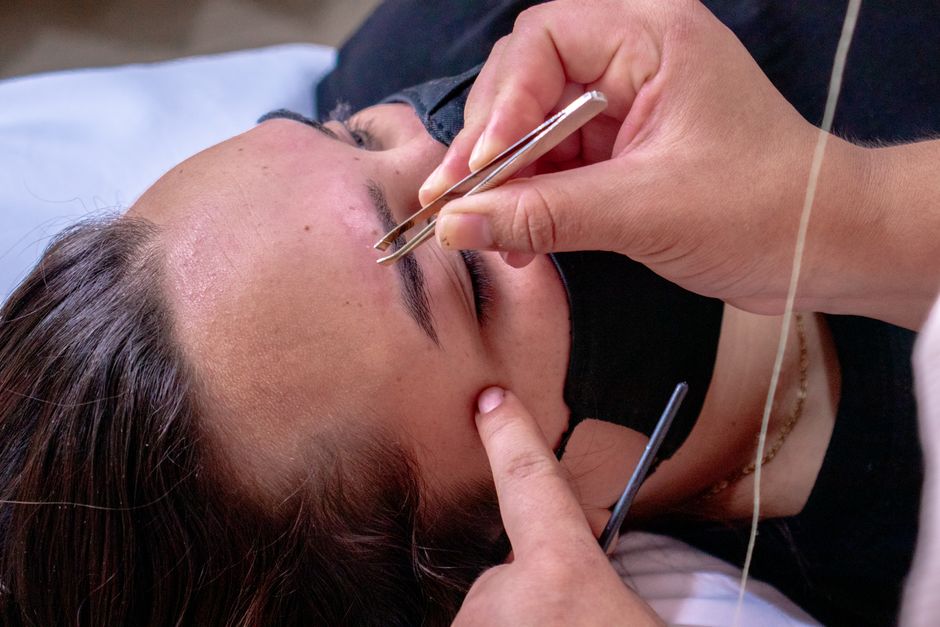
Eyebrows take about 4 to 6 weeks to start showing new growth after they are lost. Full regrowth typically takes 3 to 4 months. This timeline depends on the cause of hair loss and whether the hair follicle is damaged.
How Long Do Eyebrows Take To Grow Back?
Eyebrow hair grows on a different schedule than the hair on your scalp. Each eyebrow hair has its own growth cycle. The active growth phase, called anagen, lasts only about 30 days for eyebrows. In comparison, scalp hair can stay in the growth phase for several years.
After the anagen phase, the hair enters a short transition phase (catagen) and then a resting phase (telogen) that lasts about 3 to 4 months. At the end of the resting phase, the hair falls out and a new one begins to grow. This means that even if you lose an eyebrow hair today, it may take 3 to 4 months before the replacement hair fully emerges and reaches a visible length.
In practical terms, you may notice tiny new hairs within 4 to 6 weeks of losing eyebrows. But most people need to wait about 3 months for brows to look normal again. If the hair follicle itself is undamaged, regrowth follows this natural cycle.
What Affects Eyebrow Growth Speed?
Several factors influence how quickly eyebrows grow back. Age is one of the most important. Hair growth naturally slows as you get older. Eyebrow regrowth may take longer in someone over 50 compared to someone in their 20s.
Genetics also play a role. Some people naturally have faster or slower hair growth cycles. Your overall health matters too. Poor nutrition, chronic illness, or high stress levels can slow hair growth. Nutrients like protein, iron, zinc, and B vitamins are needed for healthy hair. But there is no strong evidence that taking extra supplements speeds up eyebrow growth beyond what a balanced diet provides.
Damage to the hair follicle is the biggest wild card. If the follicle is scarred—from deep cuts, burns, or repeated overplucking—it may not produce hair again. In that case, no amount of waiting will bring the hair back.
Do Overplucked Eyebrows Always Grow Back?
Not always. Occasional plucking usually does not cause permanent damage. But years of aggressive tweezing can injure the hair follicle over time. Each time you pluck, you pull the hair out from the root. If you do this repeatedly to the same follicle, the follicle can become scarred and stop producing hair.
Many people who overplucked in the 1990s and early 2000s now have thin eyebrows that never fully recovered. This is sometimes called overplucked eyebrow syndrome. The medical term is eyebrow hypotrichosis. If the follicle is damaged but not completely destroyed, it may still produce a very fine, light hair that is barely visible. In more severe cases, the follicle dies and no hair grows at all.
If you have overplucked for years, it may take 6 to 12 months to see if any regrowth happens. After a year with no new hairs, it is unlikely that those follicles will recover on their own.



How To Support Eyebrow Regrowth
There is no proven quick fix for eyebrow regrowth. Most of what you see online—castor oil, coconut oil, onion juice—lacks strong clinical evidence. Some small studies suggest that castor oil may moisturize the skin and hair, but no large human trial has confirmed it regrows eyebrows.
The most evidence-based approach is simple: stop plucking, waxing, or threading the area. Give the follicles a break. Let existing hairs grow without interference. For some people, this alone is enough to restore fuller brows within a few months.
If you have a diagnosed deficiency, correcting it can help. Your doctor can check your iron levels, thyroid function, and vitamin D. Treating an underlying medical condition is the only way to reliably improve hair growth when a health problem is the cause.
Products like bimatoprost (Latisse) are sometimes used off-label for eyebrows. Bimatoprost is a prescription medication for eyelash growth. Some studies show it can also stimulate eyebrow growth, but it can cause side effects like skin darkening and eye irritation. You should only use it under a doctor’s supervision.
When To See A Doctor
If your eyebrows have not started to grow back after 3 to 4 months, or if you notice patchy hair loss in other areas, see a doctor. Sudden eyebrow thinning can be a sign of a medical condition.
Common causes include hypothyroidism (underactive thyroid), alopecia areata (an autoimmune condition that causes patchy hair loss), or frontal fibrosing alopecia (a scarring hair loss condition that often affects the eyebrows first). Skin conditions like eczema, psoriasis, or contact dermatitis can also cause eyebrow hair to fall out.
A dermatologist can examine your skin and hair follicles. They may do a blood test or take a small skin sample (biopsy) to find the cause. Treatment depends on the diagnosis. For example, thyroid medication can restore hair growth in hypothyroidism. For alopecia areata, corticosteroid injections sometimes help.
Eyebrow Regrowth After Chemotherapy Or Injury
Eyebrow loss from chemotherapy is temporary. The hair usually begins to grow back 2 to 3 months after the last treatment. However, regrowth may be patchy or slower if chemotherapy was intense or prolonged. Most people see full eyebrow regrowth within 6 months to a year after completing treatment.
For eyebrow loss caused by burns or cuts, regrowth depends on the depth of the injury. Superficial wounds that spare the hair follicles usually heal with normal hair growth. Deeper wounds that scar the follicles may prevent regrowth. In these cases, cosmetic options like microblading or eyebrow transplantation may be considered after the wound has fully healed.
Can You Speed Up Eyebrow Growth With Products?
Over-the-counter growth serums and conditioners are widely marketed but have limited evidence. Some contain peptides or biotin. Biotin is a B vitamin that supports hair health, but taking extra biotin has not been proven to grow hair in people who are not deficient. High doses can interfere with lab tests, including thyroid tests.
Eyebrow growth serums that contain synthetic prostaglandin analogs (similar to bimatoprost) may have some effect. But these are not FDA-approved for eyebrow use. If you choose to try a serum, check the ingredient list. The most effective ones require a prescription.
No topical product can fix a damaged or scarred follicle. If the follicle is gone, no serum will bring it back. Honesty about this point protects readers from wasting money on ineffective products.
Frequently Asked Questions
How long does it take for eyebrows to grow back after plucking?
After plucking, you may see new hairs in 4 to 6 weeks. Full regrowth usually takes 3 to 4 months.
Can eyebrows grow back if you have overplucked for years?
Sometimes. If the hair follicles are damaged but not scarred, they may produce fine hairs again. After a year with no regrowth, recovery is unlikely.
What helps eyebrows grow back faster?
Stopping all plucking and tweezing is the most reliable step. A balanced diet and treating any underlying medical condition may help.
Is it normal for eyebrows to fall out with age?
Some gradual thinning is common with aging. But sudden, patchy, or complete eyebrow loss should be evaluated by a doctor.
