
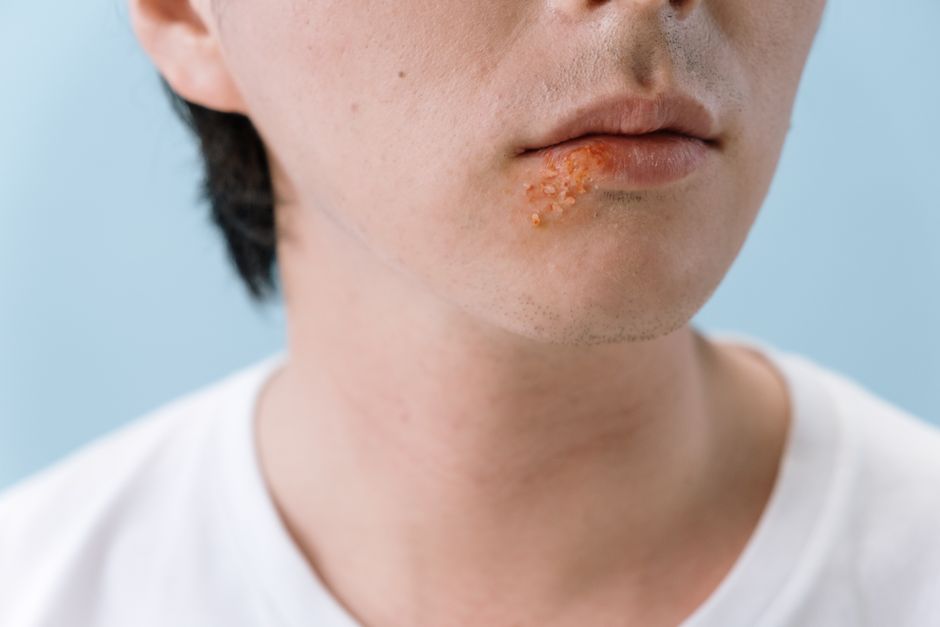
A cold sore is most contagious from the moment you first feel that tingling or burning sensation until the scab has completely fallen off and the skin underneath has healed. This entire process typically takes about 8 to 12 days. You can spread the virus even before you can see a blister, which is why it is so easy to pass along.
What Causes a Cold Sore to Be Contagious?
Cold sores are caused by the herpes simplex virus, most often type 1 (HSV-1). The virus lives inside the nerve cells of your face. When it reactivates, it travels back to the surface of your skin. As it multiplies, it sheds live virus particles into the fluid inside the blister.
That fluid is the key. If it touches another person’s skin, the virus can enter through a tiny cut or through the mucous membranes of the mouth, nose, or eyes. Once inside a new host, the virus establishes a permanent infection. This is why the contagious window is tied so directly to the presence of that fluid.
How Long Are Cold Sores Contagious?
The contagious period runs from the first symptom to full healing. For most people, that is about 8 to 12 days from start to finish. The timeline breaks down into clear stages.
- Tingling stage (Day 0–1): You feel itching, burning, or tingling where the sore will appear. The virus is already active and you are contagious, even though no blister is visible.
- Blister stage (Day 1–3): Small fluid-filled blisters form. This is when the highest amount of live virus is present.
- Weeping stage (Day 3–5): The blisters burst and release fluid. This fluid is highly contagious.
- Scabbing stage (Day 5–8): A yellow or brown crust forms over the sore. The scab can crack and bleed. It is still contagious until it falls off on its own.
- Healing stage (Day 8–12): The scab falls off, leaving pink skin underneath. Once the skin is intact, the contagious period is over.
Do not pick at the scab. Pulling it off early exposes raw skin and can extend both the healing time and the contagious window.
How Is the Virus Spread?
The virus spreads through direct contact with the sore, the fluid from the blister, or the saliva of an infected person. Kissing is the most common route. Sharing items that touch the mouth also spreads it. This includes drinking glasses, water bottles, utensils, lip balm, towels, and razors.
You can also spread the virus to other parts of your own body. This is called autoinoculation. If you touch the cold sore and then touch your eye, you can develop a herpes infection in the eye, which is serious and requires medical attention. If you touch the sore and then touch your genitals, you can transfer the virus there.
The virus does not survive long on dry surfaces. It needs a warm, moist environment to live. Inanimate objects like doorknobs or toilet seats are not a meaningful source of transmission. The primary risk is direct skin-to-skin contact or immediate sharing of personal items.





How to Avoid Spreading Cold Sores
Once you feel the tingling, assume you are contagious. Act accordingly until the sore is fully healed.
- Do not kiss anyone, especially infants, young children, or pregnant women.
- Do not share drinks, food, utensils, or lip balm.
- Do not share towels or washcloths.
- Wash your hands thoroughly with soap and water after touching the sore or applying medication.
- Avoid touching the sore unless you are applying treatment, and wash your hands immediately afterward.
- Do not pick at the scab or pop the blisters.
People with weakened immune systems, newborns, and people with chronic skin conditions like eczema are at higher risk for severe complications if they contract the virus. Extra caution is warranted around these groups.
Can You Spread the Virus With No Visible Sore?
Yes. This is called asymptomatic shedding. The virus can be present in your saliva and on your skin even when you have no symptoms at all. Research shows that people with HSV-1 shed the virus on a small number of days each year without knowing it.
This is why a large portion of the global population carries the virus. Many people were infected during childhood through casual contact with a relative or playmate who had no visible cold sore at the time. You cannot completely eliminate the risk of transmission, but you can reduce it dramatically by avoiding contact during active outbreaks.
Do Treatments Shorten the Contagious Period?
Antiviral medications can shorten the duration of an outbreak. Prescription options like acyclovir, valacyclovir, and famciclovir work best when taken at the very first sign of a tingling sensation. When started early, they can reduce healing time by one to two days, which shortens the contagious window proportionally.
Over-the-counter creams like docosanol (Abreva) can also reduce healing time slightly if applied early. However, no treatment eliminates the contagious period entirely. You are still able to spread the virus while the sore is present, even if it heals faster.
Some evidence suggests that daily suppressive antiviral therapy reduces the frequency of outbreaks and lowers the rate of asymptomatic shedding. This is a decision to discuss with a doctor, particularly if you have frequent outbreaks or a partner who does not carry the virus.
What If the Sore Lasts Longer Than Two Weeks?
A typical cold sore resolves within 12 days. If a sore lasts longer than two weeks, is unusually large, or spreads to other areas, see a doctor. This can indicate a secondary bacterial infection or an underlying immune problem.
People with weakened immune systems, such as those undergoing chemotherapy or living with HIV, may have prolonged or severe outbreaks. They should seek medical advice early in an outbreak rather than waiting for it to resolve on its own.
Any eye involvement is an emergency. If you experience eye pain, redness, light sensitivity, or a feeling of something in your eye during a cold sore outbreak, seek medical care immediately. Herpes keratitis can cause corneal scarring and vision loss if not treated promptly.
How to Reduce the Frequency of Outbreaks
Once you have the virus, it stays in your body for life. Outbreaks are triggered by factors that stress the immune system. Common triggers include illness, fatigue, stress, hormonal changes, and sun exposure.
If you know your triggers, you can sometimes prevent an outbreak. Using lip balm with SPF before sun exposure is one of the most effective prevention strategies. Managing stress and getting adequate sleep also help some people reduce frequency.
If outbreaks are frequent, a doctor may recommend daily antiviral medication. This is a well-established approach for people who have six or more outbreaks per year. It reduces both the frequency of outbreaks and the risk of transmission to partners.
Frequently Asked Questions
Can I kiss someone if my cold sore is scabbed over?
No. A scabbed cold sore is still contagious. Wait until the scab falls off naturally and the skin underneath is fully healed.
Can I spread a cold sore before it appears?
Yes. The virus is active during the tingling stage, before any blister is visible, so you are contagious at that point.
Can I get a cold sore from sharing a drink?
Yes. The virus spreads through saliva, so sharing cups, bottles, or utensils with someone who has an active or imminent cold sore can transmit it.
How long until a cold sore is not contagious?
Typically 8 to 12 days, when the scab has fallen off and the skin underneath is intact and healed.
