
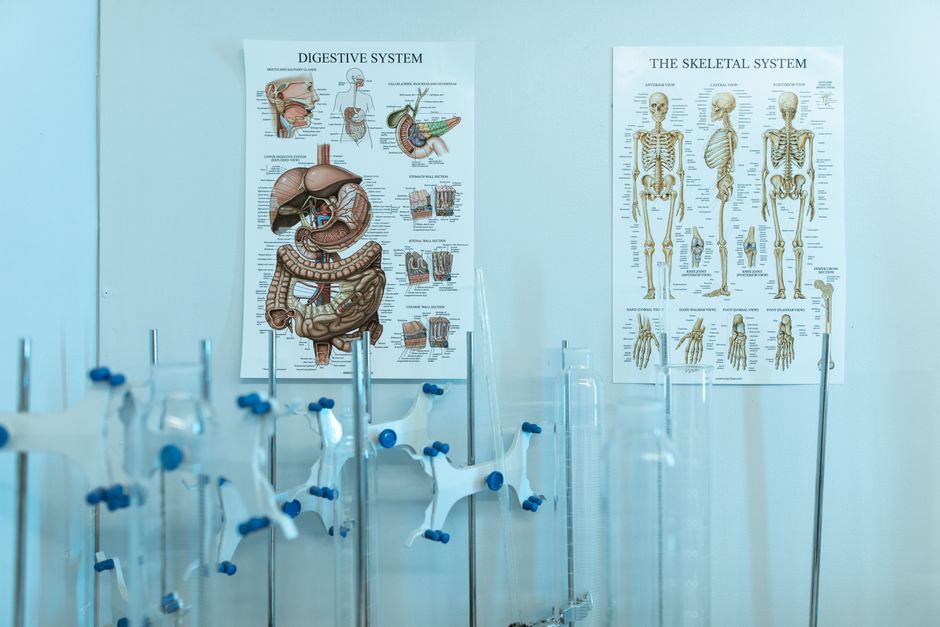
The skeletal and muscular systems are so tightly connected that they are often described as one combined system: the musculoskeletal system. Every bone in your body is a rigid lever, and every muscle is the engine that pulls on it to create movement. Without bones, muscles would have nothing to anchor to, and without muscles, bones would be a static framework with no ability to move. The relationship is physical, mechanical, and metabolic, and it governs everything from a simple blink to a full sprint.
How Is The Skeletal System Related To The Muscular System?
The skeletal system provides the structural framework and attachment points, while the muscular system generates the force that moves those bones. Muscles are attached to bones by tendons, which are tough bands of connective tissue. When a muscle contracts, it shortens and pulls on the tendon, which pulls on the bone, creating movement at the joint. This is a direct, physical relationship that operates like a system of levers and pulleys.
This partnership is not just about motion. The pull of muscles on bones stimulates bone remodeling, which keeps bones dense and strong. Conversely, bones provide the rigid support that muscles need to exert force effectively. Neither system can function fully without the other.
What Is the Anatomy of the Muscle-Bone Connection?
Understanding the relationship starts with the physical connection points. Muscles do not fuse directly to bone. They connect through tendons, which are strong, flexible cords of collagen. One end of the muscle, the origin, attaches to a bone that stays relatively stationary. The other end, the insertion, attaches to a bone that moves when the muscle contracts.
For example, the biceps muscle in your upper arm has its origin on the shoulder blade and its insertion on the radius, one of the bones in the forearm. When the biceps contracts, it pulls the radius toward the shoulder, bending the elbow. The shoulder blade stays mostly in place, serving as the stable anchor. This arrangement of origin and insertion is how every voluntary movement in your body is produced.
At the microscopic level, the connection is even more specialized. At the point where a tendon meets a bone, there is a transition zone of tissue that gradually changes from tendon to cartilage to bone. This gradient distributes the force of muscle contraction across the bone surface, preventing the tendon from tearing away from the bone under heavy load.
What Role Do Joints Play in This Relationship?
Joints are the meeting points between two or more bones, and they are the places where movement actually happens. The type of joint determines the range and direction of motion that muscles can produce. Hinge joints, like the elbow and knee, allow bending and straightening. Ball-and-socket joints, like the shoulder and hip, allow rotation and movement in multiple directions.
Muscles work in pairs called antagonistic pairs to move joints. One muscle contracts to bend the joint, and its partner relaxes. Then the partner contracts to straighten it. The biceps and triceps are a classic example. When you bend your elbow, the biceps contracts and the triceps relaxes. When you straighten your arm, the opposite happens. This coordinated action is controlled by your nervous system, which sends signals to both muscles simultaneously to manage the timing and force.
Ligaments, which connect bone to bone, are also part of this system. They stabilize joints and prevent excessive movement that could damage the bones or muscles. Without ligaments, the force generated by muscles could pull joints apart.





How Does Muscle Contraction Actually Move Bone?
Muscle contraction is a chemical and electrical process that produces mechanical force. When your brain decides to move, it sends an electrical signal through motor neurons to specific muscle fibers. The fibers then release calcium ions, which trigger the proteins actin and myosin to slide past each other. This sliding action shortens the muscle fiber, generating tension.
That tension is transmitted through the tendon to the bone. The amount of force a muscle can generate depends on its cross-sectional area, not its length. A thicker muscle can produce more force. The leverage of that force depends on where the muscle attaches relative to the joint.
Muscles that attach closer to a joint have less leverage but can move the bone faster. Muscles that attach farther from the joint have more leverage and can move heavier loads but move more slowly. This is a mechanical trade-off your body manages automatically based on the task at hand.
What Happens to Bone When Muscle Weakens?
The relationship between muscle and bone is not one-way. Muscle activity directly influences bone health. When muscles pull on bones, they create mechanical strain that bone cells detect. These cells, called osteocytes, respond by signaling other cells to build more bone tissue in that area. This is why weight-bearing exercise strengthens bones, and why astronauts who work in zero gravity lose bone density.
When muscles weaken, bones lose their primary stimulus for maintenance. Conditions that cause muscle weakness, such as prolonged bed rest, nerve damage, or age-related muscle loss, are consistently associated with bone density loss. This is a clear example of how the two systems are metabolically linked, not just physically.
This relationship also works in the other direction. Bone releases substances that influence muscle metabolism. Osteocalcin, a protein produced by bone cells, is involved in regulating energy use and muscle function. Research is still clarifying the full scope of these chemical signals, but the evidence clearly shows that bone is not an inert scaffold. It is an active organ that communicates with muscle tissue.
How Do These Systems Change With Age?
Both systems naturally lose function with age, and they do so in ways that reinforce each other. Starting around age 30, most people begin to lose muscle mass and strength, a condition called sarcopenia. At the same time, bone density begins to decline, a condition called osteopenia that can progress to osteoporosis. The two processes often occur together, and each makes the other worse.
Weaker muscles place less stress on bones, leading to faster bone loss. Weaker bones make exercise more difficult and more painful, leading to further muscle loss. This cycle can be slowed with consistent resistance training and adequate protein and calcium intake. Exercise is the single most effective intervention for preserving both muscle and bone, because it directly stimulates both tissues.
Fall risk also increases with age, partly because of this muscle-bone decline. A fall onto a weakened bone is far more likely to cause a fracture. Hip fractures are particularly serious in older adults, and they often lead to further muscle loss because of reduced mobility during recovery. This is why maintaining muscle strength in the legs and core is strongly recommended for older adults.
What Are Common Injuries to the Muscle-Bone System?
Because the two systems work as one unit, injuries often involve both tissues. A strain is an injury to a muscle or tendon. A sprain is an injury to a ligament. A fracture is an injury to bone. All three can occur together in a single traumatic event, such as a fall or a car accident.
Tendon injuries are common at the points where muscle meets bone. The rotator cuff in the shoulder, the Achilles tendon in the heel, and the patellar tendon in the knee are frequent sites of tendonitis or tears. These injuries often occur because the muscle generates more force than the tendon can handle, or because the tendon has weakened with age.
Stress fractures are another example of the muscle-bone connection. These are tiny cracks in bone that develop from repetitive force, not from a single impact. They are common in runners and military recruits who suddenly increase their training volume. The muscles become stronger quickly, but the bone takes longer to adapt to the increased load. This mismatch can lead to fracture.
How Can You Keep Both Systems Healthy?
Resistance training is the most effective way to maintain the muscle-bone relationship. Lifting weights, using resistance bands, or doing bodyweight exercises like squats and push-ups all place mechanical load on bones and challenge muscles. The key is progressive overload, which means gradually increasing the weight or resistance over time to continue stimulating both tissues.
Weight-bearing aerobic exercise, such as walking, jogging, or stair climbing, also helps maintain bone density. Swimming and cycling are excellent for cardiovascular health, but they do not provide the same bone-stimulating benefits because they do not involve impact or weight bearing.
Nutrition is equally important. Adequate protein supports muscle maintenance. Calcium and vitamin D support bone health. Older adults often need more protein than younger adults to maintain muscle mass, and many people do not get enough vitamin D from sunlight alone. A balanced diet with these nutrients is a practical foundation for both systems.
Frequently Asked Questions
Do muscles attach directly to bones?
No, muscles attach to bones through tendons, which are strong cords of connective tissue. The tendon connects to the bone at a specialized transition zone that distributes force safely.
Can weak muscles cause bone loss?
Yes, weak muscles reduce the mechanical strain on bones, which decreases the stimulus for bone maintenance. This is why prolonged inactivity or muscle weakness is consistently associated with reduced bone density.
What is the best exercise for both bones and muscles?
Resistance training, such as lifting weights or doing bodyweight exercises, is the most effective for both systems. Weight-bearing aerobic activities like walking or jogging also help maintain bone density.
How do bones and muscles work together to produce movement?
Muscles contract and pull on tendons, which pull on bones at the joints. The bones act as levers, and the joints act as fulcrums, producing movement when muscles shorten.
