
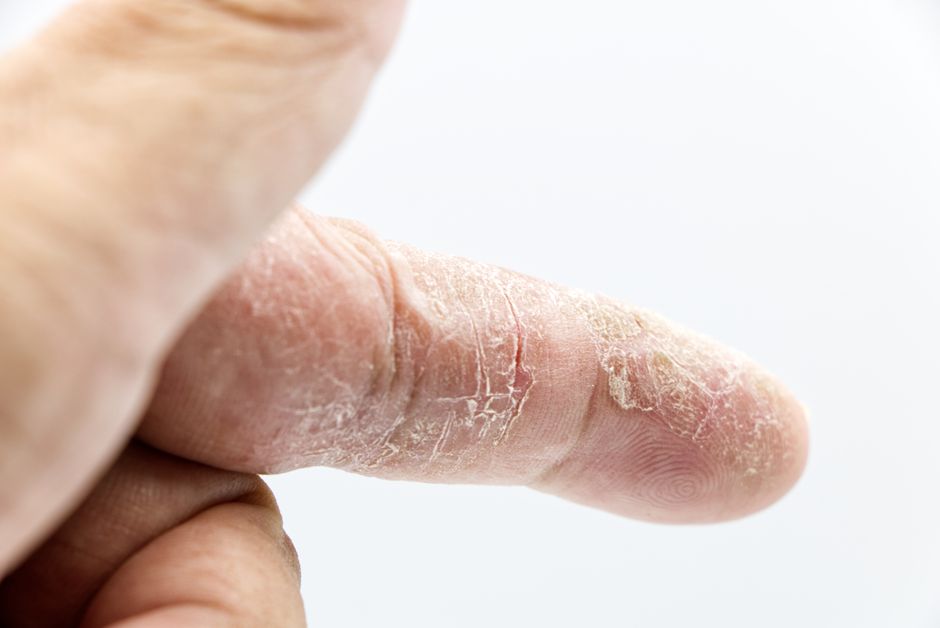
Eczema is caused by a combination of inherited skin barrier defects, immune system overactivity, and environmental triggers that push already-vulnerable skin into a cycle of inflammation and itching. The most well-studied genetic factor involves a protein called filaggrin, which helps build and maintain the skin’s outer protective layer. When that barrier is weak, moisture escapes and irritants get in, setting off the immune reactions that produce the rash.
How Is Eczema Caused by Skin Barrier Genes and Triggers?
Atopic dermatitis — the most common form of eczema — is not one disease with one cause. It is a condition that emerges when several factors line up. Genetics load the gun. The environment pulls the trigger.
The skin’s outermost layer, the stratum corneum, works like a brick wall. Skin cells are the bricks. Lipids and proteins — including filaggrin — are the mortar. In many people with eczema, that mortar is faulty. Water evaporates too easily, and foreign substances slip past the barrier that should keep them out.
The FLG gene carries instructions for making filaggrin. Certain variants of this gene reduce how much filaggrin the skin produces, or eliminate it entirely. Research published in Nature Genetics and other journals has established that loss-of-function FLG mutations are strongly associated with atopic dermatitis, particularly early-onset and persistent cases.
But here is what most people get wrong: not everyone with eczema has a filaggrin mutation. And not everyone with a filaggrin mutation develops eczema. Roughly half or more of people with moderate to severe atopic dermatitis do not carry an FLG mutation at all. The genetics are more complicated than a single gene.
What the filaggrin story reveals is a principle that applies more broadly: when the skin barrier is compromised — for any reason — the immune system reacts to things it normally would ignore.
What Happens Inside the Skin During an Eczema Flare?
The immune system drives eczema flares, even when a barrier problem started the process. Once irritants or allergens cross a weakened barrier, immune cells in the skin respond.
Two main immune pathways are involved. One involves type 2 helper T cells (Th2 cells) that release signaling molecules called cytokines — including interleukin-4 (IL-4) and interleukin-13 (IL-13). These cytokines promote inflammation and itching, and they can further weaken the skin barrier. This creates a feedback loop: barrier damage triggers immune response, and immune response damages the barrier further.
The itch itself is not just a symptom. Scratching physically damages skin cells, releasing more inflammatory signals. This is sometimes called the itch-scratch cycle, and it is one reason eczema can be so hard to control.
Research has also shown that people with atopic dermatitis often carry Staphylococcus aureus bacteria on their skin at higher rates than people without the condition. Whether this is a cause or a consequence of the disease is still debated. Some evidence suggests the bacteria worsen inflammation, but the relationship is complex.
What Triggers Eczema Flares When You Already Have the Genes?
Having a genetic predisposition does not mean you will constantly flare. Triggers are the external and internal factors that activate the condition. They vary from person to person, and identifying yours takes observation.
Common triggers include:
- Irritants: Soaps, detergents, fragrances, preservatives, and harsh fabrics like wool can strip lipids from the skin or directly irritate it.
- Allergens: Dust mites, pet dander, pollen, and mold can provoke immune reactions in sensitized people.
- Climate: Low humidity, cold weather, and dry indoor heating pull moisture from the skin. Some people flare in heat and sweat instead.
- Stress: Psychological stress does not cause eczema, but it can worsen it. The mechanisms involve stress hormones and immune signaling, though the exact pathways are still being studied.
- Infections: Skin infections and even common illnesses can trigger flares.
- Hormones: Some women report flares around their menstrual cycle or during pregnancy. The evidence for hormonal triggers is based largely on patient reports rather than controlled studies.
Food allergies deserve a specific note. In infants and young children with moderate to severe eczema, food allergies are more common than in the general population. However, food is rarely the sole trigger of eczema in older children and adults. Eliminating foods without confirmed allergy testing can lead to nutritional deficiencies and is not recommended. If you suspect a food trigger, testing should be done under medical supervision.
-
 Is Niacinamide Good For A Damaged Skin Barrier?
 -
What Is Skin Barrier Spray Used For And How It Works?
-
What Makes Skin Waterproof The Bodys Natural Barrier?
-
How To Shade Dark Skin Without A Gray Cast? Key Facts
-
PrimeBiome Reviews: A 2025 Critical Analysis, Real Results, Side Effects, and Is It a Scam?





Does Everyone With Eczema Have a Filaggrin Mutation?
No. This is one of the most important things to understand about eczema genetics.
Filaggrin mutations are the strongest single-gene risk factor identified so far. They are found in a significant minority of people with atopic dermatitis — roughly 10 to 30 percent in most study populations, depending on ethnicity and severity. But the majority of people with eczema do not have one.
Other genes involved in skin barrier formation, lipid metabolism, and immune regulation also contribute. Genome-wide association studies have identified dozens of genetic variants associated with atopic dermatitis. Each one adds a small amount of risk. The cumulative effect, combined with environmental exposures, determines whether someone develops the condition.
This is why eczema runs in families but does not follow a simple inheritance pattern. A parent with eczema may pass on increased risk without passing on any single mutation. A child may develop eczema even when no parent has it.
How Do You Know If Your Skin Barrier Is the Problem?
There is no routine clinical test that measures skin barrier function directly. Doctors diagnose eczema based on history and physical examination — the location, appearance, and pattern of the rash, along with itching and chronicity.
However, some signs suggest a barrier problem is playing a significant role:
- Skin feels tight or dry even when not flaring
- Products that do not bother most people — certain soaps, lotions, or fabrics — cause stinging or redness
- Eczema started in infancy or early childhood
- You also have asthma, hay fever, or food allergies (the “atopic march”)
- Skin loses moisture quickly after bathing
These signs are not diagnostic on their own. They are clues that a dermatologist or allergist would consider alongside the full clinical picture.
Can You Fix a Genetic Skin Barrier Problem?
You cannot change the genes. But you can support the barrier the genes build.
Moisturizers are the foundation of eczema care, even when skin looks clear. They do not “cure” the condition, but they reduce water loss and may reduce flare frequency. Research published in the Journal of Allergy and Clinical Immunology and other journals has examined whether early, consistent moisturizer use in high-risk infants can prevent eczema. Results have been mixed. Some trials showed a reduction in eczema incidence; others did not. The evidence does not currently support moisturizers as a guaranteed prevention strategy.
What the evidence does support:
- Fragrance-free, dye-free moisturizers applied within minutes of bathing help trap water in the skin
- Avoiding known irritants reduces barrier stress
- Prescription treatments — topical corticosteroids, calcineurin inhibitors, and newer biologic medications — target inflammation when the barrier alone is not enough
Some clinicians recommend bleach baths (dilute sodium hypochlorite) for people with frequent skin infections. This is based on evidence showing reduced bacterial colonization and improved eczema severity in some studies, though results vary. It should be done under medical guidance, not as a self-designed regimen.
The honest position: we can manage eczema well for most people. We cannot yet repair the underlying genetic barrier. Treatment aims to break the inflammation-itch cycle long enough for the skin to recover, and to keep it from restarting.
Frequently Asked Questions
Is eczema hereditary?
Eczema has a strong genetic component, and having a parent or sibling with eczema, asthma, or hay fever increases risk. However, it does not follow a simple pattern — many people with eczema have no family history of it.
Can eczema go away on its own?
Many children with eczema see improvement or resolution by adolescence, though some continue to have symptoms into adulthood. Adult-onset eczema tends to be persistent and requires ongoing management.
Does a filaggrin test tell you if you have eczema?
No. Filaggrin mutations increase risk but are neither necessary nor sufficient for diagnosis. Eczema is diagnosed clinically, and genetic testing is not part of routine evaluation.
Can stress cause eczema?
Stress does not cause eczema, but it can trigger or worsen flares in people who already have the condition. The relationship involves stress hormones and immune signaling, though the exact mechanisms are not fully understood.
