
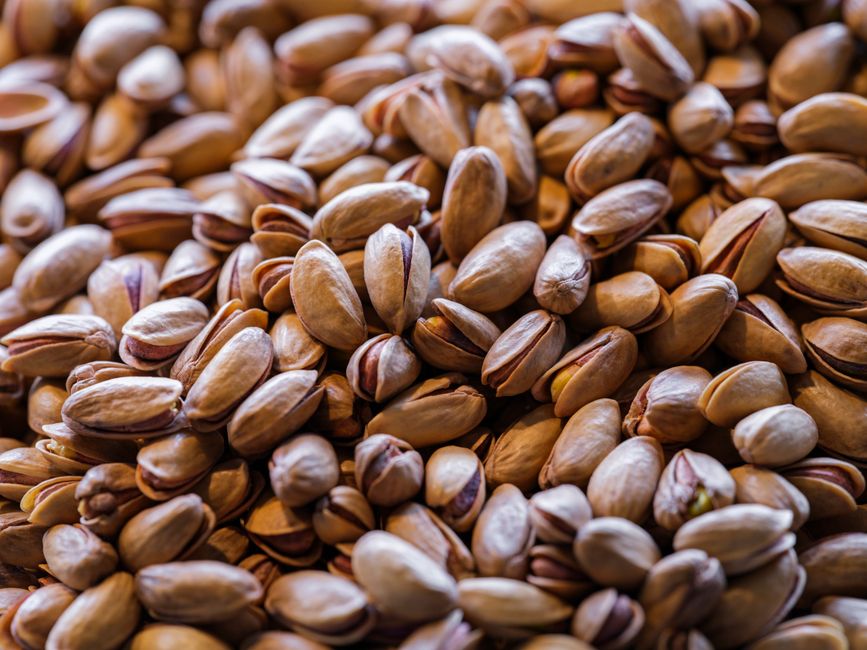
Pistachios are one of the better snack choices you can make. They deliver a solid mix of protein, fiber, healthy fats, and several vitamins and minerals, and they are the lowest-calorie nut per serving when you compare them to almonds, walnuts, cashews, and pecans. For most adults, eating a handful a day fits well into a healthy diet. The main cautions are portion size and salt, not the nut itself.
What Makes Pistachios Nutritious?
The short answer is their nutrient density relative to calories. A 1-ounce serving of dry-roasted pistachios — about 49 kernels — contains roughly 160 calories, 6 grams of protein, 3 grams of fiber, and 13 grams of fat, most of which is unsaturated. That same ounce provides meaningful amounts of vitamin B6, thiamine, copper, phosphorus, and manganese.
Vitamin B6 stands out. Pistachios are among the few plant foods that supply a substantial amount of it. The body needs B6 for protein metabolism, immune function, and the production of several neurotransmitters. A single ounce covers a large share of what most adults need in a day.
They also contain potassium, which matters for blood pressure regulation, and magnesium, which is involved in muscle and nerve function. Compared with many other nuts, pistachios pack more potassium per ounce.
One detail worth knowing: pistachios are sold both in-shell and shelled. In-shell pistachios take longer to eat because you have to crack each one. Some research suggests this slower pace may lead people to eat less overall compared with shelled nuts, though the effect is modest and not every study agrees.
How Healthy Are Pistachios Compared to Other Nuts?
Pistachios hold their own against other nuts, and in a few areas they come out ahead. The table below compares a 1-ounce serving of four common nuts using USDA nutrient data.
| Nut (1 oz) | Calories | Protein | Fiber | Total Fat |
|---|---|---|---|---|
| Pistachios | ~160 | 6 g | 3 g | 13 g |
| Almonds | ~165 | 6 g | 4 g | 14 g |
| Walnuts | ~185 | 4 g | 2 g | 18 g |
| Cashews | ~155 | 5 g | 1 g | 12 g |
Walnuts win on omega-3 fatty acids, which most Americans do not get enough of. Almonds edge out pistachios slightly on fiber and vitamin E. Pistachios win on potassium, vitamin B6, and calorie count per serving. Cashews are lower in fiber and lower in protein.
The honest takeaway: all unsalted nuts are good for you. The best one is the one you will actually eat. Pistachios have a practical advantage here — they are easy to portion, they taste mild, and they work in both sweet and savory dishes.
Do Pistachios Help With Weight Control?
Nuts are calorie-dense, which makes people nervous about eating them while trying to lose weight. The evidence does not support that fear. Studies that track people over years generally find that nut eaters do not gain more weight than people who avoid nuts, and some research links regular nut intake to slightly lower body weight over time.
There are a few reasons this may happen. Nuts are filling, so they tend to reduce hunger later. The body also does not absorb all the fat in nuts — some passes through undigested, bound up in the nut’s cell walls. Pistachios in particular appear to have a lower available energy content than the label suggests for this reason, though the exact amount absorbed varies from person to person.
That said, none of this means calories stop counting. A 1-ounce serving is about 160 calories. If you eat three servings while watching television, that is close to 500 calories. Portion awareness still matters.
If you are trying to manage weight, the practical move is to pre-portion pistachios rather than eating from a large bag. In-shell pistachios help here too, since the shells pile up and give you a visual cue of how much you have eaten.





What Does the Research Say About Heart Health?
The strongest evidence for nuts and heart health comes from large observational studies. These studies consistently find that people who eat nuts regularly have lower rates of heart disease than people who rarely eat them. Pistachios are included in that broader nut category, though most of the large studies look at nuts as a group rather than pistachios alone.
Smaller clinical trials specifically on pistachios have looked at cholesterol and blood pressure. Some of these trials found modest improvements in total cholesterol and LDL cholesterol when pistachios replaced other snacks in the diet. Others found small reductions in blood pressure. These trials tend to be short and involve relatively few people, so the results should be read as encouraging but not definitive.
What is well established: the fat in pistachios is mostly unsaturated, and replacing saturated fat with unsaturated fat in the diet lowers LDL cholesterol. That is a general principle supported by decades of research, and pistachios fit into it.
What is not established: that pistachios specifically prevent heart attacks or strokes. No large trial has tested that. The case for pistachios is built on their nutrient profile plus the broader evidence about nuts and unsaturated fats.
Are There Downsides to Eating Pistachios?
For most people, no. But a few things are worth knowing.
- Salt. Many pistachios are sold salted or flavored. A serving of salted pistachios can add a meaningful amount of sodium. If you are watching your blood pressure, buy unsalted or lightly salted and check the label.
- Calories. They add up fast if you eat shelled pistachios straight from the bag.
- Allergy. Tree nut allergies can be serious. Pistachios are tree nuts, and people with a known tree nut allergy should avoid them unless a doctor has said otherwise.
- FODMAPs. Pistachios are relatively high in fermentable carbohydrates. People with irritable bowel syndrome may find that larger portions cause bloating or gas.
- Choking risk. Whole nuts are a choking hazard for children under 4. This is a well-established safety concern, not a minor one.
There is also a practical storage note. Pistachios go rancid over time because of their fat content. Keep them in an airtight container in a cool, dark place, or in the refrigerator for longer storage.
How Should You Fit Pistachios Into Your Diet?
A reasonable target for most adults is about 1 ounce per day — roughly 49 kernels, or a small handful. That fits within the general guidance to eat a variety of nuts as part of a balanced diet.
Pistachios are versatile. They work as a snack on their own, chopped into salads, stirred into yogurt, blended into pesto, or sprinkled over fish. Using them as a replacement for less nutritious snacks — chips, cookies, processed crackers — is where the real benefit comes from.
Watch the flavored varieties. Honey-roasted, salt-and-pepper, and similar options often carry added sugar, sodium, or oil. Plain roasted or raw pistachios are the simplest choice.
If you have kidney disease, your doctor may have advised you to limit potassium or phosphorus. Pistachios are high in both, so check with your care team before making them a regular part of your diet.
Frequently Asked Questions
How many pistachios should I eat a day?
A common target is about 1 ounce, or roughly 49 kernels, per day. That amount fits within general guidance for nut intake, though individual needs vary based on overall diet and calorie goals.
Are pistachios fattening?
Not inherently. Research generally shows that nut eaters do not gain more weight than people who avoid nuts, partly because nuts are filling and some of their fat is not fully absorbed.
Are salted pistachios bad for you?
Salted pistachios can add significant sodium to your diet, which matters if you are watching your blood pressure. Unsalted or lightly salted versions are a better everyday choice.
Can pistachios lower cholesterol?
Some short-term trials found modest improvements in cholesterol when pistachios replaced other snacks, but these studies were small. The broader evidence that replacing saturated fat with unsaturated fat lowers LDL cholesterol is well established.
