
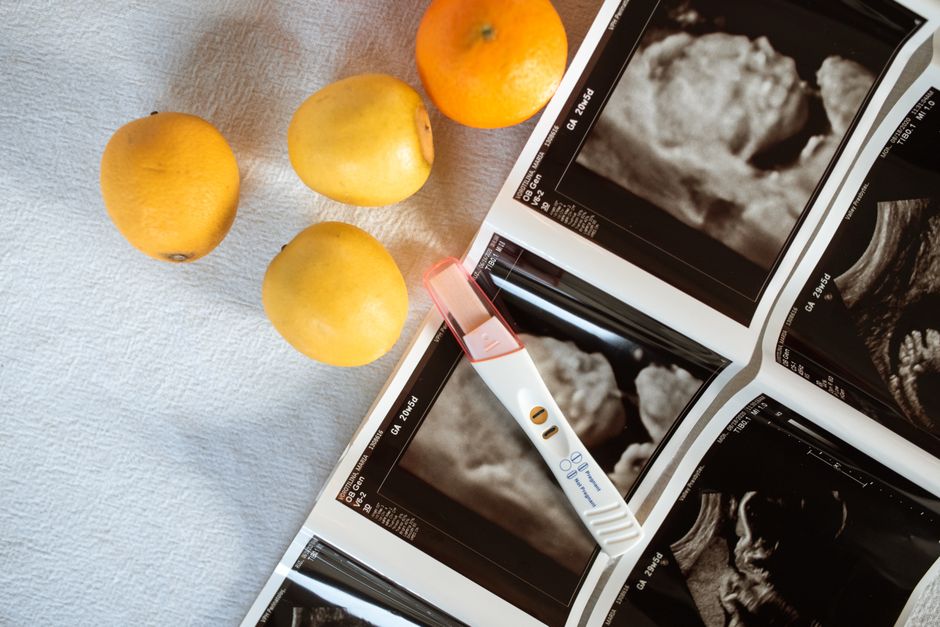
Some people notice pregnancy symptoms within a week of conception. Others feel nothing at all until they miss a period, or even later. The timing depends on when ovulation and fertilization happen, and how your body responds to shifting hormones.
Here is the short answer: implantation, when a fertilized egg attaches to the uterine lining, typically happens 6 to 12 days after ovulation. Pregnancy hormones start rising after that. So the earliest symptoms most people could realistically notice show up somewhere around 8 to 14 days after ovulation, which is often right around the time of a missed period. Before implantation, pregnancy symptoms are not possible, because the hormonal signal that drives them has not started yet.
This guide breaks down what happens week by week, which symptoms have real evidence behind them, and which ones get blamed on pregnancy when they usually mean something else.
What Happens in the Body Right After Conception?
Conception, the moment sperm meets egg, usually happens within a day of ovulation. But conception is not the same as pregnancy being established.
The fertilized egg, now called a blastocyst, travels down the fallopian tube and must implant into the uterine lining. That implantation step is what triggers the hormone shift behind most early symptoms. Before implantation, the body has not yet begun producing the hormone hCG (human chorionic gonadotropin), which is the signal a pregnancy test detects and the driver behind many early symptoms.
After implantation, hCG levels rise quickly, roughly doubling every two to three days in early pregnancy. Progesterone also climbs to support the uterine lining. Those two hormones are behind most of what people describe as “early pregnancy symptoms.”
This timeline matters because it explains why “symptoms” a day or two after sex are not pregnancy symptoms. Nothing hormonal has happened yet.
How Fast Can You Get Pregnancy Symptoms?
The realistic window is about 8 to 14 days after ovulation. That is when implantation has usually occurred and hormone levels have had time to rise enough to affect the body.
For a person with a typical 28-day cycle, ovulation happens around day 14. That puts the earliest possible symptoms near days 22 to 28 of the cycle, which lines up closely with when a period would be due. This is why so many early pregnancy symptoms get mistaken for premenstrual symptoms, and the reverse. The two can feel nearly identical.
A few important points:
- No symptom can appear before implantation, because the hormonal trigger has not started.
- Implantation timing varies. Some people implant around day 6 after ovulation, others closer to day 12.
- A positive pregnancy test usually turns positive around the time of a missed period, sometimes a day or two before.
- Feeling “different” within 24 to 48 hours of possible conception is not a pregnancy symptom. It is far too early.
One non-obvious point: cycle length changes everything. Someone who ovulates on day 20 of a 34-day cycle will not have the same symptom timeline as someone who ovulates on day 12. Counting from the last period is less accurate than counting from ovulation.
Which Early Symptoms Are Most Common?
The most commonly reported early symptoms are breast tenderness, fatigue, mild cramping, and nausea. These are the ones with the most consistent reports, though none of them are unique to pregnancy.
Breast tenderness is often one of the first things people notice. Rising progesterone and estrogen increase blood flow to breast tissue. The breasts may feel fuller, heavier, or sore. This can start within a week or two of implantation.
Fatigue is common and can be striking. Progesterone has a sedating effect, and the body is ramping up blood volume and metabolic activity. Many people describe exhaustion that feels different from ordinary tiredness, though this is subjective.
Mild cramping can happen around implantation. Some people notice light spotting at the same time, sometimes called implantation bleeding. It is usually lighter and shorter than a period, but not everyone gets it, and it is not a reliable sign on its own.
Nausea usually starts later, often around week 6 of pregnancy, though a small number of people report it earlier. Nausea that begins a few days after ovulation is more likely unrelated to pregnancy.
Other reported symptoms include food aversions, heightened sense of smell, and mood changes. These overlap heavily with normal hormonal fluctuations and premenstrual changes.




Why Early Symptoms Are So Hard to Pin Down
Early pregnancy symptoms and premenstrual symptoms come from overlapping hormones. Progesterone rises in both cases. That is why breast tenderness, cramping, fatigue, and mood shifts show up on both lists.
This overlap is not a small problem. It is the main reason people misread their own bodies in the two-week wait between ovulation and a missed period. A twinge that feels like a symptom could just as easily be a normal cycle change.
There is also a well-documented effect where people who are trying to conceive report more symptoms than those who are not, even when pregnancy outcomes are the same. Expectation shapes perception. This does not mean symptoms are imaginary. It means self-reporting during this window is genuinely unreliable.
The practical takeaway: symptoms alone cannot confirm or rule out pregnancy. Only a test can.
When Can a Pregnancy Test Confirm It?
A home pregnancy test detects hCG in urine. hCG only appears after implantation, and it takes a few days to build up to detectable levels.
Most home tests are designed to detect hCG around the time of a missed period. Testing too early is the most common reason for a false negative. If you test before your period is due and get a negative result, that result may not be final.
Testing accuracy depends on:
- How many days past ovulation you are
- The sensitivity of the specific test
- How diluted your urine is (first-morning urine is more concentrated)
If a test is negative but your period stays absent, waiting a few days and testing again is the standard approach. A blood test at a clinic can detect hCG earlier than a urine test, because it measures the hormone directly and at lower levels.
What Symptoms Are Not Actually Early Pregnancy Signs?
Several symptoms get widely attributed to early pregnancy but have little support for appearing that early.
Nausea within days of conception is very unlikely. Nausea typically starts later, once hCG has risen substantially.
Food cravings are usually a later-pregnancy symptom, not an early one. Cravings in the first days after ovulation are almost certainly unrelated.
Mood swings in the first week are more likely tied to normal cycle hormones than to pregnancy, since pregnancy hormones have not risen yet.
A “feeling” or intuition is not a symptom. It can be right by chance, but it has no biological basis as a signal.
One clarification worth making: implantation bleeding is real, but it is often over-identified. Many people who spot lightly before a period assume it is implantation bleeding when it is simply early menstrual spotting. The two can look the same.
How to Approach the Two-Week Wait
The stretch between ovulation and a missed period is genuinely uncertain, and no amount of symptom-watching resolves it. That is not a flaw in your awareness. It is biology.
A few practical points:
- Track ovulation rather than just your period start date. It gives a more accurate timeline.
- Note symptoms without over-reading them. Patterns across cycles can be more informative than single symptoms.
- Wait until a missed period before testing, unless a clinician advises otherwise.
- If you have concerns about fertility, irregular cycles, or symptoms that worry you, talk to a healthcare provider rather than relying on symptom interpretation.
If you are trying to conceive and your cycles are irregular, or if you have been trying for a year without success (or six months if you are over 35), that is a reason to seek medical guidance. This is general information, not a substitute for personalized medical advice.
Frequently Asked Questions
How soon after sex can you feel pregnancy symptoms?
You cannot feel true pregnancy symptoms until implantation occurs, which is typically 6 to 12 days after ovulation. That means the earliest realistic symptoms appear around 8 to 14 days after ovulation, not within a day or two of sex.
Can you have pregnancy symptoms before a missed period?
Yes, some people notice symptoms like breast tenderness or fatigue a few days before a missed period. However, these symptoms overlap heavily with premenstrual symptoms, so they cannot confirm pregnancy on their own.
What is the earliest symptom of pregnancy?
Breast tenderness and fatigue are among the most commonly reported early symptoms. Both are driven by rising progesterone and estrogen after implantation, but neither is unique to pregnancy.
Can you get a positive pregnancy test before symptoms start?
Yes, a pregnancy test can turn positive around the time of a missed period, sometimes a day or two before symptoms are noticeable. hCG can reach detectable levels before you feel any physical changes.
