
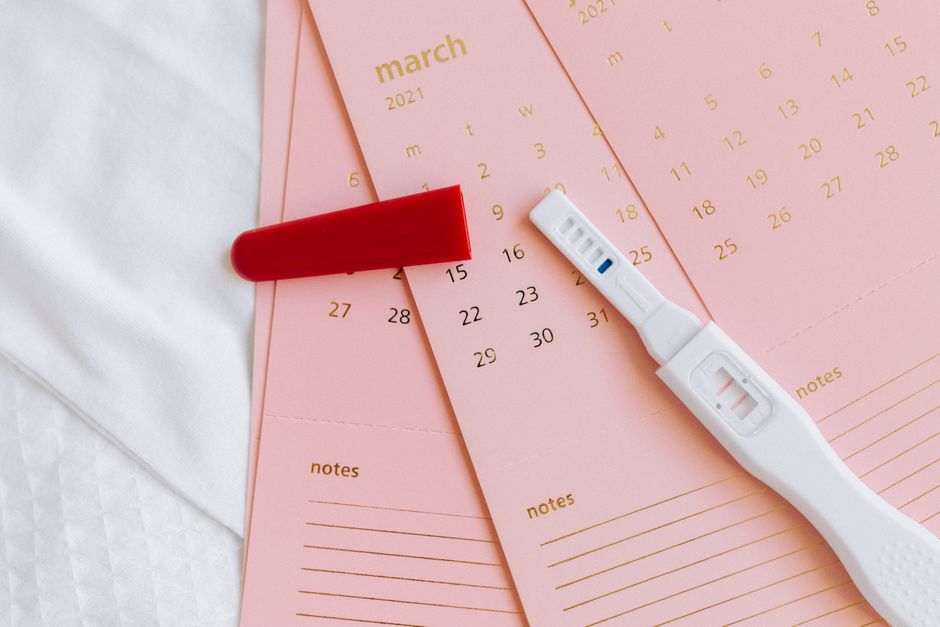
Ovulation is the moment an egg is released from the ovary, and it marks the start of the only window in a cycle when pregnancy can begin. If you are trying to conceive, the question of when a pregnancy test will give a reliable answer comes down to one thing: a hormone called hCG, which the developing embryo starts producing after it implants in the uterus. Implantation usually happens about 6 to 12 days after ovulation, and hCG becomes detectable in urine a few days after that. Most home pregnancy tests are designed to give a reliable result around the time of a missed period, which is roughly 14 days after ovulation in a typical 28-day cycle.
When To Test For Pregnancy After Ovulation?
The most reliable time to test is on the first day of a missed period. For a person with a regular 28-day cycle, that falls about 14 days after ovulation.
Testing earlier than that raises the chance of a false negative. The embryo may have implanted, but hCG levels in urine might still be too low for the test to detect. Home tests vary in their sensitivity, and the earliest ones can pick up hCG at concentrations around 10 to 25 mIU/mL. Even so, a test that can detect low levels only helps if your body has produced enough hCG by the day you use it.
There is a reason early testing so often disappoints. The timeline from ovulation to a positive test is not fixed. It depends on when the fertilized egg implants, and implantation timing varies from person to person and even from cycle to cycle. Testing at 10 days past ovulation works for some people and misses for many others.
If you want the highest chance of an accurate result on the first try, waiting until your period is due or late is the most dependable approach. Testing days earlier is not wrong, but a negative result at that point does not mean you are not pregnant.
How Long After Ovulation Can You Test?
You can technically use a test at any point, but the result only becomes meaningful once enough hCG has built up. That usually takes about two weeks from ovulation.
Here is the sequence that has to happen first:
- The egg is released at ovulation and survives for roughly 12 to 24 hours.
- If sperm is present, fertilization can occur within that window.
- The fertilized egg travels down the fallopian tube and reaches the uterus.
- Implantation into the uterine lining typically occurs 6 to 12 days after ovulation.
- The cells that will become the placenta begin producing hCG after implantation.
- hCG enters the bloodstream first, then appears in urine a short time later.
Because implantation itself can take up to 12 days, and hCG needs additional time to reach detectable urine levels, testing at 7 or 8 days past ovulation is too early for most people. Some very sensitive tests claim earlier detection, but the limiting factor is your body’s hCG production, not the test strip.
A detail many people miss: hCG shows up in blood before it shows up in urine. A blood test drawn in a clinic can detect pregnancy slightly earlier than a home urine test. That is one reason a doctor may confirm a pregnancy with a blood draw when a home test is negative but a period is still absent.
Does Testing Too Early Give a False Negative?
Yes. Testing before hCG reaches the test’s detection threshold is the most common cause of a false negative.
A false negative means the test says you are not pregnant when you actually are. This is far more likely in the days right after ovulation than it is around the time of a missed period. The test is not broken. There simply is not enough hCG in your urine yet for the strip to register a positive line.
Other factors can contribute to a false negative:
- Using urine that is very diluted, such as after drinking a lot of water.
- Testing at a different time of day when hCG concentration is lower. First-morning urine is generally more concentrated.
- Reading the result outside the time window stated on the test instructions.
- Using an expired or improperly stored test.
If you get a negative result but your period still does not arrive, wait a few days and test again. hCG levels roughly double every 48 to 72 hours in early pregnancy, so a test that was negative can turn positive within a short time.





Which Pregnancy Test Is Most Accurate?
Home urine tests are highly accurate when used on or after the day of a missed period. At that point, most brands report accuracy in the high 90s for detecting pregnancy.
Accuracy drops when you test before your period is due. The difference between brands mostly comes down to their detection threshold, the lowest hCG concentration they can register. A test sensitive to 10 mIU/mL can detect pregnancy earlier in theory than one sensitive to 25 mIU/mL. But sensitivity on the label does not change how fast your body produces hCG.
Blood tests, done at a clinic, measure the exact amount of hCG in your blood. They can detect pregnancy earlier than urine tests and are sometimes used to track whether hCG is rising as expected. A blood test is not something you can do at home, and it requires a clinician to order it.
For home use, the practical advice is simple: choose a test you can read clearly, follow the instructions exactly, and test on or after the day your period is due for the most trustworthy result.
Can You Test Before a Missed Period?
You can, and many people do. Just understand what a negative result at that stage does and does not tell you.
Some tests are marketed for testing several days before a missed period. Those claims rest on the test’s ability to detect low hCG levels. They do not guarantee your body has produced enough hCG by that day. Research on early testing consistently finds that testing before a missed period increases the rate of false negatives.
If you decide to test early, a few practices improve your odds of an accurate reading:
- Use first-morning urine, which is the most concentrated.
- Avoid drinking large amounts of fluid right before testing.
- Wait at least a couple of days between tests if the first is negative.
- Follow the reading window on the instructions precisely.
A positive result at any point is generally reliable. False positives are uncommon. They can happen with certain medical conditions, fertility medications containing hCG, or a very early loss, but a clear positive line usually means pregnancy.
What If You Do Not Know When You Ovulated?
If ovulation timing is unclear, use your period as the reference point instead. Test on the first day of a missed period, or a few days after.
Not everyone has a predictable 28-day cycle, and ovulation does not always happen on day 14. Cycles vary in length, and ovulation can shift from month to month. People with irregular cycles may ovulate later than they expect, which pushes back the earliest reliable testing date.
Ways to estimate ovulation include tracking basal body temperature, watching cervical mucus changes, and using ovulation predictor kits that detect the hormone surge before ovulation. Each method has limits. Basal body temperature confirms ovulation after it happens, not before. Ovulation predictor kits detect the surge that usually precedes ovulation but cannot confirm the exact moment the egg is released.
When ovulation timing is genuinely unknown, the safest approach is to test on the day your period is due and again a few days later if it does not arrive. If your cycles are very irregular, a clinician can help you interpret results and decide whether further testing is warranted.
When Should You See a Doctor?
Talk to a clinician if you have a positive test and want to confirm the pregnancy or begin prenatal care. Also seek advice if your period is late but repeated home tests stay negative.
A missed period with negative tests can have several explanations. It may be that you ovulated later than expected and tested too soon. It can also reflect cycle changes from stress, illness, weight change, or other factors. A clinician can order a blood test to settle the question and look into why your cycle has changed.
If you have been trying to conceive for a year without success, or six months if you are 35 or older, that is a reasonable point to seek evaluation. These general timeframes are widely used in clinical practice, though your own situation may call for a different approach.
Frequently Asked Questions
How many days after ovulation should I take a pregnancy test?
Wait until your period is due, which is about 14 days after ovulation in a typical 28-day cycle. Testing earlier raises the chance of a false negative because hCG may not yet be detectable in urine.
Can a pregnancy test be positive 7 days after ovulation?
It is possible but uncommon. Implantation usually happens 6 to 12 days after ovulation, and hCG needs additional time to reach detectable urine levels, so most people will not get a positive result that early.
Is it better to test in the morning?
Yes, first-morning urine is generally the most concentrated and gives the best chance of detecting hCG. This matters most when testing early, before a missed period.
What should I do if I test negative but my period is late?
Wait a few days and test again, since hCG levels rise quickly in early pregnancy. If your period stays absent and repeat tests remain negative, contact a clinician to check what is going on.
