
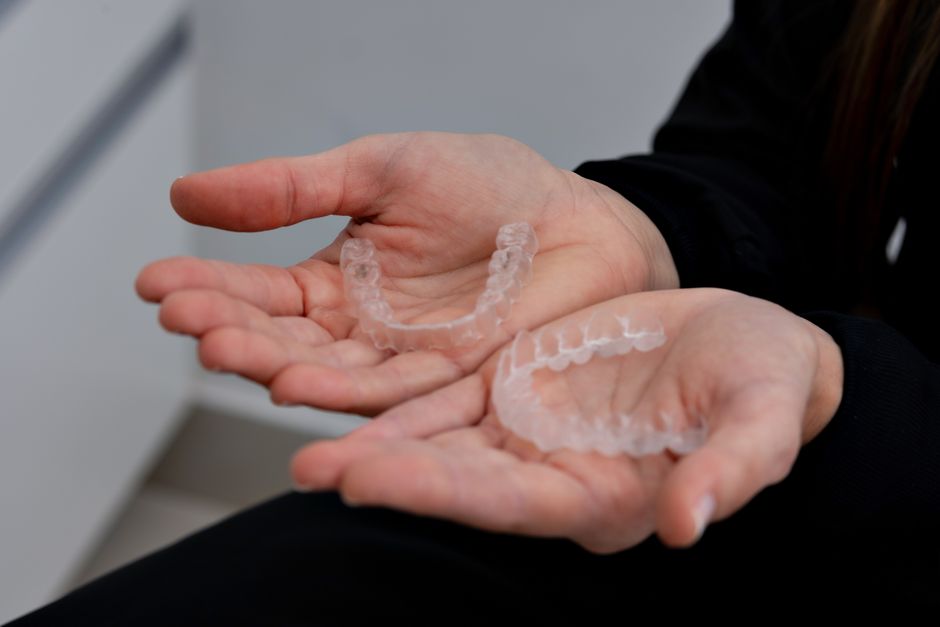
Invisalign typically costs between $3,000 and $8,000 for a full course of treatment in the United States. That price range makes it comparable to traditional metal braces, which usually run $2,500 to $7,000. Your final cost depends on how complex your case is, where you live, and whether your dentist or orthodontist includes all necessary appointments in the quoted price.
What Determines the Final Price of Invisalign?
The single biggest factor is the complexity of your bite and alignment issues. Mild crowding or small gaps require fewer aligner trays and less treatment time. Severe rotations, bite corrections, or jaw alignment problems need more trays and longer treatment.
Treatment time typically ranges from 6 to 18 months for minor cases and up to 24 months or more for complex ones. More time means more aligners, more appointments, and a higher total cost.
Your geographic location also matters. Orthodontic fees vary significantly by region and even between neighboring cities. Urban areas with higher overhead costs generally charge more than rural practices.
Comprehensive vs. Lite vs. Express: Which Plan Do You Need?
Invisalign is not one product. It comes in several treatment tiers, and each has a different price point.
- Invisalign Express handles minor relapse or very mild crowding. It typically involves 7 to 14 aligners and costs $2,000 to $4,000.
- Invisalign Lite covers mild to moderate cases with up to 14 aligners per arch. Prices usually fall between $3,000 and $5,000.
- Invisalign Comprehensive is the full system for moderate to complex cases. It includes unlimited aligners for up to 5 years of treatment and typically costs $4,000 to $8,000.
Your orthodontist determines which tier fits your needs. You cannot choose a cheaper tier if your case requires more movement.
Why the Quoted Price May Not Match What You Pay
Some offices quote a base price that covers only the aligners themselves. Additional fees can add $500 to $2,000 to the final bill.
Common extra charges include:
- Initial consultation and imaging fees
- Retainers after treatment ends
- Mid-treatment replacement aligners if you lose or damage them
- Refinement phases if your teeth do not track as planned
- Whitening or other cosmetic procedures bundled into the plan
Ask for a written breakdown before starting. The quote should state exactly what is included: all appointments, all aligner sets, retainers, and any refinement or touch-up trays.





How Does Invisalign Compare to Traditional Braces?
For many patients, the cost difference between Invisalign and metal braces is small. Both typically fall in the $3,000 to $7,000 range for comprehensive treatment.
Lingual braces, which sit behind the teeth, are usually more expensive than both. They commonly cost $5,000 to $13,000 because they require specialized training and more chair time.
Clear ceramic braces fall between metal and lingual options, typically costing $4,000 to $8,000.
Insurance coverage treats Invisalign the same way it treats braces in most cases. Many dental insurance plans cover up to $1,500 to $3,500 of orthodontic treatment for adults, though lifetime maximums often apply. Some plans cover orthodontics only for patients under 18.
Are At-Home Clear Aligner Companies Cheaper?
Direct-to-consumer aligner companies advertise prices from $1,000 to $3,000. These are significantly cheaper than in-office Invisalign treatment.
The difference is supervision. At-home companies typically send you a take-home impression kit or use a remote scanning system. A dentist reviews your case remotely, but you do not have regular in-person checkups.
These programs are designed for mild crowding or spacing only. They are not appropriate for bite problems, severe rotations, or cases requiring tooth extractions. Some dental professionals have raised concerns about patients starting these programs without a full clinical examination, including X-rays to check for hidden issues like impacted teeth or bone loss.
If your case is truly mild and you understand the limitations, an at-home option may work. If you have any doubt about the complexity of your alignment, an in-person orthodontic evaluation is the safer first step.
Does Insurance Cover Invisalign?
Many dental insurance plans cover Invisalign to the same degree they cover traditional braces. Orthodontic coverage for adults typically ranges from 10% to 50% of the total cost, with a lifetime maximum often between $1,000 and $3,000.
Some plans exclude adult orthodontics entirely. Check your specific policy documents or call your insurer before assuming coverage.
Flexible spending accounts (FSAs) and health savings accounts (HSAs) can be used to pay for Invisalign with pre-tax dollars. This does not reduce the total cost but lowers your out-of-pocket expense by the amount of tax you save.
Are Payment Plans Available?
Most orthodontic offices offer interest-free payment plans spread over the length of treatment. A typical arrangement might require a down payment of 10% to 25% upfront, with monthly payments covering the remainder.
Monthly payments commonly range from $100 to $300 depending on the total cost and the length of the payment period. Many offices do not charge interest on these in-house plans, but some do, so ask directly.
Third-party healthcare financing companies like CareCredit offer extended payment options, but these often carry interest if the balance is not paid within the promotional period.
Is Invisalign Worth the Cost?
Straightening teeth is not purely cosmetic. Misaligned teeth can be harder to clean, which increases the risk of cavities and gum disease. Bite problems can cause uneven tooth wear and strain on the jaw joints.
That said, the decision to undergo orthodontic treatment is personal. The benefits are real but gradual, and treatment requires consistent commitment. You must wear the aligners 20 to 22 hours per day for the full duration of treatment.
Research consistently shows that clear aligners effectively correct mild to moderate alignment issues when patients follow their wear schedule. Results depend heavily on compliance. Patients who do not wear their aligners as directed often need extended treatment time or refinement phases.
How to Get an Accurate Quote
Schedule consultations with at least two or three orthodontists. Many offer free initial evaluations, and comparing quotes is the only reliable way to know what your specific case will cost.
During the consultation, ask these questions:
- Is this quote for Invisalign Comprehensive or a lower tier?
- What exactly is included in the price?
- Are retainers included after treatment?
- Are refinement aligners included if needed?
- What happens if I lose an aligner?
- Are all follow-up appointments included?
An honest office will give you clear answers in writing. A practice that avoids specifics or pressures you to sign quickly is a red flag.
Hidden Costs to Plan For
Retainers are the most commonly overlooked expense. You will need to wear a retainer after treatment ends to keep your teeth in position. Without it, teeth gradually shift back toward their original alignment.
Retainers typically cost $150 to $500 per set. You will need replacement retainers over the years as they wear out or break.
If you had severe crowding, your dentist may recommend removing teeth or reshaping enamel to make room. These procedures are billed separately and are not part of the Invisalign package.
Finally, consider the value of your time. Invisalign requires checkups roughly every 6 to 8 weeks. If you choose an office far from home or work, factor in travel time and lost productivity.
Frequently Asked Questions
How much does Invisalign cost with insurance?
After insurance, most patients pay between $2,000 and $5,000 out of pocket. Your exact cost depends on your plan’s orthodontic coverage limits and your total treatment price.
Is Invisalign cheaper than braces?
No, Invisalign and traditional braces cost roughly the same for comparable cases. Both typically range from $3,000 to $7,000 depending on complexity and location.
Can I pay monthly for Invisalign?
Yes, most orthodontic offices offer interest-free monthly payment plans. A typical arrangement requires a down payment followed by monthly payments of $100 to $300 for the duration of treatment.
Why is Invisalign more expensive at some offices?
Price differences reflect the orthodontist’s experience, the office location, and what services are bundled into the quote. Always compare written quotes that list exactly what is included.
