
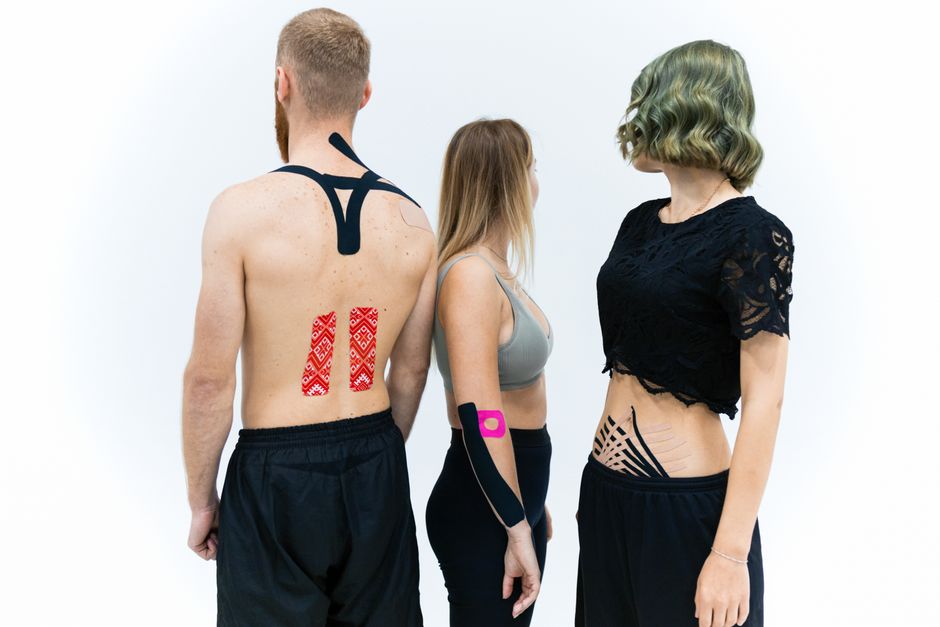
Kinesiology tape is the stretchy, colorful tape you see on athletes at the Olympics and in your local gym. Unlike traditional athletic tape, it is designed to move with your body rather than lock a joint in place. It lifts the skin slightly, which changes how pressure and movement are sensed in that area. This mechanical action is the foundation for most of its reported benefits, from reducing pain to supporting muscle function.
What Is Kinesiology Tape Made Of?
Kinesiology tape has a few distinct physical features that separate it from standard medical tape. It is made of a cotton or synthetic fiber blend with an acrylic adhesive. The adhesive is applied in a wave pattern across the tape, not a solid coat.
The tape’s elasticity is the key feature. It can typically stretch to about 120 to 140 percent of its original length. That stretch is what allows the tape to recoil gently after it is applied. Standard athletic tape has minimal stretch and works by physically restricting movement. Kinesiology tape does the opposite.
How Does Kinesiology Tape Work on the Skin?
The most direct effect of kinesiology tape is on the skin itself. When applied with tension and then laid down, the tape recoils and creates a small lift in the skin. This lift increases the space between the skin and the tissues underneath it.
This microscopic lifting effect has real physiological consequences. The skin is densely packed with sensory receptors called mechanoreceptors. These receptors detect pressure, stretch, and vibration. When the tape lifts the skin, it changes the baseline pressure in that area. This altered sensory input can influence how your brain perceives pain from deeper structures.
The gate control theory of pain helps explain this. According to this well-established model, non-painful sensory input can compete with pain signals as they travel to the brain. The gentle, constant stimulation from the tape may effectively “turn down the volume” on pain signals coming from the same region. This is not a cure for the underlying injury, but it can provide temporary relief.
Does Kinesiology Tape Improve Blood Flow and Lymphatic Drainage?
Manufacturers and many clinicians claim the skin lift also improves circulation and lymphatic drainage. The lymphatic system is a network of vessels that clears fluid and waste from tissues. It has no central pump like the heart, so it relies on muscle movement and pressure changes to move fluid.
The theory is that lifting the skin reduces pressure on the superficial lymphatic vessels. This could theoretically allow fluid to move more freely. Some research supports this idea, showing that kinesiology tape applied with a specific technique can increase lymphatic flow in the taped area.
The evidence here is not uniform. Some studies show measurable improvements in fluid movement, while others do not. The effect, when it occurs, appears to be modest. Kinesiology tape is not a substitute for medical treatment for lymphedema or significant swelling, but it is a reasonable adjunct therapy used by many physical therapists.





How Does Kinesiology Tape Support Muscles and Joints?
The claims about muscle support are more complex. Proponents say the tape can either facilitate a weak muscle or inhibit an overactive one. The proposed mechanism involves the skin and the fascia, the connective tissue that wraps around muscles.
When tape is applied from the origin of a muscle to its insertion point, it is thought to provide a gentle directional pull. This may give the brain extra sensory feedback about where the muscle is in space. This improved proprioception, or body awareness, could help you move more efficiently.
For joint support, the tape does not provide structural stability. It cannot prevent a joint from moving beyond its normal range in the way a rigid brace can. Its value lies in sensory feedback. The tape may serve as a constant reminder to avoid certain movements. It may also give a subtle feeling of security that allows for more confident movement during rehabilitation.
Research on muscle facilitation and inhibition is mixed. Some studies show changes in muscle activity, while others show no measurable difference. What is more consistent is the effect on perceived support. People often report feeling more stable and confident with the tape on, even when objective measures of joint laxity are unchanged.
What Does the Clinical Evidence Say About Pain Relief?
Pain relief is the most studied outcome for kinesiology tape. Several systematic reviews have pooled data from multiple trials to assess its effectiveness. The overall picture is that kinesiology tape provides a small to moderate benefit for pain reduction compared to no treatment.
For conditions like shoulder impingement, patellofemoral pain syndrome (runner’s knee), and low back pain, some trials show significant short-term pain relief. The tape appears to be most effective when used as part of a comprehensive rehabilitation program that includes exercise and manual therapy. It does not perform well when used as a standalone treatment.
One important finding is that the benefits of kinesiology tape are often similar to the benefits of sham taping, where the tape is applied without the correct tension. This suggests that some of the pain-relieving effect comes from the placebo response or from the simple act of receiving attention and care. Placebo effects are real physiological responses, not imaginary ones. They involve genuine changes in brain chemistry, but they are not a reason to claim the tape has a specific mechanical effect.
The evidence for long-term benefits is weak. Most trials follow patients for only a few weeks. There is no strong evidence that kinesiology tape changes the natural history of an injury or prevents future injuries.
How Is Kinesiology Tape Applied Correctly?
Application technique matters. The direction of the tape and the amount of stretch applied change the intended effect. There is no single correct method for all situations.
For muscle facilitation, practitioners often apply the tape from the muscle origin to the insertion with moderate stretch. For inhibition, they may apply it from insertion back to origin with less stretch. For lymphatic drainage, the tape is usually applied with no stretch at all, using a fan-cut pattern to create multiple thin strips that gently lift the skin.
The tape is typically left on for two to five days. It is water-resistant and can be worn during showering and swimming. The adhesive is heat-activated, so rubbing the tape firmly after application helps it bond to the skin.
Skin irritation is the most common side effect. The adhesive can cause redness, itching, or a rash in sensitive individuals. If you have fragile skin, a known adhesive allergy, or open wounds in the area, you should not use kinesiology tape. If you have diabetes or peripheral artery disease, talk to a clinician before using it, as reduced skin sensation can mask irritation.
Is Kinesiology Tape Better Than Traditional Athletic Tape?
These two products serve different purposes. Traditional athletic tape is rigid. It is designed to restrict joint motion, provide structural support, and protect injured ligaments. It is the right choice when an ankle or wrist needs to be held in a specific position.
Kinesiology tape is not designed for that purpose. It allows nearly full range of motion while providing sensory feedback. It is a better choice when you want to keep moving during rehabilitation but need some guidance and pain modulation.
Neither product is superior across the board. The right choice depends on the injury, the activity, and the goal. A physical therapist or sports medicine clinician can help determine which approach fits your situation.
When Should You Not Use Kinesiology Tape?
Kinesiology tape is generally safe for most people when applied to intact skin. There are specific situations where it should be avoided.
Do not apply it over open wounds, rashes, or areas of active skin infection. Do not use it if you have a known allergy to acrylic adhesives. People with deep vein thrombosis, active cancer in the limb, or uncontrolled diabetes should avoid kinesiology tape unless a physician approves its use.
If you have a suspected fracture or a torn ligament, see a doctor before taping. Kinesiology tape will not stabilize a serious injury. Masking the pain with tape could lead you to continue activity on an injury that needs rest or surgical repair.
Frequently Asked Questions
Can kinesiology tape prevent sports injuries?
No strong evidence shows kinesiology tape prevents injuries in healthy athletes. It is primarily used for pain management and sensory support during rehabilitation rather than as a preventive measure.
How long can you leave kinesiology tape on?
Most brands are designed to stay on for two to five days. The tape is water-resistant, but the edges may peel sooner if exposed to heavy sweating or frequent rubbing.
Does kinesiology tape actually work for muscle recovery?
Some studies suggest it may reduce delayed onset muscle soreness after intense exercise, but results are mixed. It appears to offer a small benefit for perceived soreness rather than a measurable acceleration of tissue healing.
Can you sleep with kinesiology tape on?
Yes, sleeping with the tape on is generally safe and common. If it causes skin irritation or discomfort during the night, remove it and discontinue use.
