
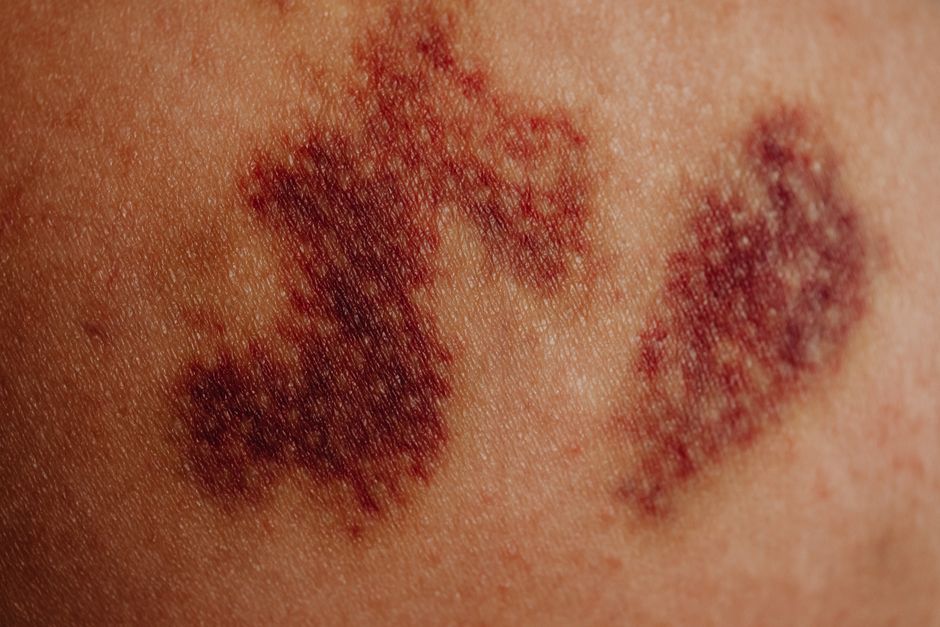
Blood leaking out of a damaged vessel and pooling under your skin is what a bruise is. When small blood vessels called capillaries break, red blood cells escape into the tissue beneath the skin. Your body then breaks down that trapped blood, and the color changes you see over the next week or two are the visible stages of that cleanup process. A bruise is not a stain on the skin. It is blood sitting in the tissue, and the skin above it is simply showing you what is happening underneath.
Most people call the mark a bruise, but the medical term is a contusion or hematoma, depending on its size and depth. Understanding how and why it forms explains why bruises change color, why some people bruise more easily than others, and when a mark on the skin is worth a doctor’s attention.
How Does Bruising Form Step by Step?
A bruise forms because a blunt force breaks tiny blood vessels faster than the body can seal them. Capillaries are the smallest blood vessels in the body, and their walls are only about one cell thick. That thinness lets oxygen and nutrients pass into tissue, but it also makes them easy to rupture under pressure or impact.
Here is the sequence:
- Impact or pressure. A bump, a fall, a pinch, or even a hard squeeze stretches or crushes the capillary walls.
- Vessel rupture. The vessel tears, and blood escapes into the surrounding tissue.
- Pooling. Red blood cells collect in the space under the skin. This is the bruise itself.
- Inflammation. The body sends immune cells to the area. This is why a fresh bruise can feel tender, warm, or slightly swollen.
- Breakdown and reabsorption. Over days, your body dismantles the trapped blood and carries the waste away.
The skin itself is usually intact. What you see is the blood beneath it showing through the translucent outer layers of skin.
Why Do Bruises Change Color?
The color changes because hemoglobin, the molecule that carries oxygen in red blood cells, breaks down in stages. Each stage produces a different pigment, and that pigment is what your eye sees through the skin.
A fresh bruise is often red or purple because the blood still contains oxygen-rich hemoglobin. Within a day or two, the hemoglobin loses its oxygen and the bruise can look blue or dark purple. As the body breaks hemoglobin down, it is converted into other compounds, including biliverdin, which is green, and then bilirubin, which is yellow or brownish. That is why a bruise that is a week old often looks greenish or yellow at the edges.
Not every bruise follows this pattern neatly. Color depends on how deep the bruise is, how much blood leaked, your skin tone, and how quickly your body clears the blood. A bruise deep in muscle may barely show color at all.
One common myth: the color of a bruise does not reliably tell you its exact age. Doctors sometimes use color as a rough clue, but research has shown that people — including medical professionals — are not accurate at dating bruises by color alone. If you are trying to figure out when an injury happened, color is a weak guide.
What Causes Bruising Beyond a Bump?
Most bruises come from a direct hit or pressure, but not all of them do. Several factors make capillaries more likely to break, sometimes with little or no obvious trauma.
Age. As people get older, the skin thins and the supporting tissue around blood vessels weakens. Capillaries become more fragile, so a minor bump that once left no mark may now produce a bruise.
Medications. Some drugs reduce the blood’s ability to clot or thin the vessel walls. Blood thinners such as warfarin, heparin, and direct oral anticoagulants are well known to increase bruising. So can daily aspirin, some anti-inflammatory drugs, and certain steroids. This is a genuine effect, not a side effect people imagine.
Supplements. Fish oil, ginkgo, ginger, garlic, and high-dose vitamin E have all been linked to increased bleeding tendency in some people. The evidence varies by supplement and dose, and not all of these are strongly confirmed in human trials.
Alcohol. Heavy drinking can affect platelet function and liver health, both of which matter for clotting.
Nutritional deficiencies. Vitamin C is needed to build strong collagen in vessel walls, and vitamin K is needed for clotting. Severe deficiency in either can lead to easy bruising.
Medical conditions. Bleeding disorders, low platelet counts, liver disease, and some blood cancers can all cause bruising that appears with little or no injury.
If you bruise far more easily than you used to, or bruises appear without any cause you can identify, that is a reason to see a doctor.





Why Do Some People Bruise More Easily?
Two people can take the same hit and end up with very different marks. Several things explain that difference.
Genetics play a role. Some people simply have more fragile capillaries or thinner skin than others, and this runs in families. Skin tone matters too — bruises are often more visible on lighter skin, but they can be harder to spot on darker skin, which does not mean they are not there.
Sex is a factor. Estrogen can affect blood vessel walls, and some research suggests women may bruise more easily than men on average. The evidence is not entirely consistent, so this is best described as a general tendency rather than a rule.
Body composition matters. People with more subcutaneous fat may show less bruising from a given impact, while people with less fat and thinner skin may show more.
Activity and occupation matter. Athletes, people who work with their hands, and anyone in a physically demanding job will accumulate more minor injuries and more bruises.
None of this means easy bruising is always harmless. It usually is. But a change in your normal pattern is worth noting.
When Should a Bruise Concern You?
Most bruises are minor and heal on their own. Some are worth a medical visit.
Seek medical attention if:
- A bruise appears with no injury you can recall, especially repeatedly.
- Bruises are unusually large, spreading, or getting worse instead of fading.
- You bruise much more easily than you used to.
- You have other symptoms such as fatigue, fever, weight loss, or bleeding from the gums or nose.
- A bruise is extremely painful, swollen, or located over a bone where a fracture is possible.
- You take a blood thinner and notice new or worsening bruising.
A bruise that keeps growing, feels hard, or does not improve over a couple of weeks deserves a look. In rare cases, a collection of blood under the skin can become a hematoma that needs drainage, and occasionally a mark that looks like a bruise is something else entirely.
How Long Does a Bruise Take to Heal?
Most bruises fade over about two weeks, though the timeline varies. Small, shallow bruises may clear in a few days. Large or deep bruises can take several weeks.
Healing speed depends on the size of the bruise, its depth, your age, your circulation, and any medications you take. People on blood thinners often bruise more and take longer to clear.
There is no proven way to make a bruise disappear faster. Cold packs applied soon after an injury can reduce swelling and limit how much blood leaks out, which may keep the bruise smaller. After the first day or two, gentle warmth and movement may help the body clear the trapped blood, though the evidence for this is not strong. Arnica creams are widely sold for bruising, but the clinical evidence for them is limited and mixed. No study has confirmed they speed healing in a reliable way.
What you should not do is assume a bruise needs treatment. For most healthy people, the body handles it. The main job is watching for signs that something else is going on.
Frequently Asked Questions
How long does it take for a bruise to go away?
Most bruises fade within about two weeks, though small ones may clear in days and large or deep ones can take several weeks. Healing time depends on size, depth, age, and medications such as blood thinners.
Why do bruises turn yellow and green?
As your body breaks down hemoglobin from the trapped blood, it produces pigments that appear green and then yellow. This color shift is a normal part of the healing process, not a sign of a problem.
Can you get a bruise without hitting anything?
Yes. Fragile capillaries, certain medications, supplements, and some medical conditions can cause bruising with little or no injury. Bruises that appear without a cause you can identify are worth discussing with a doctor.
Do bruises heal faster if you put ice on them?
Cold applied soon after an injury can reduce swelling and may limit how much blood leaks out, which can keep the bruise smaller. It does not make an existing bruise disappear faster once the blood has already pooled.
