
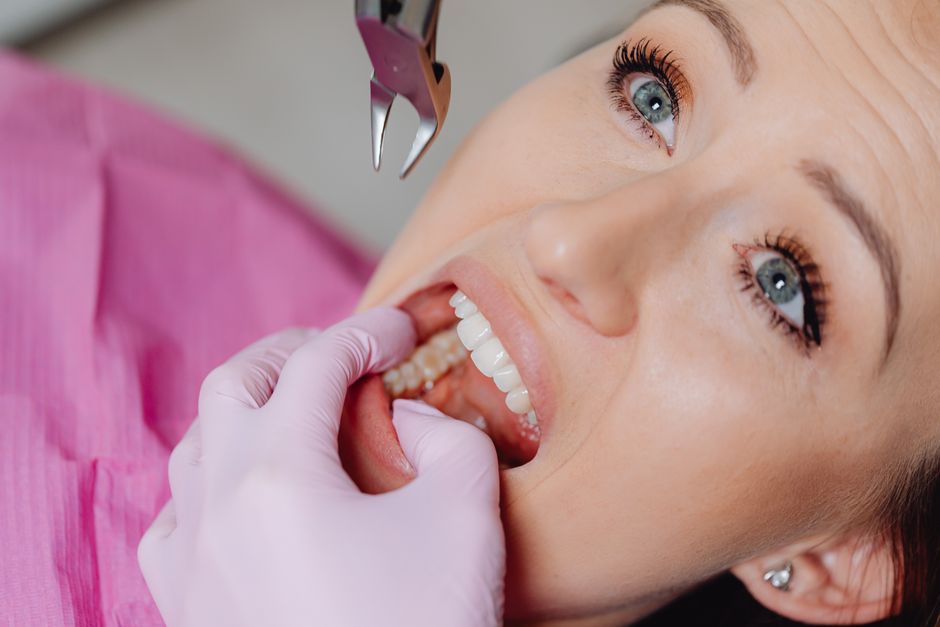
Pulling a tooth at home without pain isn’t really possible, and trying it can cause serious harm. The honest answer is that painless tooth removal is a dental procedure, done with local anesthesia by a licensed dentist or oral surgeon. If you have a loose baby tooth or a very mobile adult tooth, there are safer ways to help it come out. For anything else, the right move is to call a dentist.
This guide explains why home extraction is risky, what you can safely do for a wiggly tooth, how dentists remove teeth without pain, and what recovery actually looks like. It also covers the myths that convince people to try this at home.
Can You Pull a Tooth Without Pain at Home?
No. There is no safe, painless way to remove a firmly rooted tooth at home.
A tooth is held in place by the periodontal ligament, a tough band of tissue that connects the root to the jawbone. Pulling against that tissue without anesthesia causes sharp pain. Forcing it can crack the root, tear the gum, or push bacteria into deeper tissue. Those problems often need more involved treatment than a simple extraction would have.
The only situation where a tooth sometimes comes out at home with little discomfort is a baby tooth that is already very loose. Even then, “little discomfort” is not the same as no pain. An adult tooth that is loose usually signals a problem, such as advanced gum disease or injury, and should be evaluated by a dentist rather than pulled.
If you are in pain right now, that is a reason to see a dentist, not a reason to act on your own. Dental offices keep time open for urgent cases, and many communities have low-cost or sliding-scale clinics.
Why Is Pulling a Tooth at Home Dangerous?
Home extraction can cause injuries that are far worse than the toothache you started with.
The most common problems include:
- Broken roots left behind. A snapped root can stay embedded in the gum and become a source of infection.
- Infection. The mouth is full of bacteria. An open wound from a clumsy extraction gives them a direct path into tissue and, in rare cases, deeper spaces of the head and neck.
- Nerve damage. Lower teeth sit close to nerves that control feeling in the lip, chin, and tongue. Rough force can injure them.
- Jaw fracture. Rare, but possible when heavy force is applied to a tooth, especially in weakened bone.
- Heavy bleeding. People who take blood thinners or have a bleeding disorder can bleed badly from a torn gum.
There is also a less obvious risk. A tooth that looks like it just needs pulling may actually be cracked, infected, or sitting over a cyst. A dentist sees these things on an exam and X-ray. You cannot.
What Is the Safest Way To Deal With a Loose Tooth?
Let a very loose tooth come out on its own, or help it along gently with clean hands or a piece of gauze.
For a baby tooth that is hanging by a thread, gentle wiggling with a clean finger or gauze is usually enough. Twisting or yanking is not. If it hurts, it is not ready. Give it a few more days.
For an adult tooth that has become loose, do not pull it. Loosening in adult teeth is a sign of something that needs a diagnosis, such as gum disease, grinding, or trauma. A dentist can often save the tooth if you get care early. Pulling it yourself removes that option.
If a tooth has already come out on its own, bite gently on clean gauze for 15 to 20 minutes to control bleeding, and call a dentist to check the area.





How Do Dentists Remove a Tooth Without Pain?
Dentists use local anesthesia to numb the tooth and surrounding tissue before they start. You stay awake, but you should not feel sharp pain during the procedure.
The steps are usually:
- Numbing. A local anesthetic is injected near the tooth. The injection itself may cause a brief pinch or sting, then the area goes numb.
- Testing. The dentist checks that you are numb before proceeding. Speak up if you still feel sharp sensation.
- Loosening. Special instruments gently stretch and separate the ligament that holds the tooth.
- Removal. The tooth is lifted out. You may feel pressure and movement, but not sharp pain.
- Aftercare. Gauze is placed over the socket, and you get instructions for the next few days.
For a surgical extraction, such as an impacted wisdom tooth, the dentist or surgeon may also use sedation. Options range from nitrous oxide to oral sedatives to intravenous sedation. The type depends on the tooth, your health, and your comfort level.
If you have ever had a dental procedure where the numbing did not fully work, tell your dentist. There are ways to adjust, including different anesthetics or additional injections. You do not have to just endure it.
What Does Recovery Feel Like After a Tooth Is Pulled?
Some soreness, swelling, and minor bleeding in the first day or two is normal. Most people manage it with over-the-counter pain relievers and the aftercare instructions from their dentist.
General guidance most dentists give:
- Bite on gauze as directed to help a blood clot form.
- Avoid smoking and avoid drinking through a straw for the first few days, since suction can dislodge the clot.
- Stick to soft foods and avoid very hot drinks early on.
- Use ice on the outside of the face for swelling if advised.
- Take pain medication as directed. Ask your dentist before combining anything with other drugs.
Call the dentist if you have severe pain that gets worse after a few days, heavy bleeding that will not stop, fever, or trouble swallowing or breathing. These can point to a problem that needs prompt care.
Why Do Home Extraction “Tricks” Spread Online?
Videos of people pulling their own teeth get attention because they look quick and dramatic. That does not make them safe.
Some common claims are simply wrong:
- “Tying floss to a doorknob is painless.” It is not. Sudden force on a rooted tooth causes pain and can break the tooth.
- “Pliers work fine.” Household tools are not shaped for teeth and can crush or shatter them.
- “If it doesn’t hurt, it’s fine.” Damage to roots, nerves, and bone is not always felt right away.
- “You can numb it with ice or alcohol.” These do not block pain from a rooted tooth the way dental anesthesia does.
The gap between a loose baby tooth and a rooted adult tooth is enormous. Content that treats them the same is misleading.
The Bottom Line
Painless tooth removal is a dental procedure, not a home remedy. If a tooth needs to come out, a dentist can do it with local anesthesia and manage the risks. If you are in pain, call a dentist today rather than reaching for tools. That single decision prevents most of the injuries described in this article.
Frequently Asked Questions
Can I pull my own tooth without pain?
No. There is no safe, painless way to remove a rooted tooth at home, because the tissue holding it in place is not numbed. Only a very loose baby tooth sometimes comes out with little discomfort.
What happens if I pull a tooth at home and it breaks?
A broken root can stay embedded in the gum and lead to infection, and it often requires a dentist to remove. See a dentist promptly if any part of the tooth remains.
How do dentists make tooth removal painless?
They use local anesthesia to numb the tooth and surrounding tissue before starting. You may feel pressure during the procedure, but sharp pain should not occur.
When should I see a dentist instead of waiting?
See a dentist for any loose adult tooth, ongoing tooth pain, swelling, fever, or bleeding that will not stop. These signs suggest a problem that home care cannot fix.
