
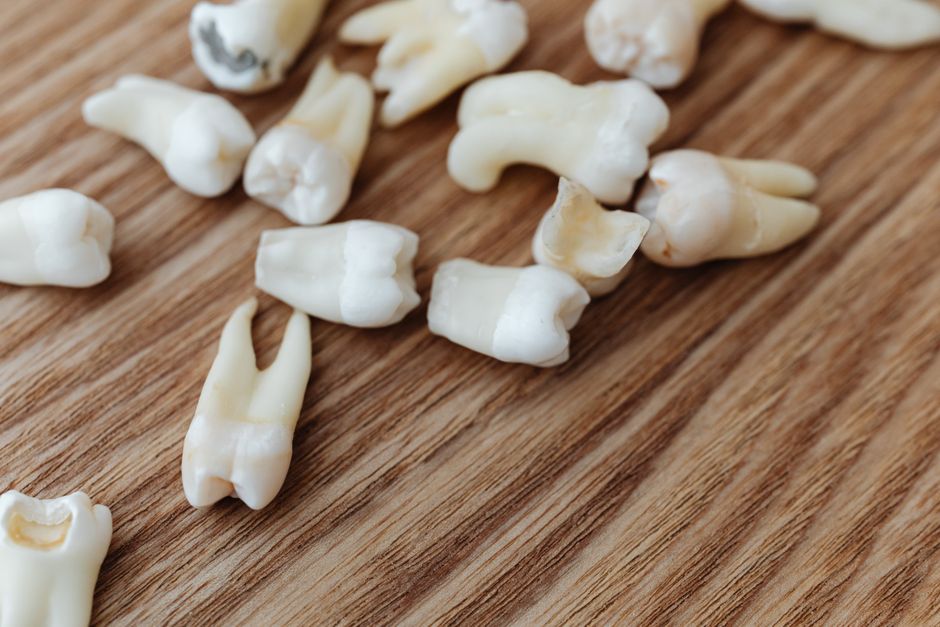
A decaying tooth changes color before it changes shape. In the early stage, decay shows up as a chalky white or dull brown spot on the chewing surface or near the gum line. As it progresses, the spot darkens, the surface softens, and a visible pit or hole can form. Later decay can turn black, and part of the tooth may break away.
That is the short answer. The longer answer matters more, because what you see depends on where the decay is, how long it has been there, and whether you are looking at a live tooth or an old filling. Below is a full breakdown of what tooth decay looks like at each stage, what it looks like in places you cannot easily see, and how it differs from things that only resemble decay.
What Does Early Tooth Decay Look Like?
Early decay usually looks like a white, chalky patch. It tends to appear on the chewing surfaces of back teeth, at the gum line, or between teeth. The patch may look dull rather than shiny, and it does not wipe off.
This stage is called demineralization. Acid made by bacteria in plaque pulls minerals out of the outer enamel layer. Enamel is translucent, so when it loses mineral content it scatters light differently and turns opaque white. The surface is still intact at this point. In many cases, early demineralization can be reversed with fluoride and good oral hygiene, because the enamel has not yet broken down into a cavity.
Not every white spot is decay. White spots can also come from fluorosis, which is a cosmetic change from too much fluoride during tooth development, or from braces, where plaque sits against the tooth for long periods. A dentist can usually tell the difference by how the spot looks and feels.
How Does A Tooth Decay Look Like When It Becomes A Cavity?
Once the enamel breaks down, decay looks like a hole, pit, or dark spot. The color shifts from white to yellow-brown, then to dark brown or black as the decay deepens. The surface feels soft or sticky when a dentist probes it, and it may catch on a fingernail or dental floss.
This is the point where the damage is permanent. Enamel cannot regrow. A cavity needs to be cleaned out and filled, because the decay will keep spreading into the softer dentin layer underneath. Dentin is much softer than enamel, so once decay reaches it, the process speeds up.
Some cavities look like a small dark dot. Others look like a wide, shallow crater with brown edges. The appearance depends on where the decay started and how the tooth is shaped.
What Does Tooth Decay Look Like At Each Stage?
Tooth decay moves through recognizable stages, and each one looks different. This table summarizes what you can expect to see.
| Stage | What It Looks Like | Where It Sits |
|---|---|---|
| Early demineralization | Chalky white or dull spot, no hole | Enamel surface |
| Enamel decay | Small pit or hole, yellow-brown | Enamel, just breaking through |
| Dentin decay | Darker brown, larger hole, softer surface | Dentin layer under enamel |
| Pulp involvement | Deep dark cavity, sometimes a visible shadow under the surface | Reaching the nerve |
| Abscess | Dark cavity, swelling or a pimple-like bump on the gum near the root | Root and surrounding bone |
The later stages are not just cosmetic. When decay reaches the pulp, where the nerve and blood vessels sit, it can cause pain, infection, and eventually a dental abscess. At that point, a simple filling is no longer enough.





What Does Decay Look Like Between Teeth Or Under Old Fillings?
Decay between teeth often looks like a dark shadow visible on an X-ray before it is visible to the eye. On the surface, you might notice a slight gray or brown tint near where two teeth touch. By the time a hole is visible there, the decay is usually advanced.
Decay under an old filling is harder to spot. It can show up as a dark line at the edge of the filling, a gray shadow under the filling, or a small chip or gap where the filling has pulled away from the tooth. Sometimes the filling looks fine but the tooth underneath is decaying. This is one reason regular dental X-rays matter, especially for people with several older fillings.
Decay around the gum line is another common spot. It often looks like a yellow or brown notch where the tooth meets the gum, and it can be mistaken for staining or for the natural yellow color of exposed root.
What Does Tooth Decay Look Like On An X-Ray?
On a dental X-ray, decay appears as a dark area within the lighter, denser tooth structure. Because minerals block X-rays, healthy enamel and dentin look light. Decayed areas have lost mineral content, so they show up as darker, less dense regions.
X-rays catch decay that a visual exam misses, especially between teeth and under fillings. This is why dentists take them at intervals rather than relying on what they can see with the naked eye. The American Dental Association supports the use of X-rays as part of a complete exam, with frequency based on a person’s individual risk.
What Can Look Like Tooth Decay But Isn’t?
Several things resemble decay without being decay. Knowing the difference can save you worry, and it can also stop you from ignoring a real problem.
- Staining. Coffee, tea, red wine, and tobacco can darken teeth. Stains usually sit on the surface and are more uniform than decay, which tends to be localized and irregular.
- Fluorosis. White or brown flecks from fluoride exposure during childhood. These are typically symmetrical and appear on multiple teeth.
- Food and plaque. Dark bits of food can lodge in grooves and look like decay. They usually brush away.
- Age-related wear. Years of chewing and grinding can wear down enamel, exposing the yellower dentin underneath. This can look like widespread discoloration rather than a single spot.
- Old amalgam fillings. Silver fillings can darken the tooth around them over time, which can look like decay but is sometimes just a cosmetic change.
None of this can be sorted out reliably by looking in a mirror. A dentist uses a probe, good lighting, and often X-rays to tell the difference.
When Should You See A Dentist?
See a dentist if you notice a new dark or white spot that does not brush away, a hole or pit you can feel with your tongue, or a rough patch on a tooth. Pain, sensitivity to hot or cold, or a bad taste in your mouth are reasons to go sooner rather than later.
Decay does not always hurt, especially early on. A tooth can have a visible cavity and cause no pain at all. Waiting for pain is a poor guide, because by the time decay hurts, it has often reached the inner part of the tooth.
Regular checkups remain the most reliable way to catch decay early. The American Dental Association recommends seeing a dentist regularly, with the exact interval set by your dentist based on your risk factors. People with a history of cavities, dry mouth, or frequent sugar intake may need to be seen more often.
How Can You Lower Your Risk Of Tooth Decay?
Tooth decay is largely preventable. The main drivers are well established: frequent exposure to sugar, plaque buildup, and low fluoride exposure.
- Brush twice a day with fluoride toothpaste. Fluoride helps rebuild weakened enamel and makes it more resistant to acid.
- Limit how often you eat sugar. It is the frequency of sugar exposure, not just the total amount, that matters most for decay.
- Floss or clean between teeth daily. This reaches the surfaces a toothbrush cannot.
- Drink water, especially fluoridated water where available. Water helps rinse away food and supports saliva flow.
- Avoid tobacco. Smoking and chewing tobacco raise the risk of gum disease and decay.
What you cannot do is reverse a cavity once a hole has formed. Enamel does not grow back. Early demineralization can be stopped and in some cases repaired, but a true cavity needs professional treatment.
What Is The Bottom Line?
Tooth decay starts as a chalky white or brown spot, then becomes a darker hole as it deepens. Between teeth and under old fillings, it is often invisible until an X-ray shows it. If you see something new on a tooth that does not brush away, get it checked. Early decay is much easier and cheaper to treat than advanced decay.
Frequently Asked Questions
What does a decaying tooth look like at first?
It usually looks like a chalky white or dull brown spot on the tooth surface that does not brush off. At this stage there is no hole yet.
Can you see tooth decay between your teeth?
Often you cannot see it directly, which is why dentists use X-rays to find it. You might notice a faint gray or brown shadow where two teeth meet.
Does tooth decay always look black?
No. Early decay is usually white or light brown, and it only turns dark brown or black as it deepens. Color alone does not tell you how serious a cavity is.
Can a dentist tell if a tooth is decaying just by looking?
A dentist can often spot decay visually, but X-rays and a probe are usually needed to confirm it, especially between teeth or under fillings.
