
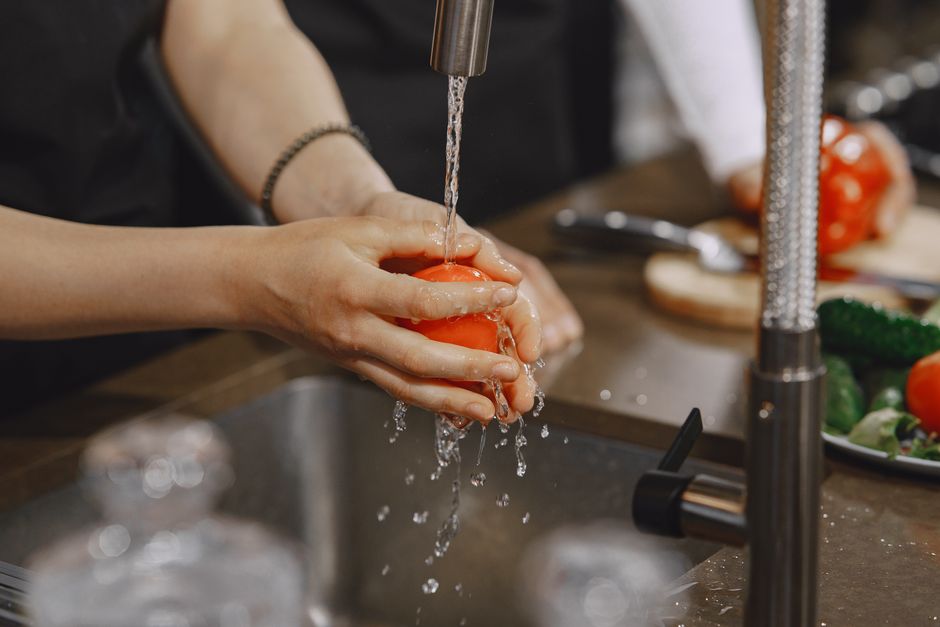
Washing vegetables comes down to three things: running water, friction, and time. Hold produce under cool running water and rub the surface with your hands for about 15 to 20 seconds. That simple step removes most dirt, pesticide residue, and many germs that can cause foodborne illness. For firm items like cucumbers or potatoes, a clean vegetable brush helps. For leafy greens, separate the leaves and rinse each one so water reaches the folds where grit and soil collect.
What you should not do is just as important. Do not use soap, dish detergent, bleach, or commercial produce washes. Produce is porous, and it can absorb these substances in ways your body is not meant to handle. The US Food and Drug Administration advises against washing produce with soap or household cleaners for this reason. Plain water, used well, is the recommended approach.
Why Does Washing Vegetables Actually Matter?
Fresh produce can carry three main categories of contaminants: soil and grit, pesticide residues, and harmful microorganisms. Washing addresses all three to different degrees.
The microorganism risk is the one that causes real illness. Bacteria such as Salmonella, E. coli, and Listeria can be present on raw produce. The Centers for Disease Control and Prevention has linked numerous foodborne outbreaks to contaminated leafy greens, sprouts, cucumbers, and other raw vegetables. These bacteria come from soil, water, animals, and human handling along the supply chain.
Pesticide residues are a separate concern. Regulatory agencies set limits on how much residue can legally remain on produce sold in the US, and most conventionally grown produce stays within those limits. Washing reduces surface residues but does not eliminate them entirely, and it does nothing for pesticides that have been absorbed into the plant tissue. This is one reason the “wash it all away” idea is oversold.
Here is a point that often gets lost: washing reduces risk, but it does not sterilize produce. You cannot make raw vegetables pathogen-free with tap water at home. For people at higher risk, that distinction matters.
How Do You Wash Vegetables the Right Way?
The method is simple, and doing it properly takes less than a minute for most items.
- Start with clean hands. Wash your hands with soap and water for at least 20 seconds before you handle produce.
- Rinse under cool running water. The flow of water physically carries contaminants away. Soaking in a bowl of still water is less effective because contaminants can settle back onto the surface.
- Use friction. Rub the surface with your hands or a clean brush. Friction is what loosens dirt and microbes that water alone might miss.
- Cut after washing, not before. If you slice a vegetable first, bacteria on the outside get pushed onto the moist interior where they can multiply. Wash whole, then cut.
- Dry with a clean towel if you plan to store it. Excess moisture encourages spoilage and bacterial growth.
For leafy greens, the approach is slightly different. Remove the outer leaves, separate the rest, and rinse each leaf under running water. If the greens are very sandy, a brief soak can help loosen grit, but finish with a running-water rinse.
For produce with a rough or textured surface, like broccoli or cauliflower, water alone reaches less of the surface. Some clinicians and food safety researchers suggest a short soak followed by a rinse for these items, though the evidence that soaking outperforms a thorough running-water rinse is limited. Running water with friction remains the standard recommendation.
Should You Use Vinegar, Baking Soda, or Produce Wash?
This is where marketing and evidence part ways.
Commercial produce washes are sold with claims that they remove more pesticides and bacteria than water. The evidence for a meaningful advantage over plain running water is weak. Some studies have found that certain washes reduce surface bacteria slightly more than water alone, but the difference is generally small and the clinical significance is unclear. No major public health agency recommends them over water.
Vinegar and baking soda get recommended often online. Here is what the research actually shows:
- Vinegar (usually diluted white vinegar) has some antibacterial effect on produce surfaces in laboratory studies. But it can affect texture and taste, and it does not reliably outperform a thorough water rinse for removing pathogens.
- Baking soda solutions have been studied for pesticide removal. Some research indicates that soaking in a baking soda solution can reduce certain surface pesticide residues more than water alone. The effect varies by pesticide and by produce type, and it does not address bacteria or absorbed pesticides.
- Salt water soaks are popular for some vegetables. There is little evidence they improve safety over plain water, and salt can draw moisture out of delicate produce.
None of these methods sterilize produce. If your goal is reducing germs that cause foodborne illness, running water and friction do most of the work. If your goal is reducing surface pesticide residue, water helps, and a baking soda soak may help a little more for some residues. Neither approach makes raw produce risk-free.




Does Washing Remove Pesticides Completely?
No. Washing reduces surface pesticide residues, but it does not remove them entirely, and it cannot remove pesticides that have been taken up into the plant’s tissues. This is true for both conventional and organic produce.
Organic vegetables can also carry pesticide residues, because organic farming permits certain approved pesticides. The difference between organic and conventional produce is about which pesticides are allowed and at what levels, not about the presence or absence of residues.
For most people, the health benefits of eating vegetables outweigh the risks from pesticide residues at levels found in the food supply. Public health agencies consistently encourage eating more produce, not less. If you want to reduce residues further, washing with running water and, for some items, a baking soda soak are reasonable steps. Peeling removes more residue but also removes fiber and nutrients found in the skin.
Which Vegetables Need Special Handling?
Most vegetables follow the same basic rule, but a few deserve extra attention.
- Leafy greens and sprouts carry a higher risk of contamination and are often eaten raw. Rinse leaves individually. Note that sprouts are a special case — the conditions that make seeds sprout also favor bacterial growth, and washing cannot remove bacteria that have entered the sprout. People at higher risk of foodborne illness are often advised to avoid raw sprouts.
- Root vegetables like carrots, potatoes, and beets need scrubbing with a brush to remove soil. Peel if you prefer, but scrub first so your peeler does not drag dirt into the flesh.
- Mushrooms can be rinsed briefly under running water and patted dry. The old advice to never wash mushrooms because they absorb water is largely overstated — a quick rinse adds very little water, and it removes surface dirt.
- Delicate items like berries and herbs should be rinsed gently and dried well. Berries are porous and fragile; rinse them just before eating rather than storing them wet.
One thing that surprises many people: pre-washed or “triple-washed” bagged greens are generally ready to eat without further washing. Re-washing them at home in a kitchen sink can actually introduce contamination from the sink surface. If you choose to rinse them anyway, use a clean bowl or colander rather than a sink that has held raw meat.
When Does Washing Not Help?
Washing has real limits, and being honest about them is more useful than pretending water solves everything.
If a pathogen has moved inside a leaf or sprout through a cut or a natural opening, surface washing cannot reach it. This is why some outbreaks linked to leafy greens and sprouts have occurred even when people washed their produce. Washing reduces risk; it does not eliminate it.
Cross-contamination in your kitchen can undo your washing. If you rinse vegetables in a sink where you just prepared raw chicken, or cut them on a board that held raw meat, you can reintroduce bacteria. Clean your sink, boards, and knives with hot soapy water after handling raw meat and before preparing produce.
Refrigeration matters too. Keep cut produce refrigerated and eat it within a few days. Bacteria multiply faster at room temperature, and cut surfaces are more vulnerable than intact skins.
Frequently Asked Questions
Do I need to wash vegetables if I am going to cook them?
Yes. Washing removes dirt and reduces bacteria before cooking, and it prevents contaminants from spreading to your hands, boards, and other food. Cooking kills most pathogens, but washing first lowers the overall risk in your kitchen.
Is it safe to use soap or bleach to wash vegetables?
No. The FDA advises against washing produce with soap, detergent, or bleach because these substances can be absorbed by the produce and may cause illness. Plain running water is the recommended method.
Does vinegar kill bacteria on vegetables?
Vinegar has some antibacterial effect in laboratory studies, but it does not reliably outperform a thorough running-water rinse for removing pathogens. It is not a substitute for washing with water and friction.
Should I rewash pre-washed bagged salad?
Generally no. Pre-washed greens are cleaned before packaging, and rewashing them in a home sink can add contamination from the sink surface. If you rinse them anyway, use a clean bowl or colander instead of the sink.
