
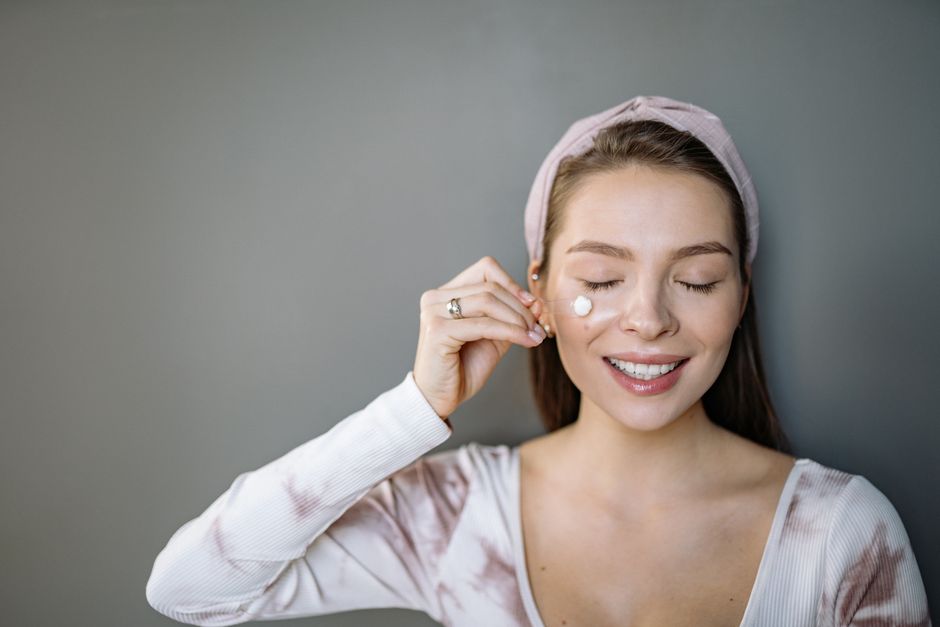
Start with a low concentration retinol once or twice a week at night. Always apply a broad-spectrum sunscreen every morning. Use retinol on clean, dry skin and wait at least 20 minutes before adding moisturizer.
What Is Retinol and How Does It Work?
Retinol is a type of retinoid — a compound made from vitamin A. Your skin naturally contains retinoid receptors. When retinol is applied, it converts to retinoic acid, the active form that binds to these receptors. This process stimulates collagen production and speeds up skin cell turnover.
Over time, this can improve the appearance of fine lines, uneven skin tone, and rough texture. It also helps unclog pores, which is why it is used for acne. However, retinol is less potent than prescription retinoids like tretinoin. That makes it a good starting point for beginners.
How Do You Use Retinol for the First Time?
Start slowly. Apply retinol once or twice a week for the first two to four weeks. Choose a low concentration — typically 0.25% or 0.3% for over-the-counter products. A higher concentration does not mean faster results. It often means more irritation.
Do a patch test before your first full application. Put a small amount on the inside of your forearm or behind your ear. Wait 24 hours. If you see redness, burning, or peeling, the product may be too strong for now.
Apply retinol to a completely dry face. Wet skin absorbs more product and increases the risk of irritation. Wait 20 to 30 minutes after washing your face before applying retinol. If you prefer to skip the wait, some dermatologists recommend using a moisturizer first as a buffer. Apply retinol over the moisturizer, then wait before adding more moisturizer if needed.
What Time of Day Should You Use Retinol?
Use retinol only at night. Retinol breaks down in sunlight and becomes less effective. Also, retinol makes your skin more sensitive to UV damage. You need sunscreen every morning to protect that newly exposed skin.
Nighttime application also avoids interference with makeup or other daytime products. Apply retinol as part of your evening routine, after cleansing and before a heavier moisturizer or night cream.





How Do You Layer Retinol with Other Skincare Products?
Layer in the right order to reduce irritation. Start with a gentle cleanser. Wait for your skin to dry fully. Apply retinol. Wait at least 20 minutes. Then apply a moisturizer.
Do not combine retinol with strong exfoliating acids — like alpha hydroxy acids (AHAs) or beta hydroxy acids (BHAs) — in the same routine. Both can strip the skin barrier and make irritation worse. If you use an acid product, use it on a different night or in the morning.
Vitamin C is also a common concern. Many dermatologists suggest using vitamin C in the morning and retinol at night. If you want to use both in the same evening, apply vitamin C first, wait, then apply retinol. Some people can tolerate this, but it increases irritation risk. Start one product at a time.
What Are Common Retinol Side Effects and How Do You Handle Them?
Retinol often causes a period of adjustment called the “retinoid reaction.” You may see dryness, peeling, redness, or stinging. This is especially common in the first two to four weeks. It usually fades as your skin adapts.
To manage irritation:
- Use retinol less often — every third night instead of every other night.
- Apply a pea-sized amount only. More product does not mean better results. It means more irritation.
- Use a gentle, fragrance-free moisturizer after retinol. Look for ingredients like ceramides, niacinamide, or hyaluronic acid.
- Stop all other active ingredients — exfoliants, benzoyl peroxide, or strong vitamin C — until your skin settles.
- If irritation continues after four to six weeks, reduce concentration or take a week off.
Purging — temporary breakouts — can also happen. This is not true acne. It is the skin pushing out clogged pores faster. Purging usually clears up within a few weeks. If breakouts last longer than three months, the product may not be right for you.
How Long Does It Take for Retinol to Work?
Results take time. Most visible improvements in fine lines and skin texture appear after 8 to 12 weeks of consistent use. For acne, some people see improvement in 6 to 8 weeks, but full benefits may take 12 weeks or longer.
Do not expect overnight changes. Retinol works slowly by building collagen and normalizing skin cell turnover. Consistent application, not frequency, is what matters. Missing a night here and there will not ruin your progress. Use it consistently at the frequency that your skin tolerates.
Can You Use Retinol While Pregnant or Breastfeeding?
No. Topical retinol and all retinoids should be avoided during pregnancy and when breastfeeding. The oral form of retinoids, like isotretinoin, is known to cause birth defects. While topical absorption is low, there is no established safe level during pregnancy. Most dermatologists and obstetricians recommend stopping retinol entirely if you are pregnant or trying to conceive.
If you are breastfeeding, the evidence is limited, but many experts advise avoiding retinol as a precaution. Safer alternatives during pregnancy include azelaic acid, niacinamide, and glycolic acid. Check with your doctor for individual advice.
Is It Safe to Use Retinol Around the Eyes and Mouth?
Use caution. Retinol can be applied around the eyes and mouth, but the skin there is thinner and more sensitive. Use a lower concentration product specifically designed for the eye area, or buffer with a moisturizer first. Keep the retinol away from the eyelids and the lash line. If you experience irritation, stinging, or dryness, stop and focus on moisturizing those areas instead.
Some people apply a thin layer of eye cream first, then a tiny dot of retinol over it. Many dermatologists recommend starting with a retinol eye cream that is formulated to be gentler rather than using your regular retinol cream around the eyes.
What Retinol Concentration Should You Choose?
For beginners, 0.25% to 0.3% is a safe starting point. If you have sensitive skin, consider 0.1% products. After several months of regular use without irritation, you can move up to 0.5% to 1.0%. Concentrations above 1% are available but are often more irritating and not necessarily more effective for most people.
Brands vary, so check the label. Some products list the percentage clearly. Others use terms like “encapsulated” or “micro” which aim for slower release and less irritation. Start at the low end and increase only when your skin has built tolerance.
Frequently Asked Questions
Do you need to wash off retinol in the morning?
No. Leave retinol on overnight. In the morning, wash your face normally with a gentle cleanser. Follow with a moisturizer and sunscreen. You do not need to wash off the retinol itself — it has already absorbed and broken down.
Can retinol be used with vitamin C?
Yes, but at different times of day. Use vitamin C in the morning and retinol at night. Using both together in the same routine can increase irritation. If you want to use them together, apply vitamin C first, wait 20 minutes, then apply retinol.
What retinol concentration should a beginner use?
Start with 0.25% to 0.3% retinol. If you have very sensitive skin, try 0.1% first. Use it once or twice a week for at least two to four weeks before increasing frequency. Move to a higher concentration only when your skin is tolerating the current level without redness or peeling.
Does retinol cause sun sensitivity?
Yes. Retinol makes your skin more vulnerable to UV damage. You must wear a broad-spectrum sunscreen with SPF 30 or higher every morning, even on cloudy days. This is not optional — sun exposure can undo the benefits of retinol and increase the risk of sun damage.
