
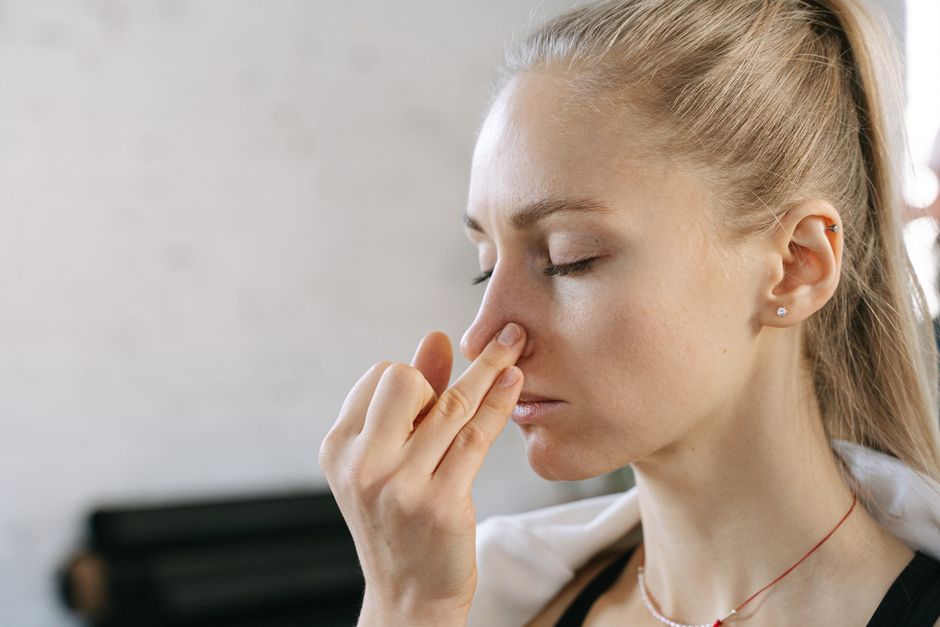
Mouth breathing at night is not a habit you have to live with. You can stop it by treating the underlying cause, which is often nasal congestion, sleep position, or a physical issue with your airway. The most effective first step is to figure out why you breathe through your mouth in the first place, then address that specific reason.
What Causes Mouth Breathing During Sleep?
Mouth breathing happens when your nose cannot get enough air through it. It is a backup system your body uses when your nasal passages are blocked or your airway is narrow.
The most common cause is nasal congestion. Allergies, colds, sinus infections, or a deviated septum can all make it hard to breathe through your nose. When your nose is blocked, your mouth automatically opens to get air.
Another cause is the structure of your airway. Some people have a narrow upper airway or large tonsils that partially block the throat. When you lie down, gravity makes this worse, and mouth breathing becomes the path of least resistance.
Sleep position also matters. Back sleeping lets your jaw and tongue fall backward, narrowing the airway. Side sleeping keeps the airway more open and reduces the need to mouth breathe.
How Do You Stop Mouth Breathing by Clearing Your Nose First
Before you can stop mouth breathing, you need a clear nasal passage. If your nose is blocked, no technique will work for long.
Saline nasal rinses are one of the most effective tools. A neti pot or squeeze bottle with sterile saline solution flushes out mucus, allergens, and irritants. The American Academy of Otolaryngology recommends saline rinses for chronic nasal congestion. Use distilled or boiled water only.
Nasal steroid sprays like fluticasone (Flonase) reduce inflammation in the nasal passages over time. These are available over the counter and work best when used daily for at least a week. They do not work instantly like decongestant sprays do.
Decongestant sprays like oxymetazoline (Afrin) work fast but have a major downside. Using them for more than three days in a row causes rebound congestion, making your nose more blocked than before. The FDA warns against long-term use.
Allergy medication can help if allergies are the root cause. Antihistamines like cetirizine (Zyrtec) or loratadine (Claritin) reduce the allergic response that swells nasal tissues.
Does Mouth Taping Actually Work to Stop Mouth Breathing?
Mouth taping has become popular on social media. People place a piece of surgical tape vertically over their lips to keep their mouth closed during sleep. The idea is that if your mouth is taped shut, you will be forced to breathe through your nose.
Some people report that it works for them. They wake up with less dry mouth and snoring. But the evidence behind mouth taping is very thin.
Research published in the Journal of Clinical Sleep Medicine found that mouth taping reduced snoring in some people with mild sleep apnea, but the study was small. There is no large-scale clinical trial proving that mouth taping is safe or effective for the general population.
There are real risks. If your nose becomes blocked during the night and your mouth is taped shut, you cannot breathe. People with untreated sleep apnea, nasal congestion, or a narrow airway should not use mouth tape. The American Academy of Sleep Medicine has not endorsed mouth taping as a treatment.
| Method | How It Works | Evidence Level | Safety Concerns |
|---|---|---|---|
| Mouth taping | Keeps lips closed mechanically | Weak – small studies only | Risk of breathing obstruction if nose blocks |
| Nasal strips | Opens nasal passages from outside | Moderate – helps with congestion | Minimal – skin irritation possible |
| Nasal dilators | Holds nostrils open from inside | Moderate – improves nasal airflow | Minimal – discomfort for some |
| Saline rinse | Flushes out nasal passages | Strong – recommended by ENTs | None if using sterile water |
| Positional therapy | Keeps you on your side | Moderate – reduces snoring | None |





What Position Changes Help You Stop Mouth Breathing at Night
Your sleep position directly affects whether you breathe through your mouth or nose. Back sleeping is the worst position for mouth breathing.
When you lie on your back, gravity pulls your jaw, tongue, and soft palate backward into your airway. This narrows the space air travels through. Your body responds by opening your mouth to compensate. A study in the journal Chest found that back sleeping significantly increased mouth breathing compared to side sleeping.
Side sleeping keeps your airway more open. It prevents the tongue from falling back and reduces the need to mouth breathe. The simplest change is to sleep on your side.
If you naturally roll onto your back during the night, there are tools to help. A body pillow placed behind your back can prevent rolling. Some people use a tennis ball sewn into the back of a shirt, though this is uncomfortable and not a long-term solution.
Elevating your head with an extra pillow or a wedge pillow can also help. A 2018 study in Sleep and Breathing found that head elevation improved nasal breathing in people with nasal congestion. The angle matters — a 30-degree elevation is more effective than a small lift.
What Medical Treatments Address Mouth Breathing
If home remedies do not work, a medical evaluation is the next step. Some causes of mouth breathing require professional treatment.
A deviated septum is a common physical cause. The septum is the wall of cartilage between your nostrils. When it is bent to one side, it blocks airflow through that nostril. A study in JAMA Otolaryngology found that septoplasty, surgical correction of the septum, improved nasal breathing in 85 percent of patients.
Enlarged tonsils or adenoids can block the airway, especially in children. If tonsils are large enough to touch each other, they physically prevent nasal breathing. Tonsillectomy is sometimes recommended, but only when the obstruction is severe.
Sleep apnea is a serious condition that often involves mouth breathing. In sleep apnea, the airway collapses during sleep, stopping breathing for seconds at a time. The body gasps for air, often through the mouth. A sleep study is the only way to diagnose it.
Continuous positive airway pressure (CPAP) therapy is the standard treatment for sleep apnea. CPAP delivers pressurized air through a mask, keeping the airway open. Many people find that CPAP eliminates mouth breathing because their airway stays open without effort.
Oral appliances fitted by a dentist can also help. These devices reposition the jaw forward, keeping the airway open. They are an alternative for people who cannot tolerate CPAP.
What Lifestyle Changes Reduce Mouth Breathing Over Time
Some habits make mouth breathing worse. Changing them can reduce how often you breathe through your mouth.
Alcohol and sedatives relax the muscles in your airway. This makes the airway more likely to collapse and triggers mouth breathing. Avoiding alcohol in the evening can improve your nasal breathing during sleep.
Weight management matters. Excess weight, especially around the neck, puts pressure on the airway. The American Academy of Sleep Medicine reports that weight loss can reduce sleep apnea severity and mouth breathing in people who are overweight.
Breathing exercises during the day can help. Buteyko breathing, developed by a Russian doctor, focuses on nasal breathing and breath control. Some small studies suggest it reduces mouth breathing and snoring, but larger trials are needed.
Hydration keeps nasal mucus thin. When you are dehydrated, mucus becomes thick and sticky, making nasal breathing harder. Drinking enough water throughout the day helps keep nasal passages clear.
Humidity in your bedroom also matters. Dry air irritates nasal passages and causes them to swell. A humidifier adds moisture to the air, which can reduce nasal congestion and make nose breathing easier.
Common Misconceptions About Stopping Mouth Breathing
There is a lot of bad advice online about mouth breathing. Some of it is harmless but useless. Some of it is dangerous.
One common myth is that you can train yourself to nose breathe by consciously keeping your mouth closed during the day. This does not work. Mouth breathing during sleep is not a habit you control consciously. It is a physical response to an airway problem. Daytime awareness exercises do not change what happens when you are unconscious.
Another myth is that all mouth breathing is caused by bad posture or weak facial muscles. While facial muscle tone plays a role in some cases, most mouth breathing is caused by nasal obstruction or airway narrowing. No amount of tongue exercises will fix a blocked nose or a deviated septum.
Some people claim that mouth breathing causes all kinds of health problems, from cavities to heart disease. While mouth breathing does dry out your mouth and increase cavity risk, the link to heart disease is not proven. Be skeptical of claims that treat mouth breathing as the root cause of serious health conditions.
Mouth taping is often presented as a simple fix. As discussed earlier, it has real risks. Do not use mouth tape if you have nasal congestion, sleep apnea, or any breathing condition. It is not a first-line treatment.
What to Avoid When Trying to Stop Mouth Breathing
Some products and practices waste your time or put you at risk. Know what to skip.
Avoid chin straps designed for snoring. These straps hold your jaw closed, not your mouth. They do not address the underlying cause and can be uncomfortable. They are not a treatment for mouth breathing.
Do not use nasal decongestant sprays for more than three days in a row. The rebound congestion is worse than the original problem. If you need daily relief, use a saline rinse or a nasal steroid spray instead.
Avoid mouthwashes that claim to stop mouth breathing. There is no evidence that any mouthwash changes how you breathe at night. They only mask the dry mouth symptom temporarily.
Skip the expensive “mouth breathing correction” devices sold online. Many are not backed by research and can be harmful. Stick with methods that have clinical evidence behind them.
Frequently Asked Questions
Can mouth breathing be cured permanently?
It depends on the cause. If allergies or congestion are the issue, treating them can stop mouth breathing long-term. If the cause is structural like a deviated septum, surgery may provide a permanent fix.
Is it dangerous to sleep with your mouth open?
It is not dangerous in itself, but it can lead to dry mouth, bad breath, and increased risk of cavities. If mouth breathing is caused by sleep apnea, the underlying condition is serious and needs treatment.
How long does it take to stop mouth breathing?
If you address the cause directly, improvement can happen within days. Nasal sprays and rinses work within a week. Position changes work immediately. Mouth taping provides no timeline because it does not treat the cause.
Does mouth breathing affect your face shape?
Chronic mouth breathing during childhood can change facial development, leading to a longer face and narrower jaw. In adults, the facial structure is already formed, so mouth breathing does not change face shape.
