
Plasma donation centers in the United States are regulated by the FDA, and every donor must pass the same basic screen: you need to be at least 18 years old, weigh at least 110 pounds, be in generally good health, and clear a medical questionnaire, a brief physical check, and blood tests for infectious diseases. Most centers also require a government-issued photo ID, proof of address, and a Social Security number or other taxpayer identification for payment purposes.
That is the short answer. The longer answer depends on which center you visit, what medications you take, and whether you have traveled or gotten a tattoo recently. Below is what the requirements actually mean, why they exist, and where people most often get turned away.
How Do You Qualify To Donate Plasma Key Requirements?
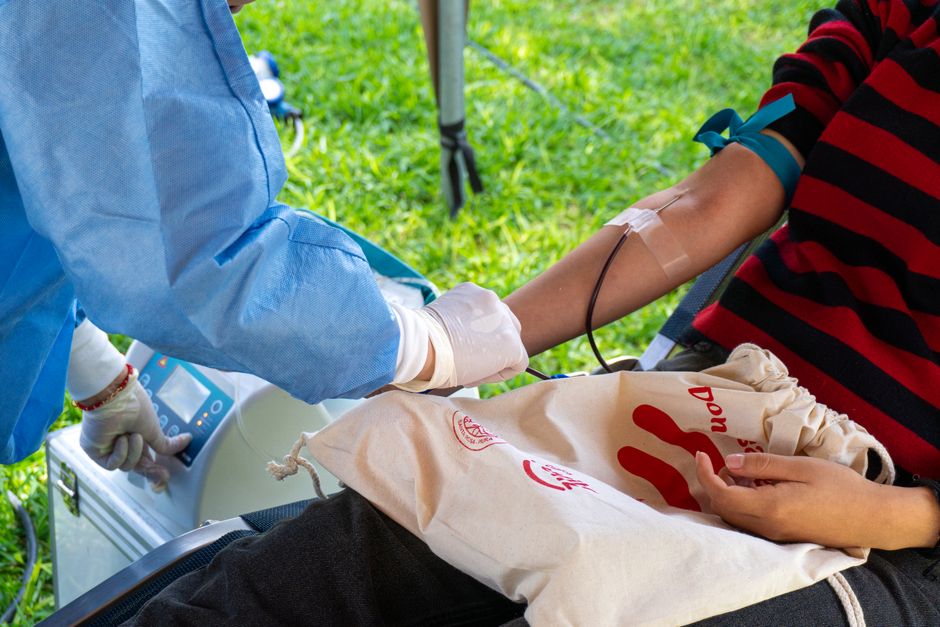
Plasma is the liquid part of blood — mostly water, salts, and proteins — and it is collected through a process called plasmapheresis. Blood is drawn, the plasma is separated out by a machine, and the red cells and platelets are returned to your body, usually in the same session. Because your body replaces plasma relatively quickly, federal rules allow plasma donation up to twice in a seven-day period with at least one day between donations, though individual centers set their own schedules within that limit.
The core requirements come from FDA guidance that applies to all licensed plasma collection centers. They include:
- Age: At least 18. Some centers allow 16 or 17 with parental consent where state law permits, but this is uncommon.
- Weight: At least 110 pounds (50 kg). This is a safety threshold tied to the volume of plasma removed relative to body size.
- Health status: You must feel well on the day of donation and have no active infection, fever, or acute illness.
- Identity: Government-issued photo ID, proof of current address, and a Social Security number or taxpayer ID.
- Medical screening: A questionnaire covering health history, medications, travel, and risk behaviors, plus a limited physical exam.
- Blood testing: Screening for HIV, hepatitis B and C, and other infectious diseases. Some centers also test for syphilis.
The 110-pound minimum is not a suggestion. It reflects the reality that removing a fixed volume of plasma from a smaller person removes a larger share of their total blood volume, which raises the risk of lightheadedness and fainting.
What Health Conditions Disqualify You From Donating Plasma?
The screening questionnaire is where most disqualifications happen, and it is longer than most first-time donors expect. The questions exist to protect two groups: you, and the person who will eventually receive plasma-derived therapies.
Conditions that typically lead to deferral or permanent disqualification include active or recent infections, certain cancers, uncontrolled heart disease, and a history of blood-borne viral infections such as HIV or hepatitis B or C. A history of intravenous drug use is also a standard exclusion because of infectious disease risk.
Some conditions are temporary deferrals rather than permanent ones. A cold, flu, or fever will usually push your donation back until you have been symptom-free for a period the center specifies. Recent surgery, a recent blood transfusion, or a recent pregnancy may also require a waiting period.
Autoimmune conditions are handled case by case. Some centers accept donors with well-controlled autoimmune disease; others do not. There is no single national rule that covers every condition, which is why the same person can be accepted at one center and turned away at another.
Which Medications Prevent Plasma Donation?
Medication rules are the single biggest source of confusion, and for good reason. There is no universal list. Each center maintains its own formulary based on FDA guidance, and the same drug can be acceptable at one company and disqualifying at another.
Broad categories that commonly cause deferral include:
- Blood thinners such as warfarin, which raise bleeding risk at the needle site.
- Isotretinoin (Accutane) and similar drugs, because of birth defect risk if the plasma were used for certain recipients.
- Certain psychiatric medications, though many are accepted.
- Hormone therapies, which may require review or a waiting period.
- Narcotics and injectable drugs, including some prescribed pain medications.
Common over-the-counter drugs are usually fine. Acetaminophen, ibuprofen, aspirin, and most antibiotics (after you have finished the course and are symptom-free) are generally accepted, though you should confirm with the center.
If you take a prescription medication, the honest answer is that you need to call the center and ask. Do not rely on a list you found online, because it may be outdated or specific to a different company.





Does a Tattoo, Piercing, or Travel Disqualify You?
Recent tattoos and piercings are a common reason for temporary deferral. The concern is not the tattoo itself but the possibility of a blood-borne infection introduced during the procedure. Many centers apply a waiting period — often several months — if the tattoo or piercing was done in a state or facility that does not regulate hygiene standards. If the work was done at a licensed, regulated facility, some centers waive the wait entirely.
Travel rules are more specific. Time spent in certain regions where malaria is common typically triggers a deferral period. So does travel to areas with ongoing outbreaks of specific infectious diseases. The exact list changes as outbreaks emerge and resolve, so the center will ask about your travel in the recent past rather than giving you a fixed rule to memorize.
One clarification worth knowing: the travel questions are about where you have been, not where you live. A two-week trip to a malaria-endemic region can trigger the same deferral as living there, depending on the center’s policy.
What Happens During the Screening Process?
Your first visit takes longer than subsequent ones, usually a few hours. The process runs in a predictable order.
You start with registration and ID verification. Then you complete a health questionnaire, often on a computer terminal. A staff member reviews your answers with you and may ask follow-up questions.
Next comes a limited physical exam. This typically includes checking your blood pressure, pulse, temperature, and weight, and looking at your veins to confirm they can support the needle. Some centers also do a fingerstick test to check your protein and hematocrit (red blood cell) levels.
If you pass the exam, blood is drawn for infectious disease testing. Under FDA rules, your plasma cannot be used until those test results come back clear, which usually takes a few days. Your first donation is often held in quarantine until then.
After the screening, you move to the donation itself, which takes roughly 30 to 90 minutes depending on your body and the machine. Most of that time you are reclined with a needle in one arm.
Why Do Requirements Differ Between Centers?
All US plasma centers operate under the same FDA framework, but the framework sets a floor, not a ceiling. Individual companies can be stricter, and many are.
The reason is partly business and partly medical. Plasma collected in the US is used to make therapies for conditions like immune deficiencies, hemophilia, and certain rare diseases. A company that accepts a donor another company rejects is not being careless — it may simply have different risk tolerances, different recipient populations, or a different internal review process.
This is why the most reliable answer to “do I qualify?” is not a website or a general guide. It is a phone call to the specific center you plan to use. Ask about your medications by name, mention any recent travel, and describe any health conditions. The staff can tell you in a few minutes whether you are likely to pass.
One practical note: disqualification is often temporary. Many people who are turned away on a first attempt qualify later once a deferral period ends or a medication changes. It is worth asking what specifically caused the deferral and when you can try again.
Frequently Asked Questions
What is the minimum weight to donate plasma?
You must weigh at least 110 pounds (50 kg). This threshold exists because removing a fixed volume of plasma from a smaller body raises the risk of fainting.
Can you donate plasma if you take medication?
It depends entirely on the medication and the center. Many common prescriptions are accepted, but blood thinners, isotretinoin, and certain other drugs typically cause deferral, so you must confirm with the specific center.
How old do you have to be to donate plasma?
You must be at least 18 years old. A small number of centers allow 16- and 17-year-olds with parental consent where state law permits, but this is not common.
How often can you donate plasma?
Federal rules allow up to twice in a seven-day period, with at least one day between donations. Individual centers may set stricter schedules within that limit.
