
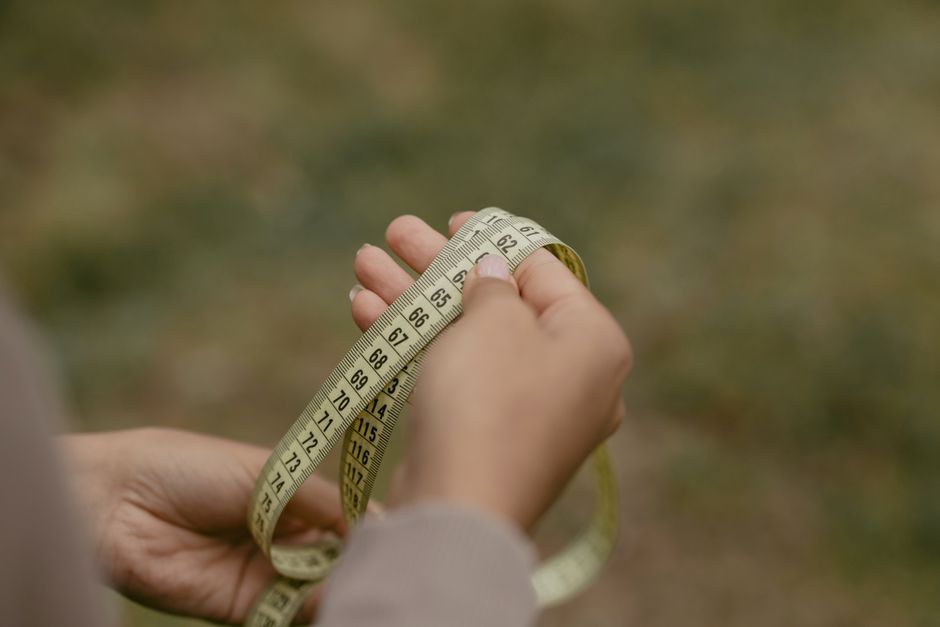
Measuring your pupillary distance (PD) at home is a straightforward process that requires a millimeter ruler, a mirror, and about two minutes of your time. The most common method involves standing about 8 inches from a mirror, holding the ruler against your forehead, and measuring the distance between the center of your left pupil and the center of your right pupil. While you can get a usable number this way, having a friend help you measure is more accurate, and an eye care professional’s measurement remains the gold standard for prescription eyewear.
What Exactly Is Pupillary Distance?
Pupillary distance is the measurement, in millimeters, between the center of your two pupils. This number tells an optical lab exactly where to place the optical center of each lens in your frames. If this measurement is off, your eyes have to work harder to look through the correct part of the lens, which can lead to eye strain, headaches, and blurry vision.
For most adults, this distance falls between 54 and 68 millimeters. For children, it is usually between 43 and 54 millimeters. The number is unique to you, and it changes slightly as you grow, which is why children need their PD re-measured as they get older.
There are two types of PD: binocular and monocular. Binocular PD is the single distance between both pupils. Monocular PD is the distance from the center of your nose to each pupil individually. Monocular measurements are often preferred because most people’s faces are not perfectly symmetrical, and using two separate numbers can improve lens alignment.
How Do You Measure Pupillary Distance At Home With a Mirror?
This is the most common DIY method because it only requires a ruler and a mirror. You will need a ruler with millimeter markings. A plastic ruler is safer than a metal one in case you slip.
- Stand about 8 inches away from a mirror.
- Hold the ruler horizontally against your forehead, just above your eyebrows.
- Close your right eye and align the zero mark on the ruler with the center of your left pupil.
- Keep your head perfectly still. Do not move the ruler.
- Close your left eye and read the millimeter line that lines up with the center of your right pupil.
- That number is your binocular PD.
This method has a real weakness. When you close one eye and then the other, your eyes shift slightly. This can throw off the measurement by a few millimeters. A few millimeters might not sound like much, but it is enough to make your glasses feel wrong.
To improve accuracy, take the measurement three times and use the average of the three numbers. If you get wildly different readings, slow down and try again. Your eyes should be looking straight ahead, not at the ruler and not at the mirror.
How to Measure PD With a Friend’s Help
Having a second person measure your PD is significantly more accurate than doing it yourself. Your friend can hold the ruler steady while you keep both eyes open and focused on a distant object.
Sit or stand facing your friend at the same eye level. Ask your friend to hold the ruler against your forehead. Look past your friend at an object in the distance. This keeps your eyes relaxed and prevents them from converging, which happens naturally when you look at something close. Your friend then measures from the center of your left pupil to the center of your right pupil.
This method is better because you are not closing your eyes or shifting your gaze. Your friend should measure twice and compare the numbers. If the two readings differ by more than 2 millimeters, measure a third time.




Using a Smartphone App to Measure Pupillary Distance
Several smartphone apps claim to measure your PD using your phone’s camera. Most work by asking you to place a standard-sized card, like a credit card, against your forehead. The app uses the card as a scale reference to calculate the distance between your pupils.
These apps can be convenient, but their accuracy varies. Some research suggests they can be reasonably accurate for single-vision glasses, but they are less reliable for progressive lenses or high-prescription glasses where precision matters most. The camera angle, lighting, and how far you hold the phone all affect the result.
If you use an app, follow the instructions exactly. Most apps require you to look directly at the camera lens, not at your own image on the screen. Looking at your own image causes your eyes to converge, which can shorten the measured distance.
Why Accurate PD Measurement Matters for Your Glasses
Your PD is not just a random number. It is the reference point for where the optical center of each lens sits in front of your eye. When the optical center lines up with your pupil, light passes through the lens exactly as prescribed.
If the PD is too wide or too narrow, your eyes look through the wrong part of the lens. This causes a prism effect, where light bends in a way your prescription did not intend. The result is often eye strain, headaches, and a feeling that your glasses are just slightly off, even though the prescription itself is correct.
The impact is larger with stronger prescriptions. A person with a mild prescription of -1.00 may not notice a 2-millimeter error. A person with a -6.00 prescription will feel it immediately. Progressive lenses are especially unforgiving because they have multiple zones for different viewing distances, and each zone must align with your pupil height and PD.
When You Should Not Measure Your PD at Home
Home measurement is fine for ordering simple single-vision glasses online. It is not appropriate for every situation. If you need progressive lenses, bifocals, or high-index lenses, you should have your PD measured by a professional.
Professionals use a device called a pupillometer. It measures both binocular and monocular PD while you look at a distant target to keep your eyes relaxed. Some also measure your pupillary height, which is the vertical distance from the bottom of the lens to the center of your pupil. You cannot measure pupillary height at home, and it is essential for progressive lenses.
Children should also have their PD measured professionally. A child’s PD changes as they grow, and an incorrect measurement can worsen existing vision problems. If you are ordering glasses for a child, do not rely on a home measurement.
If you have a very strong prescription, an eye condition like strabismus, or you wear prism lenses, skip the home measurement entirely. The margin for error is too small, and the consequences of a wrong measurement are not worth the savings.
Common Mistakes That Ruin Home PD Measurements
Most home measurements fail for a few predictable reasons. Knowing these can help you avoid them.
- Looking at the ruler instead of straight ahead. Your eyes must stay fixed on a distant object.
- Holding the ruler at an angle. The ruler must sit flat and horizontal against your forehead.
- Measuring from the wrong point. Measure from the center of the pupil, not the edge of the iris or the corner of the eye.
- Using a ruler with only inches. You need millimeter markings. Inches are too coarse for this measurement.
- Measuring too close to the mirror. Standing too close makes your eyes converge, which shortens the distance.
If you are ordering glasses online, many retailers will ask for your PD during checkout. Some offer a return policy if the glasses do not fit optically. Read that policy before you order. If a store refuses to accept returns for incorrect PD, that is a sign they expect you to get it right the first time.
Frequently Asked Questions
What is the average pupillary distance for adults?
The average adult PD is between 54 and 68 millimeters. Most adults fall in the 58 to 64 millimeter range.
Can I measure my PD with a regular ruler?
Yes, but the ruler must have millimeter markings. An inch ruler is not precise enough for this measurement.
Is a home PD measurement accurate enough for online glasses?
It can be for simple single-vision glasses if done carefully. It is not reliable for progressive lenses, bifocals, or strong prescriptions.
Do I need my PD for every glasses order?
Yes, your PD is required for any prescription glasses. Without it, the optical lab cannot center the lenses correctly in front of your eyes.
