
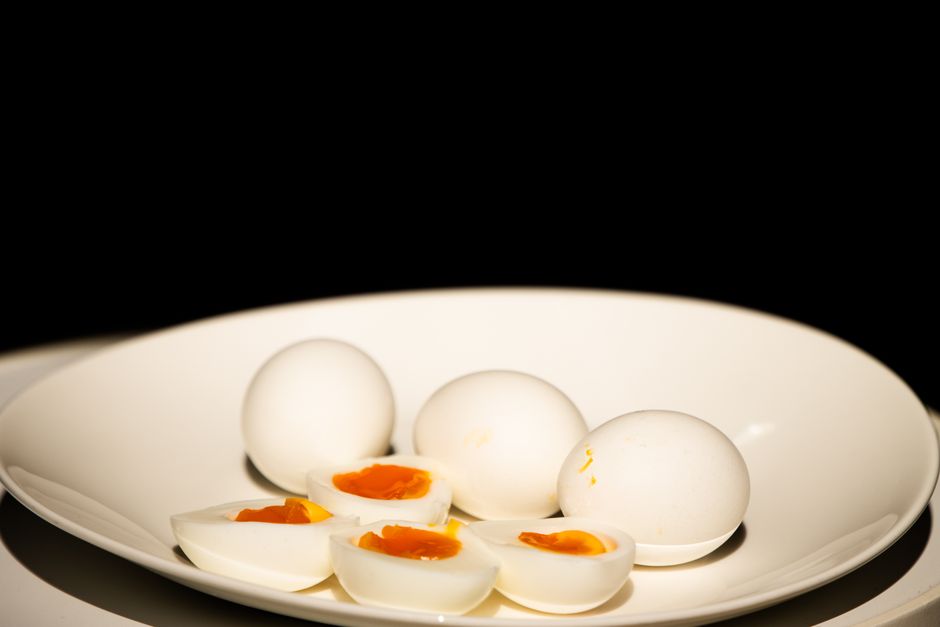
You can tell an egg is boiled by spinning it on a flat surface. A hard-boiled egg spins fast and wobbles very little because its inside is solid. A raw egg barely spins, wobbles heavily, and stops quickly because the liquid inside keeps moving. That simple test works because cooking changes the egg from a liquid-filled shell into a solid mass, and that change shows up in how the egg moves.
Boiled eggs are a staple food for millions of households. They are portable, affordable, and rich in protein. But they also create a common kitchen problem: once an egg is cooked, it looks almost exactly like a raw one from the outside. The shell gives away nothing. This article explains the reliable ways to tell whether an egg is boiled, why those methods work, and what the science says about egg safety.
How Do You Know The Egg Is Boiled?
The spin test is the most reliable method. Place the egg on a countertop and give it a quick twist. A hard-boiled egg rotates smoothly and stays upright for several seconds. A raw egg wobbles awkwardly and stops almost immediately.
There is a second version of this test that adds a step. Spin the egg, then briefly press your finger on top to stop it, and release. A hard-boiled egg stays stopped. A raw egg starts spinning again on its own because the liquid inside is still moving and drags the shell along with it. This happens because of inertia — the resistance of an object to a change in its motion.
You can also hold the egg up and shine a bright light through it in a dark room. A raw egg glows because light passes through the liquid. A hard-boiled egg blocks the light because the solid interior scatters it. This is the same principle used in candling, a method commercial egg producers use to inspect eggs for cracks and internal quality.
Why Does a Boiled Egg Spin Differently Than a Raw Egg?
A raw egg contains liquid yolk and liquid white. When you spin it, that liquid does not move as one solid piece with the shell. The shell turns, but the inside lags behind, creating friction and drag. That drag slows the egg down and makes it wobble.
A hard-boiled egg is solid throughout. The shell, white, and yolk have all become one firm mass. When you spin it, the entire egg rotates together. There is no internal lag, no drag from sloshing liquid, and no wobble from shifting weight.
This is a straightforward physics principle. A solid object spins more predictably than a hollow or liquid-filled one. The same idea explains why a filled water bottle rolls differently than an empty one. The egg is simply a natural demonstration of that principle.
One clarification worth knowing: the spin test tells you whether the inside is solid, but it does not tell you how long the egg was cooked. A soft-boiled egg with a runny yolk will still spin somewhat, though less cleanly than a hard-boiled one. The test is most reliable for distinguishing fully hard-boiled eggs from raw ones.
What Other Signs Tell You an Egg Is Boiled?
Several visual and physical cues can help, though none is as reliable as the spin test on its own.
- Weight in hand: A boiled egg feels slightly heavier and more solid when you hold it. This difference is subtle and easy to miss.
- Sound when tapped: Tapping a boiled egg against a hard surface produces a dull, flat sound. A raw egg sounds more hollow. This works because sound travels differently through solid versus liquid contents.
- Shell texture after cooling: A boiled egg that has been cooled in cold water often has a slightly chalky or matte appearance. This is not a guaranteed sign, since raw eggs can also look matte.
- Peeling test: If you try to peel an egg and the shell comes off in large, clean pieces with a firm white underneath, it is boiled. A raw egg will crack and leak.
The tapping method is the least reliable of these. Shell thickness varies between eggs, and the sound difference can be hard to detect in a noisy kitchen. The spin test remains the most consistent.




Does the Float Test Tell You If an Egg Is Boiled?
No. The float test tells you how old an egg is, not whether it has been cooked. This is one of the most common mix-ups in home kitchens.
Here is how the float test works. As an egg ages, the liquid inside slowly evaporates through the porous shell. This creates a larger air pocket inside. An older egg has a bigger air pocket, so it floats higher in a bowl of water. A very fresh egg sinks and lies flat on the bottom. A slightly older egg stands upright. A very old egg floats.
Cooking does not change the size of the air pocket in any meaningful way. A boiled egg and a raw egg of the same age will float or sink almost identically. So if you are trying to figure out whether an egg in your fridge is cooked or raw, the float test will not help you.
The float test is useful for a different purpose: checking freshness. But even that has limits. An egg that floats is not automatically unsafe, and an egg that sinks is not automatically fresh. The USDA advises that eggs can be safely refrigerated for up to three to five weeks from the date of purchase. After that, quality declines and the risk of bacterial growth increases.
Is It Safe to Eat a Boiled Egg That Sat Out?
Boiled eggs are perishable and need refrigeration. The USDA recommends refrigerating hard-boiled eggs within two hours of cooking. If the temperature is above 90°F — for example, at a summer picnic — that window shrinks to one hour.
Hard-boiled eggs can be stored in the refrigerator for up to one week. This is shorter than the three to five weeks raw eggs can last, because boiling removes the protective coating on the shell. That coating normally helps block bacteria from entering through the shell’s pores. Once it is gone, the egg is more vulnerable.
If a boiled egg has been left at room temperature for more than two hours, the safest choice is to throw it away. You cannot reliably tell by smell or appearance whether a boiled egg has begun to spoil. Bacteria that cause foodborne illness, such as Salmonella, do not always produce a noticeable odor or visible change.
Signs that a boiled egg has gone bad include a slimy texture, a sulfur-like or rotten smell, and a discolored yolk or white. But the absence of these signs does not guarantee safety. When in doubt, discard it.
Why Do Some Boiled Eggs Have a Green Ring Around the Yolk?
A greenish-gray ring around the yolk is a sign of overcooking, not spoilage. It forms when the iron in the yolk reacts with the sulfur in the egg white. This reaction speeds up when eggs are cooked for too long or at too high a temperature.
The green ring is harmless. It does not affect the safety or nutritional value of the egg in any meaningful way. It is purely a cosmetic issue. To avoid it, cook eggs in simmering water rather than a rolling boil, and cool them immediately in cold water after cooking.
This reaction is a good example of how cooking chemistry works. Heat causes proteins to unfold and re-form into new structures. In the case of the green ring, heat also drives a chemical reaction between two minerals that are naturally present in the egg. It is not a sign that anything is wrong with the egg itself.
Can You Boil an Egg and Still Have It Be Raw Inside?
Yes. An egg can be boiled but still have a runny yolk or even a partially liquid white if it was not cooked long enough. This is what happens with soft-boiled and medium-boiled eggs.
A soft-boiled egg is typically cooked for about six minutes in simmering water. The white is set but soft, and the yolk is still liquid. A medium-boiled egg, around eight minutes, has a jammy yolk. A hard-boiled egg, usually ten to twelve minutes, is fully solid.
If you are trying to determine whether an egg is fully hard-boiled, the spin test is your best tool. A soft-boiled egg will spin with some wobble because the yolk is still liquid. A hard-boiled egg spins cleanly. This distinction matters if you are planning to slice eggs for a salad or devil them for a platter.
It also matters for food safety in a specific way. Undercooked eggs carry a higher risk of Salmonella contamination. The CDC advises that people with weakened immune systems, young children, older adults, and pregnant women should avoid eating eggs with runny yolks. Fully cooked eggs are the safer choice for these groups.
Frequently Asked Questions
How can I tell if an egg is boiled without cracking it?
Spin it on a flat surface. A hard-boiled egg spins fast and stays steady, while a raw egg wobbles and stops quickly.
Does a boiled egg float in water?
No, floating is a sign of age, not cooking. A boiled egg and a raw egg of the same age will float or sink almost identically.
How long can you keep hard-boiled eggs in the fridge?
Up to one week, according to USDA guidelines. This is shorter than raw eggs because boiling removes the shell’s protective coating.
Why does my boiled egg have a green yolk?
It is a reaction between iron in the yolk and sulfur in the white, caused by overcooking. It is harmless and does not affect safety or nutrition.
