
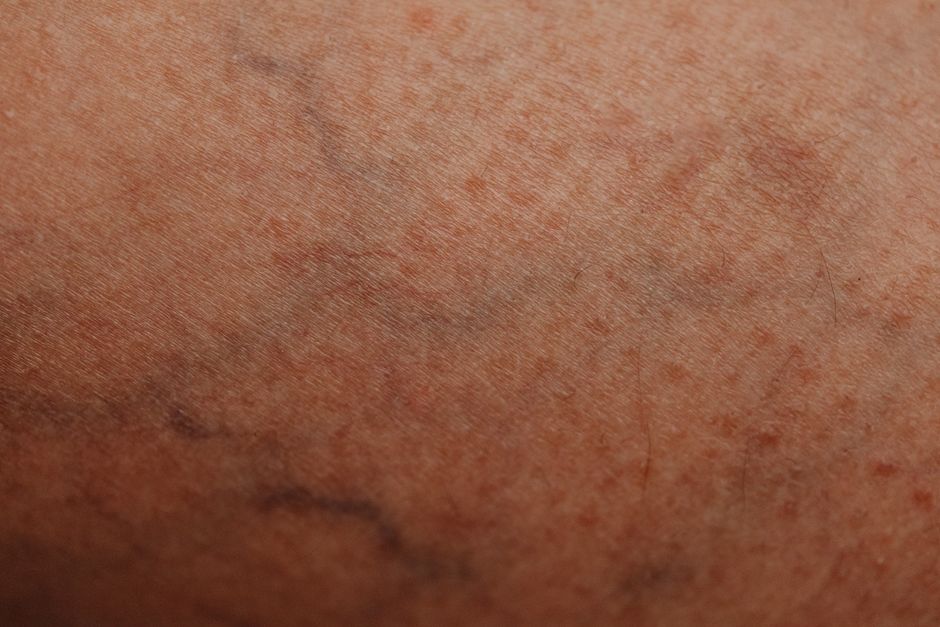
Varicose veins happen when the one-way valves inside your veins stop closing properly, letting blood pool instead of flowing back up to your heart. That pooling stretches the vein wall, which is why the veins become twisted, bulging, and visible under the skin. They most often appear in the legs because standing and walking put constant downward pressure on the veins farthest from your heart.
How Do You Get Varicose Veins? Causes And Risks
Veins in your legs have a hard job. They push blood upward against gravity, all the way back to your heart. To do this, they rely on two things working together: flexible vein walls and a series of tiny one-way valves spaced along the inside of the vein.
When those valves weaken or the vein wall loses some of its elasticity, blood slips backward and collects. This backward flow is called venous reflux. The trapped blood increases pressure inside the vein, and over time that pressure stretches the walls outward. The result is the swollen, rope-like appearance most people recognize as varicose veins.
This is a mechanical problem, not a blood quality problem. The blood itself is normal. The vein’s ability to move it in one direction is what fails.
What Raises Your Risk of Varicose Veins?
Several factors make the valve-and-wall breakdown more likely, though having a risk factor does not mean you will develop varicose veins.
- Family history. Varicose veins tend to run in families. If a parent has them, your own risk is higher. This suggests a genetic component to vein wall strength and valve structure.
- Age. Veins lose elasticity over time, and valves can weaken with decades of use. Risk rises as you get older.
- Sex. Women develop varicose veins more often than men. Female hormones are thought to relax vein walls, which may contribute.
- Pregnancy. Blood volume increases during pregnancy, and the growing uterus puts pressure on veins in the pelvis. Hormonal changes also relax vein walls. Varicose veins often improve after delivery, but not always.
- Prolonged standing or sitting. Staying in one position for long stretches keeps blood from moving efficiently. Jobs that require hours on your feet are a common factor.
- Excess body weight. Extra weight increases pressure on leg veins.
One point worth clarifying: crossing your legs or wearing tight socks does not cause varicose veins. Those ideas are common but not supported. The underlying cause is valve and vein wall function.
Are Varicose Veins and Spider Veins the Same Thing?
No. They involve the same general system but differ in size and depth.
Spider veins are tiny, thin veins near the skin’s surface. They look like red or blue webs or branches. They are usually cosmetic and rarely cause symptoms.
Varicose veins are larger, deeper, and bulge outward. They can ache, throb, or feel heavy. The distinction matters because varicose veins are more likely to cause symptoms and, in some cases, lead to complications.



What Symptoms Come With Varicose Veins?
Not everyone with visible varicose veins has symptoms, and some people have symptoms before veins look obvious.
Common complaints include:
- A heavy, tired, or aching feeling in the legs, often worse after standing
- Throbbing, burning, or cramping
- Swelling in the ankles or lower legs, especially by the end of the day
- Itching around the affected veins
- Restless or uncomfortable legs at night
Symptoms often ease when you elevate your legs. That is because raising the legs helps blood drain back toward the heart, reducing the pressure that builds up during the day.
Can Varicose Veins Cause Serious Problems?
Most varicose veins are uncomfortable but not dangerous. A minority lead to complications, and a few of those need prompt medical attention.
Possible complications include:
- Skin changes. Long-standing pressure can cause the skin near the ankle to darken, thicken, or become dry and itchy.
- Venous ulcers. In more advanced cases, poor circulation can lead to slow-healing sores, usually near the ankle.
- Superficial thrombophlebitis. A vein close to the surface can become inflamed and form a clot. This is different from a deep vein clot, but it still warrants a medical evaluation.
- Bleeding. A varicose vein near the surface can bleed if injured.
Deep vein thrombosis (DVT) is a clot in a deep vein, not a varicose vein. Varicose veins are not the same as DVT. However, if you have sudden swelling in one leg, pain, warmth, or redness, that is a reason to seek care right away rather than assume it is routine varicose veins.
When Should You See a Doctor About Varicose Veins?
See a clinician if your legs ache enough to affect daily life, if swelling is persistent, or if you notice skin changes near the ankles. Sores that will not heal, sudden swelling in one leg, or a vein that becomes hot, red, and tender all call for prompt evaluation.
Many people manage mild varicose veins without treatment. For those with symptoms or complications, a range of options exists, from compression to procedures that close or remove the affected vein. The right choice depends on your symptoms, the veins involved, and your overall health, which is why an in-person assessment matters.
Can You Prevent Varicose Veins?
You cannot prevent the genetic and age-related factors behind varicose veins. What you can do is reduce the pressure that builds in your leg veins day to day.
Measures that may help include staying active, avoiding long stretches of standing or sitting without movement, elevating your legs when resting, and maintaining a healthy body weight. Compression stockings are often used to ease symptoms and support circulation, though they manage symptoms rather than remove the veins.
The evidence on how much these steps prevent new varicose veins from forming is limited. They are reasonable habits for leg vein health, but it would be an overstatement to call them proven prevention.
What Actually Happens Inside a Varicose Vein?
It helps to picture the vein as a tube with doors along its length. Each door, or valve, should open to let blood move up and snap shut to stop it from sliding back down.
When a valve no longer seals, blood falls back and pools in the section below it. That pooled blood raises the pressure in the vein. The wall responds by stretching, and once stretched, it may not return to its original shape. Nearby valves then face more pressure, and the problem can spread along the vein.
This is why varicose veins often worsen over time rather than resolve on their own. The underlying valve failure does not repair itself. That does not mean everyone needs treatment, but it does explain why the veins tend to grow more prominent with age.
Frequently Asked Questions
What is the main cause of varicose veins?
The main cause is failure of the one-way valves inside leg veins, which lets blood flow backward and pool. That pooling raises pressure and stretches the vein wall, producing the bulging, twisted appearance.
Do varicose veins go away on their own?
They usually do not go away on their own because the valve problem does not repair itself. Symptoms may improve with leg elevation and compression, but the veins typically persist or worsen over time.
Are varicose veins dangerous?
Most are uncomfortable rather than dangerous, but some lead to skin changes, ulcers, or superficial clots. Sudden swelling, pain, or warmth in one leg should be checked promptly.
Can standing all day cause varicose veins?
Prolonged standing does not directly cause them, but it increases pressure in leg veins and is a common contributing factor. Movement and leg elevation during the day help reduce that pressure.
