
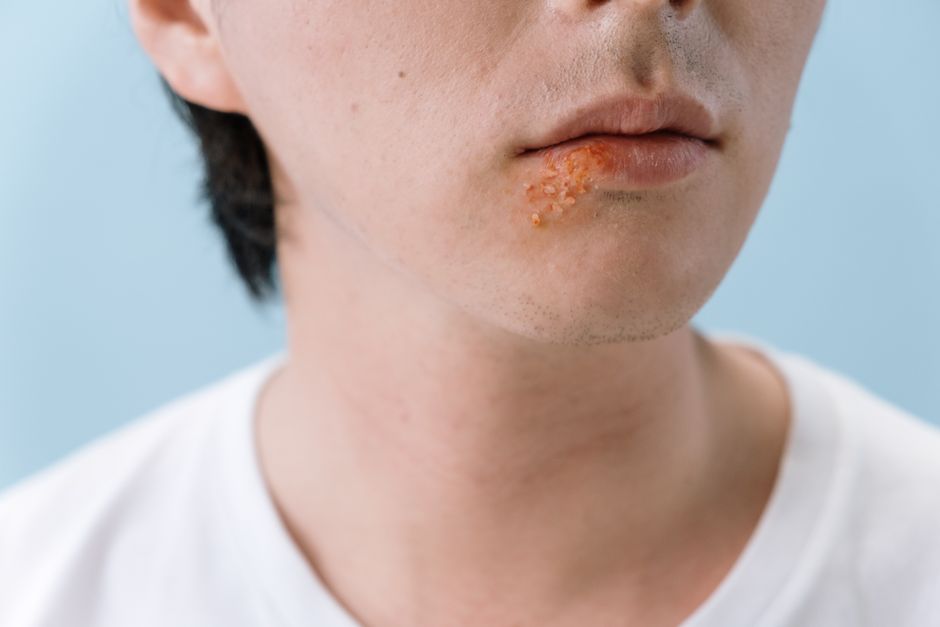
Cold sores inside the mouth are almost always canker sores, not the same virus that causes cold sores on your lips. The distinction matters because the treatments are different. For canker sores, the goal is pain relief and letting the ulcer heal on its own, which typically takes 7 to 14 days. Over-the-counter gels, saltwater rinses, and avoiding irritating foods are the most reliable ways to manage them. If the sore lasts longer than two weeks, grows, or spreads, see a doctor or dentist to rule out other conditions.
Are Cold Sores Inside the Mouth the Same as Lip Cold Sores?
No. What people call a cold sore inside the mouth is usually a canker sore, also known as an aphthous ulcer. Canker sores are shallow, painful ulcers with a white or yellow center and a red border. They are not contagious. They are not caused by a virus.
True cold sores, caused by the herpes simplex virus type 1 (HSV-1), appear on the lips, around the mouth, or on the nose. They are contagious and start as a tingling or burning sensation before blisters form. HSV-1 can occasionally cause sores inside the mouth, but this is more common in children experiencing a first infection. In adults, a sore inside the cheek or under the tongue is almost always a canker sore.
This distinction is the first step in treatment. Antiviral creams for lip cold sores do nothing for canker sores. And the pain-relief gels made for canker sores do not treat a herpes outbreak.
How Do You Get Rid of Cold Sores In Your Mouth Fast?
The fastest way to manage a canker sore is to reduce pain and inflammation while the tissue heals. No treatment makes a canker sore disappear overnight. The sore must heal on its own, and the healing process takes about one to two weeks.
Over-the-counter topical products containing benzocaine or lidocaine numb the area and provide immediate pain relief. These are available as gels, ointments, or pastes. Apply them directly to the sore as directed on the package. Some products also contain ingredients like hydrogen peroxide or glycerin that may help clean the area, though their effect on healing speed is limited.
Oral pain relievers such as acetaminophen or ibuprofen can help if the sore is painful enough to interfere with eating or drinking. Ibuprofen also reduces inflammation, which may help with the swelling around the ulcer. Use these according to the label instructions.
A saltwater rinse is a simple, low-cost option. Mix half a teaspoon of salt in a cup of warm water and swish it gently for 30 seconds. Do this a few times a day. Saltwater does not heal the sore faster, but it keeps the area clean and may reduce discomfort. Avoid mouthwashes that contain alcohol, which can sting and slow healing.
What Causes Canker Sores in the First Place?
The exact cause of canker sores is not fully understood, but several triggers are well documented. Minor injury to the inside of the mouth is a common one. Accidentally biting your cheek, brushing too hard, or eating sharp or crunchy foods can damage the delicate lining and start an ulcer.
Stress is another recognized trigger. Studies have linked psychological stress to an increased frequency of canker sores, though the mechanism is not completely clear. Some research suggests stress affects the immune system and the way the mouth lining repairs itself.
Certain foods can trigger canker sores in some people. Acidic foods like citrus fruits and tomatoes, spicy foods, and chocolate are frequently reported triggers. Food sensitivities or allergies may play a role in some cases. If you notice a pattern, keeping a food diary can help you identify your personal triggers.
Nutritional deficiencies are less common but real. Some studies have found links between canker sores and low levels of vitamin B12, folate, iron, or zinc. If you get canker sores frequently, a blood test can check for these deficiencies. Correcting a deficiency may reduce how often you get sores.
Hormonal changes, particularly in women, are also associated with canker sores. Some women report more sores during their menstrual cycle. Genetics may play a role too, as canker sores often run in families.
-
 Why Am I Getting Pimples Around My Mouth? Why It Happens
 -
How To Keep Babys Mouth Closed While Sleeping? Key Facts
-
Do Hand Foot And Mouth Itch? What Research Really Shows
-
Does Drinking Alcohol Help A Cold? The Facts
-
ProDentim Reviews 2026 – Does This Oral Probiotic Really Improve Teeth and Gum Health?




When Should You See a Doctor About a Mouth Sore?
Most canker sores heal on their own without medical treatment. But some situations require professional evaluation. See a doctor or dentist if a sore lasts longer than two weeks. A sore that does not heal could be something other than a canker sore, including oral cancer in rare cases.
Seek care sooner if the sore is unusually large, if you get several sores at once, or if the pain is severe enough to prevent eating or drinking. Recurrent sores that return frequently may also warrant a medical evaluation to look for underlying causes.
See a doctor immediately if you develop a sore along with a fever, if the sore spreads, or if you have signs of a bacterial infection such as increasing redness, warmth, or pus. These symptoms suggest something more serious than a simple canker sore.
If you have a weakened immune system from conditions like HIV, cancer treatment, or an organ transplant, any mouth sore should be evaluated by a doctor promptly. The same applies if you are taking medications that suppress the immune system.
Can You Prevent Canker Sores?
Prevention is not always possible, but you can reduce your risk. Avoiding known triggers is the most effective strategy. If certain foods consistently cause sores, limit or avoid them. If you bite your cheek or tongue frequently, talk to your dentist about dental work or habits that may be contributing.
Good oral hygiene helps. Brush gently with a soft-bristled toothbrush to avoid injuring the mouth lining. Floss daily to remove food particles that could irritate the tissue. But avoid toothpaste containing sodium lauryl sulfate if you notice a pattern of sores after brushing. Some research suggests this foaming agent may irritate the mouth lining in susceptible people, though the evidence is not definitive.
Managing stress may reduce the frequency of canker sores. Regular exercise, adequate sleep, and relaxation techniques like deep breathing or meditation can help. The evidence for stress reduction specifically preventing canker sores is limited, but it is a reasonable approach given the known link between stress and outbreaks.
If you have frequent canker sores and a blood test shows a nutritional deficiency, correcting it may help. Work with your doctor to determine the right supplement dose. Do not take high doses of vitamins without testing, as excess amounts can be harmful.
What About Prescription Treatments for Recurrent Canker Sores?
For people with frequent or severe canker sores, a doctor may prescribe stronger treatments. Prescription mouthwashes containing chlorhexidine or a corticosteroid like dexamethasone can reduce pain and inflammation. These are used for a limited time and require a prescription.
Topical corticosteroid ointments can be applied directly to the sore. These reduce inflammation and may speed healing. They are more potent than over-the-counter options and are reserved for cases that do not respond to basic care.
In severe cases, a doctor may prescribe oral medications. Colchicine or dapsone are sometimes used off-label for recurrent canker sores, but these have significant side effects and are not first-line treatments. They are reserved for people with frequent, painful sores that do not respond to other treatments.
No large clinical trials have confirmed a single best prescription treatment for recurrent canker sores. Treatment is individualized based on how often you get sores, how severe they are, and how well you tolerate medications. Discuss the risks and benefits with your doctor.
Do Home Remedies Actually Work for Canker Sores?
Some home remedies have genuine evidence behind them. Others are popular but unproven. Honey applied to the sore has shown some benefit in small studies, likely due to its antibacterial and anti-inflammatory properties. The evidence is limited, but honey is low-risk if you are not diabetic and do not have a honey allergy.
Aloe vera gel may soothe the sore and reduce pain. Some research supports its use for wound healing generally, but specific studies on canker sores are limited. It is generally safe to apply a small amount to the sore.
Milk of magnesia applied to the sore a few times a day may help with pain by coating the ulcer. This is a common recommendation from dentists, though clinical evidence is sparse. It is safe for most people.
Be cautious with unproven remedies. Applying undiluted essential oils, hydrogen peroxide directly on the sore, or acidic substances like lemon juice can cause more irritation and delay healing. If a remedy stings significantly, stop using it.
No home remedy has been shown to make a canker sore heal faster than the natural 7 to 14 day course. The most reliable benefit of any treatment is pain relief while the body heals itself.
Frequently Asked Questions
How long does a canker sore last?
A canker sore usually heals on its own in 7 to 14 days. Larger sores can take up to three weeks.
Can I pop a canker sore?
No. Canker sores are not blisters and cannot be popped. Picking at them can make them larger and slow healing.
Is a canker sore contagious?
No. Canker sores are not caused by a virus and cannot spread to other people. Lip cold sores from HSV-1 are contagious.
What vitamin deficiency causes canker sores?
Low levels of vitamin B12, folate, iron, or zinc have been linked to canker sores in some studies. A blood test can confirm a deficiency.
