
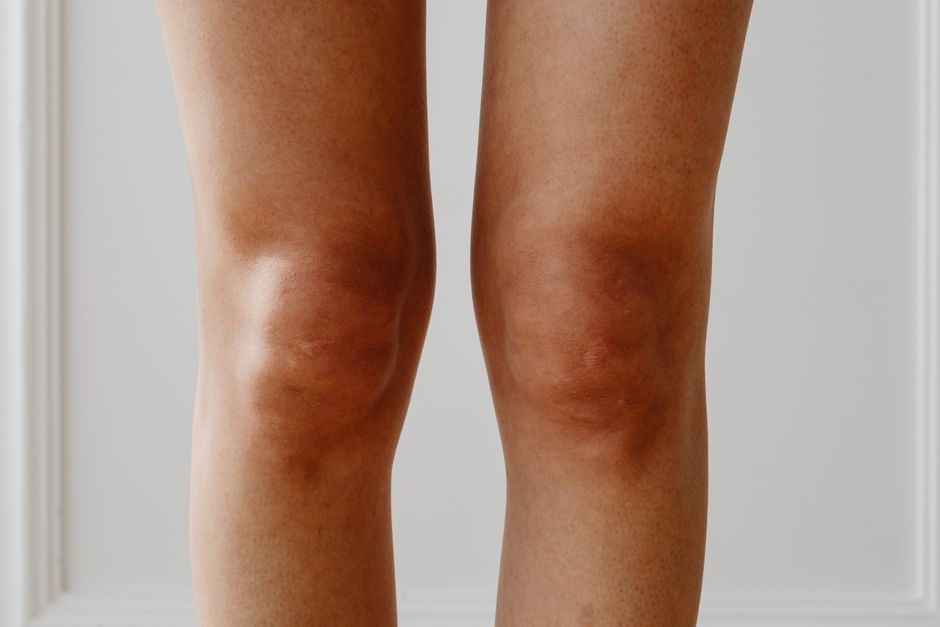
Dark skin on the knees is a common skin concern, not a medical condition. It happens when the skin on your knees produces extra melanin or thickens due to friction, pressure, or dryness. Getting rid of black knees is usually about reducing that friction, moisturizing consistently, and using ingredients that support gentle skin cell turnover. Most people see real improvement in four to eight weeks with the right routine, but some causes like genetic skin tone differences are not reversible.
What Actually Causes Dark Skin on the Knees?
The skin on your knees is different from the skin on your arms or face. It has fewer oil glands and experiences constant bending and pressure. This combination makes it prone to thickening and darkening.
Friction is the most common cause. Kneeling on hard floors, sitting with your legs crossed for long periods, or wearing tight pants that rub against the knees all create repeated irritation. Your skin responds by building up a thicker outer layer, which can look darker than the surrounding skin.
Dryness plays a major role too. When the skin on your knees lacks moisture, it becomes rough and flaky. This rough texture scatters light unevenly, making the area appear darker than it really is. The American Academy of Dermatology notes that dry skin can look gray or ashy, especially on darker skin tones.
Some people naturally have more melanin in their knee skin. This is genetic and not something you can change. If your knees have always been slightly darker than your thighs, that is your normal skin color, not a problem to fix.
Does Moisturizer Alone Fix Black Knees?
Moisturizer helps, but it is rarely enough on its own. Dryness makes dark knees look worse, so fixing the dryness will lighten the appearance somewhat. But if friction or skin thickening is the main issue, you need more than lotion.
Look for moisturizers with ingredients that support the skin barrier. Ceramides, shea butter, and glycerin are well-studied moisturizing ingredients. They trap water in the skin and reduce the scaly look that makes knees appear darker.
Urea is a specific ingredient worth mentioning. Research published in the Journal of Dermatological Treatment found that urea creams help soften thickened skin and improve moisture retention. A 10% to 20% urea cream can gradually reduce the rough buildup on knees over several weeks. Start with 10% to avoid irritation.
Moisturizing twice daily is the minimum for visible results. Apply right after showering when the skin is still damp. This locks in more moisture than applying to dry skin.
What Ingredients Actually Lighten Black Knees?
Several ingredients have reasonable evidence for lightening darkened skin on elbows and knees. None of them work overnight. Consistency over weeks matters more than using a strong product once.
Alpha hydroxy acids (AHAs) like lactic acid and glycolic acid exfoliate the outer layer of skin. They dissolve the bonds holding dead skin cells together, which allows the thickened, darker layer to shed. A study in the Journal of Cosmetic Dermatology showed that 12% lactic acid improved skin lightening on knees and elbows after eight weeks of daily use.
Kojic acid is a natural compound that blocks tyrosinase, an enzyme needed for melanin production. Some studies suggest it works, but the evidence is weaker than for other ingredients. It is commonly found in creams at 1% to 2% concentration.
Vitamin C in the form of L-ascorbic acid can reduce melanin production and protect against oxidative stress. It is less irritating than some other lightening agents. However, vitamin C is unstable in many formulations, so look for products in opaque, airtight packaging.
Niacinamide at 2% to 5% has good evidence for reducing hyperpigmentation. It works by blocking melanin transfer to skin cells rather than stopping melanin production. This makes it gentler and suitable for long-term use.
Here is a simple comparison of common ingredients:
| Ingredient | What It Does | Evidence Level | Typical Time to Results |
|---|---|---|---|
| Lactic Acid (AHA) | Exfoliates outer skin layer | Strong | 4-8 weeks |
| Kojic Acid | Blocks melanin production | Moderate | 6-12 weeks |
| Vitamin C | Reduces melanin, antioxidant | Moderate | 8-12 weeks |
| Niacinamide | Blocks melanin transfer | Strong | 8-12 weeks |
| Urea | Softens and moisturizes | Strong for texture | 2-4 weeks for texture |





What Should You Avoid When Treating Black Knees?
Many products and home remedies marketed for black knees are either ineffective or harmful. Knowing what to skip is just as important as knowing what to use.
Avoid lemon juice. This is one of the most common viral remedies for dark knees. Lemon juice is highly acidic and can cause chemical burns, especially on skin that is already irritated from friction. There is no clinical evidence that lemon juice safely lightens skin. It can make hyperpigmentation worse by causing inflammation.
Avoid baking soda pastes. Baking soda has a high pH that disrupts the skin barrier. Scrubbing with baking soda creates micro-tears in the skin, which leads to more thickening and darkening over time. The same applies to toothpaste, which is not formulated for skin.
Avoid harsh physical scrubs. Loofahs, pumice stones, and rough exfoliating gloves can damage the skin on your knees. The skin there is already under mechanical stress. Adding more friction only triggers more thickening. Gentle chemical exfoliation is safer and more effective.
Avoid bleaching creams with hydroquinone above 2% without a doctor. Hydroquinone is effective for some types of hyperpigmentation, but it is a prescription-strength medication in many countries. Overuse can cause ochronosis, a condition where the skin becomes permanently darker and blue-black. The FDA has warned about safety concerns with hydroquinone in over-the-counter products.
Avoid steroid creams. Some people use over-the-counter hydrocortisone on dark knees thinking it will reduce inflammation and lighten the skin. Long-term steroid use thins the skin and can cause stretch marks. It is not a treatment for hyperpigmentation.
What Is the Right Daily Routine for Black Knees?
A consistent routine matters more than any single product. Here is a step-by-step approach based on what dermatologists recommend for hyperpigmentation on thick skin areas.
- Cleanse gently. Use a mild body wash. Do not scrub your knees with a brush or rough cloth. Pat dry instead of rubbing.
- Exfoliate chemically. Apply a lactic acid or glycolic acid lotion to your knees three to four times per week. Start with a lower concentration and increase if your skin tolerates it well.
- Apply a treatment product. Use a cream containing niacinamide, kojic acid, or vitamin C once daily on clean, dry knees. Do not layer multiple lightening ingredients at the same time initially.
- Moisturize thoroughly. Use a thick moisturizer with ceramides or urea every time you wash your knees. This is non-negotiable for reducing the appearance of darkness.
- Protect from the sun. Sun exposure darkens all skin, including your knees. Apply sunscreen to your knees when wearing shorts or skirts. SPF 30 or higher is standard advice from the Skin Cancer Foundation.
Morning and evening routines can differ. In the morning, focus on moisturizer and sunscreen. In the evening, use your exfoliating or treatment products. This prevents irritation from combining too many active ingredients at once.
When Should You See a Doctor About Black Knees?
Most cases of dark knees are cosmetic and not a health concern. But there are situations where a doctor should evaluate the skin.
If the dark area is spreading, changing color rapidly, or has an irregular border, it could be something other than hyperpigmentation. Acanthosis nigricans is a condition where the skin becomes dark, thick, and velvety. It often appears on the knees, elbows, knuckles, and neck. The American Academy of Dermatology states that acanthosis nigricans can be a sign of insulin resistance or type 2 diabetes. A doctor can check for underlying metabolic issues.
If the skin on your knees is painful, itchy, or has open cracks, see a dermatologist. This could indicate eczema, psoriasis, or a fungal infection. Treating the underlying condition will often resolve the dark appearance.
If you have used over-the-counter products consistently for three months with no improvement, a dermatologist can prescribe stronger treatments. Prescription options include higher-concentration retinoids, azelaic acid, or hydroquinone under medical supervision. Laser treatments and chemical peels are also options for stubborn cases, though evidence for their effectiveness on knees specifically is limited compared to face treatments.
How Long Does It Take to See Results?
Realistic expectations prevent frustration. Skin turnover takes about four to six weeks in healthy adults. For thickened knee skin, the timeline is longer because the buildup is more stubborn.
With consistent use of an exfoliating and moisturizing routine, most people notice smoother texture within two to three weeks. Visible lightening of the dark color typically takes six to twelve weeks. Genetic hyperpigmentation may not change at all, and that is normal.
Maintenance is lifelong. Once you stop exfoliating and moisturizing, the skin will gradually return to its previous state. This does not mean the treatment failed. It means the causes — friction, pressure, and dryness — are still present. Treating black knees is more like managing dry skin than curing an infection.
Frequently Asked Questions
Can coconut oil get rid of black knees?
Coconut oil moisturizes the skin but has no evidence for lightening hyperpigmentation. It may help with the appearance of dryness but will not change skin color.
Is it safe to use lemon and sugar scrub on knees?
No. Lemon juice can burn the skin and sugar crystals cause micro-tears. Both can make dark knees worse over time by increasing inflammation.
Do whitening creams work on black knees?
Some creams with ingredients like niacinamide or kojic acid can help, but creams marketed as “whitening” often contain unregulated ingredients or steroids. Check the ingredient list carefully.
How often should I exfoliate my knees?
Three to four times per week is enough for most people. Daily exfoliation can irritate the skin and cause more thickening.
