
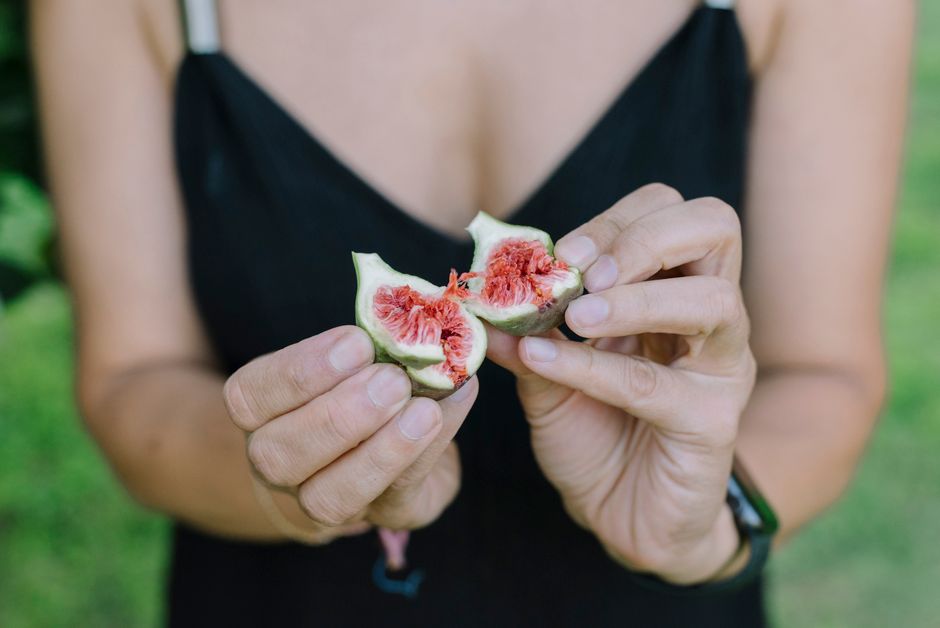
You can eat figs raw, dried, roasted, or grilled. The skin is fully edible, so no peeling is needed. Just rinse fresh figs gently and remove the stem. For dried figs, eat them as-is or soak them for a softer texture. This guide covers the different ways to prepare and enjoy figs, from simple snacking to cooking and baking.
What Is the Best Way to Eat Fresh Figs?
Fresh figs are at their peak from late summer through early fall. The best way to eat them is raw, at room temperature. Cold dulls their flavor. Let them sit out for 30 minutes after refrigeration.
Wash them gently under cool water. Pat dry with a towel. Do not rub the skin — it is thin and delicate. Cut off the hard stem end with a small knife. Then bite into the whole fig or slice it in half.
The skin is edible and contains fiber. The tiny seeds inside are also edible. Some people prefer to scoop out the flesh with a spoon, but that is not necessary. The texture is soft and the taste is sweet with a hint of honey.
How Do You Eat Dried Figs?
Dried figs are available year-round and are more concentrated in sugar than fresh figs. You can eat them straight from the bag. They make a good snack on their own or mixed with nuts.
If the dried figs feel too hard or chewy, soak them in warm water for 10 to 15 minutes. This softens the skin and plumps up the flesh. Drain them before eating. You can also slice soaked figs into salads or yogurt.
Some dried figs have a white powdery coating on the outside. That is not mold. It is crystallized natural sugar that rises to the surface as the fig dries. It is safe to eat.
How Do You Cook Figs?
Figs cook quickly because they are soft. Heat intensifies their sweetness and changes the texture to jammy. You can roast, grill, or sauté them.
Roasting is the simplest method. Preheat your oven to 400°F. Cut fresh figs in half lengthwise. Place them cut-side up on a baking sheet lined with parchment. Drizzle with a little olive oil or honey. Roast for 10 to 15 minutes until they soften and start to caramelize.
Grilling works well too. Halve the figs and place them cut-side down on a hot grill. Cook for 2 to 3 minutes. The heat creates light char marks and brings out a smoky sweetness. Grilled figs pair well with goat cheese or balsamic glaze.
Sautéing is the fastest option. Heat a pan over medium heat with butter or olive oil. Add halved figs and cook for 2 minutes per side. They can be served warm over ice cream, pancakes, or oatmeal.





How Do You Use Figs in Recipes?
Figs work in both sweet and savory dishes. Their natural sweetness means you often need less added sugar. Here are a few reliable ways to use them.
| Dish Type | How to Use Figs | Best Fig Type |
|---|---|---|
| Salads | Slice fresh or roasted figs and toss with greens, nuts, and vinaigrette | Fresh |
| Cheese boards | Place whole or halved figs alongside cheese, crackers, and honey | Fresh or dried |
| Baked goods | Chop dried figs and fold into muffin, bread, or cookie batter | Dried |
| Preserves and jams | Cook chopped figs with sugar and lemon juice until thick | Fresh or dried |
| Pizza or flatbread | Top with fig slices, prosciutto, arugula, and cheese before baking | Fresh |
| Smoothies | Blend fresh or soaked dried figs with yogurt and banana | Fresh or dried |
Figs also work well in sauces. Simmer chopped figs with balsamic vinegar and rosemary for a glaze that goes on chicken or pork. The sauce reduces to a thick, sweet-tart finish.
What Are the Health Benefits of Figs?
Figs are a good source of dietary fiber. A serving of three to four fresh figs provides about 5 grams of fiber. That is roughly 20 percent of the daily recommended intake for adults. Fiber supports digestion and helps with regular bowel movements.
Figs also contain potassium, calcium, and magnesium. Research published in the Journal of the American College of Nutrition found that dried figs have higher mineral density than fresh figs because the water is removed. This makes dried figs a more concentrated source of these nutrients by weight.
The sugar content is worth noting. Fresh figs have about 8 to 10 grams of sugar per fig. Dried figs have about 16 grams per piece because the sugars are concentrated. People managing blood sugar should be mindful of portion sizes, especially with dried figs.
Some studies suggest that fig leaf extracts may help lower blood sugar levels. The National Institutes of Health notes that early research is promising but not yet conclusive for humans. Eating whole figs does not appear to have the same effect as concentrated extract.
How Do You Store Figs?
Fresh figs are perishable. They last only 2 to 3 days at room temperature and up to a week in the refrigerator. Store them in a single layer on a paper towel in a shallow container. Do not stack them — the bottom ones will bruise and spoil faster.
Do not wash figs before storing. Moisture speeds up mold growth. Wash them only right before eating. If you have more figs than you can eat, freeze them. Place whole or halved figs on a baking sheet in the freezer for 2 hours. Then transfer them to a freezer bag. Frozen figs last up to 6 months and work well in smoothies or cooked dishes.
Dried figs last much longer. Store them in an airtight container in a cool, dark place for up to 6 months. In the refrigerator, they keep for up to a year. If you see mold on any dried fig, throw out the entire batch — mold spores spread quickly through dried fruit.
Common Misconceptions About Figs
A common myth is that figs are not vegan because some contain wasps. The reality is less dramatic. Female fig wasps sometimes enter figs to lay eggs. The fig digests the wasp over time. Commercial figs grown in the United States are mostly self-pollinating varieties that do not rely on wasps. Even in varieties that do, any wasp residue is fully broken down by the time the fig is harvested. There are no visible insect parts in a fig you buy at the store.
Another myth is that the white powder on dried figs is mold. As mentioned earlier, it is crystallized sugar. If you see fuzzy green or black spots, that is mold. The white powdery coating is not.
Some people also believe that figs are a fruit. Botanically, a fig is not a fruit. It is an inverted flower called a syconium. The seeds are the true fruits. For everyday eating, this distinction does not matter. But it is a fact that surprises most people.
Frequently Asked Questions
Can you eat fig skin?
Yes. The skin is fully edible and contains fiber. Just wash the fig first.
Do you need to peel figs?
No. Peeling is not necessary. The skin is thin and soft.
How many figs can you eat in a day?
Three to five fresh figs or two to three dried figs is a reasonable serving for most people.
Can you eat figs if you have diabetes?
Yes, in moderation. Dried figs are higher in sugar, so portion control matters. Consult your doctor.
