
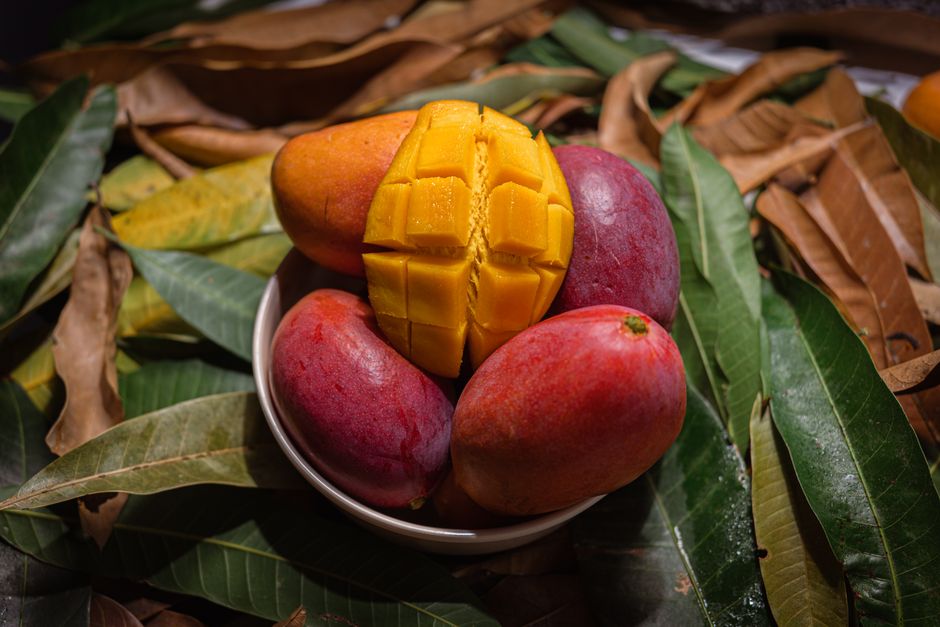
Cutting a mango does not need to be a messy struggle. The goal is to separate the sweet flesh from the large flat seed in the center with minimal waste and maximum safety. The most reliable method is to stand the mango upright, slice down both sides of the pit to get two “cheeks,” then score the flesh in a grid pattern and scoop it out. Here is the step-by-step method, along with the tools and safety tips that make it work.
What You Need Before You Start
You do not need a special mango tool, but a sharp knife makes a real difference. A dull knife slips more easily and is more dangerous than a sharp one. Use a chef’s knife or a paring knife, depending on your comfort level.
A sturdy cutting board is essential. A wet or unstable board is a recipe for a cut finger. Place a damp paper towel under the board to keep it from sliding while you work.
Have a large spoon ready for scooping the flesh. A spoon with a thin edge works best for separating the fruit from the skin.
How Do You Cut A Mango: The Standard Cheek Method
This is the method most chefs use. It works because the mango pit is flat and runs vertically through the fruit.
First, find the pit. The mango is oval, and the seed runs from top to bottom along the flatter sides. Place the mango upright on the cutting board with the stem end facing up. The stem is the top.
Imagine a line running from the stem straight down to the bottom. This line marks the edge of the pit. Position your knife about a quarter inch to the side of this line. Slice straight down in one smooth motion. You are cutting along the flat side of the seed, not through it.
Repeat on the other side. You will now have two large oval pieces, called cheeks, and a thin center piece that still holds the pit. The center piece will have a band of flesh around the seed.
Take one cheek in your hand, flesh side up. Score it in a crosshatch pattern with the tip of your knife. Cut down to the skin but do not cut through it. Make parallel cuts lengthwise, then rotate and repeat to create squares.
Push the skin side inward to invert the cheek. The flesh will pop outward like a hedgehog. Use your spoon to scoop the cubes away from the skin.
This method gives you neat cubes for salads, smoothies, or eating fresh. It is fast and wastes very little fruit.
How to Handle the Center Piece with the Pit
The two cheeks are the easy part. The center piece still has a good amount of edible mango around the seed. Do not throw it away.
Lay the center piece flat on the board. Look at the band of flesh surrounding the pit. Use your paring knife to carefully slice the flesh away from the seed. Follow the contour of the pit as you cut.
You will get a few irregular strips of mango. These are perfect for snacking or for blending into a smoothie. Do not try to cut through the pit. It is hard and will dull your knife, and you risk the blade slipping.
In some mango varieties, the flesh clings tightly to the seed. In others, it releases more easily. If the pit is stubborn, just eat the flesh directly off the seed. This is normal and is not a sign of a bad mango.





Alternative Method: The Hedgehog Cut
The hedgehog cut is the same as the cheek method, but it is worth naming because it is so popular for presentation. It is the technique used in fruit platters and for kids’ snacks.
After scoring the cheek in a crosshatch pattern, press the skin side upward. The cubes separate and stand up, resembling a hedgehog. This makes the mango easy to eat right off the skin without any dishes.
This presentation also makes it easy to see if the mango is ripe. Ripe cubes are bright orange-yellow and juicy. Under-ripe cubes are pale and firm.
Serve the hedgehog as-is, or slice the cubes off for a cleaner look. Both work. The hedgehog is mostly about making the fruit appealing and easy to grab.
How to Peel a Mango Without a Knife
Some people prefer to peel the mango before cutting. This works best with very ripe mangoes that are soft to the touch.
Use a vegetable peeler or a paring knife to remove the skin in long strips. The skin is thin but tough. Once peeled, the fruit is slippery, so hold it firmly.
After peeling, slice the flesh away from the pit in large pieces. You can then cut these pieces into chunks or strips. This method is messier than the cheek method because the juice gets on your hands.
It is the best approach if you want large slices for dehydrating or for pureeing. It also works well for mangoes that are too soft to hold upright for the cheek method.
Tools That Help and Tools to Skip
A good knife is the only essential tool. A paring knife gives you control for scoring and for cutting around the pit. A chef’s knife is better for the initial vertical cuts because its weight does the work.
Mango splitters are sold in stores. These are plastic tools with a blade and a handle designed to cut the cheeks and remove the pit in one motion. They work, but they are not necessary. A knife does the same job with less to store.
Some people use a glass or a cup to separate the flesh from the skin. You hold the cheek with the skin side down and push the rim of the glass between the flesh and the skin. This works reasonably well for ripe mangoes but can crush softer fruit.
Skip any tool that requires you to grip the slippery mango with your fingers near the blade. The risk of cutting yourself is not worth the convenience.
Safety Tips for Cutting Slippery Fruit
Mangoes are slippery. The skin is smooth, and the flesh is juicy. This combination makes them one of the more dangerous fruits to cut in the kitchen.
Always cut on a flat, stable surface. Never hold the mango in your palm while cutting toward yourself. The standard grip for the cheek method keeps your fingers behind the blade, which is the safe position.
If the mango is very ripe and soft, it may be too slippery to handle safely. In this case, peel it first or chill it in the fridge for 15 minutes. A firmer mango is easier and safer to cut.
Keep your fingers curled under like a claw when holding the fruit. This position keeps your fingertips out of the path of the blade. It is the same technique used for cutting onions or potatoes.
How to Tell If a Mango Is Ready to Cut
Cutting a mango too early is disappointing. The flesh will be pale, sour, and fibrous. Cutting it too late means it may be mushy and overripe.
A ripe mango gives slightly when you press it gently, like a ripe peach. It also has a fruity aroma near the stem end. The color is not a reliable indicator because different varieties stay green even when ripe.
If your mango is still hard, leave it on the counter for a few days. Do not put it in the fridge until it is ripe. Cold stops the ripening process.
Once ripe, you can store it in the fridge for up to five days. Cut mango should be refrigerated in a sealed container and eaten within two days.
What to Do with the Skin and Pit
The skin and pit are not edible in the usual sense. The skin contains compounds that can irritate some people’s mouths and skin. Do not eat it.
The pit is also not edible. It is large, hard, and bitter. Do not try to crack it open for the inner kernel unless you know what you are doing. The kernel is not a common food.
You can compost the skin and pit. They break down well and add nutrients to the soil. If you do not compost, they go in the trash. Do not put them down the garbage disposal; the pit can damage the blades.
One more note: mango skin contains urushiol, the same compound found in poison ivy. Some people develop a rash after handling mango skin. If you know you are sensitive, wear kitchen gloves while cutting.
How to Store Cut Mango
Cut mango oxidizes and loses quality quickly. It will keep in the fridge for one to two days in an airtight container. After that, it becomes mushy and loses flavor.
You can freeze cut mango for smoothies. Lay the cubes on a baking sheet in a single layer and freeze until solid. Then transfer to a freezer bag. Frozen mango keeps for about six months.
Do not freeze whole mangoes. The texture breaks down completely when they thaw. Always cut and cube before freezing.
If you have a large batch, consider pureeing the mango and freezing it in ice cube trays. These cubes are convenient for adding to drinks or sauces later.
Frequently Asked Questions
What is the safest way to cut a mango?
Stand the mango upright and slice down both sides of the flat pit to get two cheeks. Keep your fingers curled under and use a sharp knife on a stable cutting board.
Do you have to peel a mango before cutting it?
No. The cheek method scores the flesh and scoops it away from the skin, so peeling is not needed. Peel first only if you want large slices or the fruit is too soft to handle.
Can you eat the skin of a mango?
It is not recommended. The skin contains compounds that can irritate the mouth, and some people develop a rash from handling it.
How do you know when a mango is ripe enough to cut?
Press gently on the fruit. It should give slightly like a ripe peach and smell sweet near the stem. Color is not a reliable guide because some varieties stay green.
