
Veneers cover the front of your teeth, but they do not make those teeth immune to decay or gum disease. You clean under and around veneers the same way you care for natural teeth: brush twice a day, floss daily, and see your dentist regularly. The difference is that veneers create a new margin where the porcelain meets your natural tooth, and that junction needs specific attention to stay healthy.
Why Do Veneers Need Special Cleaning?
Veneers are thin shells bonded to the front surface of your teeth. They change the shape, color, and size of your smile. But the tooth underneath is still alive. The nerve and blood supply remain intact. The gum tissue still attaches to the tooth root below the veneer line.
That means plaque can still form. It can still cause cavities at the edges of the veneer. It can still trigger gum inflammation. The veneer itself cannot decay, but the tooth underneath absolutely can.
The most common problem area is the margin. That is where the veneer ends and your natural tooth begins. If plaque collects there, it can lead to decay that is difficult to see and treat. Gum recession can also expose this margin, which may affect both appearance and sensitivity.
How Do You Clean Your Teeth Under Veneers?
You clean them with the same tools you use for natural teeth, but with more attention to detail. A soft-bristled toothbrush and fluoride toothpaste are the foundation. Brush for two minutes, twice a day, angling the bristles toward the gumline where the veneer meets the tooth.
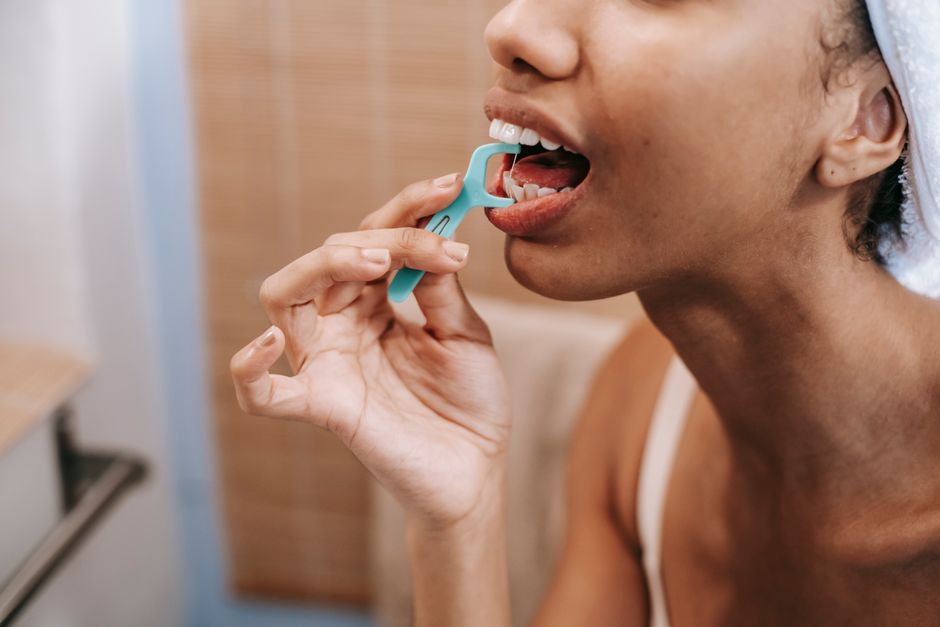
Flossing is not optional with veneers. It is the only way to remove plaque from the sides of the teeth where the veneer margin sits. Standard string floss works well. Slide it gently between the teeth, curve it around each tooth in a C-shape, and move it up and down past the gumline.
Water flossers are a useful addition, but they are not a replacement for string floss. Some research suggests water flossers remove plaque effectively, but string floss remains the standard for cleaning the tight spaces between teeth. If you use both, you are covering more ground.
Interdental brushes can also help. These small brushes fit between teeth and clean along the gumline. They are especially useful for people with wider gaps between teeth or those who find flossing difficult.
What Tools Should You Avoid With Veneers?
Hard-bristled toothbrushes can scratch the surface of your veneers over time. Porcelain is durable, but it is not indestructible. Scratches create rough spots where plaque and stain can accumulate. Stick with soft bristles.
Abrasive toothpaste is another concern. Some whitening toothpastes contain harsh abrasives that can dull the glaze on porcelain veneers. Check the Relative Dentin Abrasivity (RDA) value on the label if you want to compare products. Lower numbers mean less abrasive. Your dentist can recommend a toothpaste that cleans effectively without damaging your veneers.
Metal tools are not for home use. Never use a metal pick or scaler on your veneers. These instruments can chip or scratch the porcelain. Leave professional cleaning tools to your dental hygienist.





Can You Use a Water Flosser With Veneers?
Yes. Water flossers are safe for veneers. They use a pressurized stream of water to remove food particles and plaque from between teeth and along the gumline. They do not scratch porcelain.
Some people find water flossers easier to use than string floss. They can be especially helpful for cleaning around bridges or implants. But for veneers, the evidence suggests that string floss remains the more reliable method for cleaning the tight contact points between teeth.
If you use a water flosser, start at the lowest pressure setting. Aim the tip at the gumline and work your way around each tooth. Use it once a day, preferably in the evening when you have the most time to be thorough.
How Often Should You See the Dentist With Veneers?
Regular dental visits are essential. Most dentists recommend a checkup and professional cleaning every six months. Your hygienist can remove hardened plaque, called calculus or tartar, that you cannot remove at home. They can also check the margins of your veneers for signs of decay or wear.
Your dentist will also evaluate your bite. Veneers can change how your teeth come together. Over time, this can cause wear on the veneers or on your opposing teeth. A bite that feels off should be addressed early, not ignored.
Professional cleaning also includes polishing. Your hygienist will use a gentle polish to remove surface stains from the veneers and your natural teeth. This keeps your smile looking uniform.
What Happens If You Do Not Clean Under Veneers Properly?
Poor cleaning leads to predictable problems. Plaque builds up along the gumline and at the veneer margins. This causes gingivitis, which is inflammation of the gums. You may notice bleeding when you brush or floss. That is an early warning sign.
If gingivitis is left untreated, it can progress to periodontitis. This is a more serious infection that damages the bone and tissue supporting your teeth. Veneers do not protect you from this. In fact, the added bulk of a veneer can make cleaning slightly more challenging, which increases risk if you are not diligent.
Decay at the margin is another concern. Cavities can form where the veneer meets the natural tooth. These are often hard to see because they hide under the edge of the porcelain. By the time they cause symptoms like sensitivity or pain, they may be extensive. Treatment may require replacing the veneer or even a root canal.
Bad breath is a less serious but common consequence. Food and bacteria trapped along the gumline produce odors. If your breath smells even after brushing, plaque accumulation around your veneers may be the cause.
Can Veneers Stain or Discolor Over Time?
Porcelain veneers resist staining better than natural teeth. The glaze on the surface is smooth and non-porous. But the cement used to bond the veneer can stain. So can the margin where the veneer meets the tooth.
Coffee, tea, red wine, and tobacco can all cause discoloration over time. Regular brushing and professional cleanings help. If your veneers do pick up surface stains, your dentist can polish them. Whitening toothpaste will not change the color of porcelain. It only removes surface stains from the glaze.
Note that whitening treatments do not work on veneers. If you whiten your natural teeth after getting veneers, your veneers will not change color. This can create a mismatch. That is why dentists typically recommend whitening before getting veneers, not after.
What Is the Best Daily Routine for Veneer Care?
A consistent routine is more important than any single product. Brush twice a day with a soft-bristled brush and fluoride toothpaste. Floss once a day, taking extra time around the veneer margins. Use a water flosser if you like, but do not skip string floss.
Consider an antibacterial mouthwash. Some research suggests that rinsing with an antimicrobial rinse can reduce plaque and gingivitis. It is not a replacement for brushing and flossing, but it adds a layer of protection.
Pay attention to your gums. Healthy gums are firm and pink. They do not bleed when you brush. If you notice bleeding, swelling, or redness, schedule a dental visit. These are signs that your cleaning routine is not sufficient.
Avoid using your teeth as tools. Do not bite your nails, open packages, or chew on pens. These habits can chip or crack veneers. If you grind your teeth at night, ask your dentist about a night guard. Grinding is one of the most common causes of veneer damage.
Frequently Asked Questions
Can you floss normally with veneers?
Yes, you floss normally, but you should be gentle around the gumline and the veneer margin. Use a C-shape motion and slide the floss up and down rather than snapping it between teeth.
Do veneers need special toothpaste?
No special toothpaste is required, but you should avoid highly abrasive whitening pastes that can dull the porcelain glaze. Your dentist can recommend a low-abrasion fluoride toothpaste that works well for both veneers and natural teeth.
Can a water flosser damage veneers?
No, water flossers are safe for veneers when used at a comfortable pressure setting. They do not scratch porcelain, but they should not replace string floss for cleaning tight spaces between teeth.
How long do veneers last with good care?
With proper cleaning and regular dental visits, veneers typically last 10 to 15 years before they may need replacement. Their lifespan depends on your oral hygiene, habits like grinding, and how well you protect them from trauma.
